
It is a fair question, and it deserves a straight answer rather than a sales pitch. Chair tai chi — tai chi movements practised sitting down — can look suspiciously gentle. Nobody is sweating, nobody is out of breath, and the whole thing happens in a chair. If you have ever wondered whether it is real exercise or just waving your arms about while seated, you are not alone, and you are not wrong to ask.
This article gives the honest version: why seated practice attracts doubt, what chair tai chi genuinely can do, what it cannot do, and who it actually suits. If you would like the closely related question of whether it produces results, our article Does Chair Tai Chi Work? looks at that angle separately. Here, we are dealing with legitimacy.
Why people doubt seated exercise
Most of us absorbed a simple rule somewhere along the way: exercise is supposed to feel like effort. A raised heart rate, warm muscles, a sense of having worked. Seated tai chi offers almost none of those signals, so it fails the sniff test for many people before they have tried a single movement.
There is also a fair point buried in the scepticism. Sitting down removes some of what standing exercise involves — your legs are not holding you up, and your balance is not being challenged in the same way. Anyone who claims a chair routine is identical to a standing one is overstating the case, and this article will not do that.
But “different from standing exercise” is not the same as “not exercise at all”. That is where the honest middle ground lies.
What chair tai chi actually is
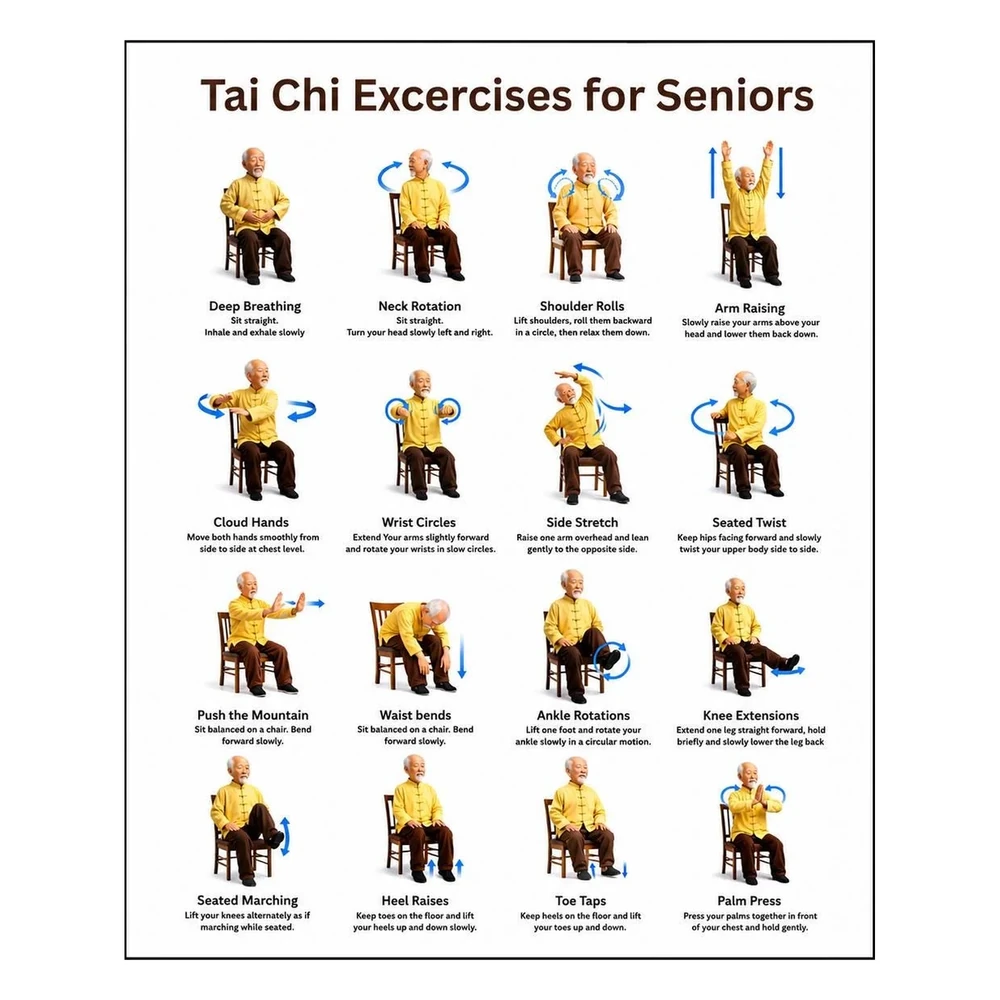
Chair tai chi adapts the slow, flowing movements of tai chi so they can be practised from a sturdy chair. The arms trace the same unhurried patterns, the trunk turns and sways gently, the head and shoulders move through comfortable ranges, and some movements involve the legs — lifting, extending or pressing the feet into the floor — while the chair carries your weight. Breathing stays slow and steady throughout. Our Chair Tai Chi article teaches a complete routine of this kind, movement by movement, if you want to see exactly what a session involves.
The important detail is that the chair is a support, not a sofa. You sit tall, feet flat, and move deliberately. Done properly, a session asks for attention, control and coordination from beginning to end — it simply asks for them at a low level of physical intensity.
What it can honestly do
Kept to what is reasonable, seated tai chi offers a few genuine things. It gets joints and muscles moving gently and regularly, which is how stiff shoulders, necks and backs are generally kept comfortable in daily life. It practises coordination — hands doing different things at different speeds — in a setting where falling is not a worry. It gives people who cannot stand for long, or who are rebuilding confidence after illness or a quiet period, a way to be active today rather than at some future date when standing feels easier.
It also has a habit-forming advantage that should not be underestimated: people actually do it. A practice that fits into a living room, needs no special equipment and leaves you feeling calm rather than exhausted is a practice that survives past the first week. In the long run, the gentle routine that happens regularly does a person more good than the vigorous one that was abandoned by February.
What it cannot do
Honesty cuts both ways. Chair tai chi will not build the leg strength that standing exercise does, because your legs are not supporting your weight. It will not challenge your balance the way standing practice does, and it is not a treatment for any medical condition. If you are comfortably able to stand and walk, a chair routine should be a supplement to your movement, not your only movement — the standing and walking your day already contains matters, and giving it up for the chair would be a step backwards.
It also works slowly. Anyone promising dramatic change within days is selling something. What seated practice offers is gradual: movements feeling a little easier, a routine becoming familiar, confidence returning in small increments.
Chair tai chi compared with standing tai chi
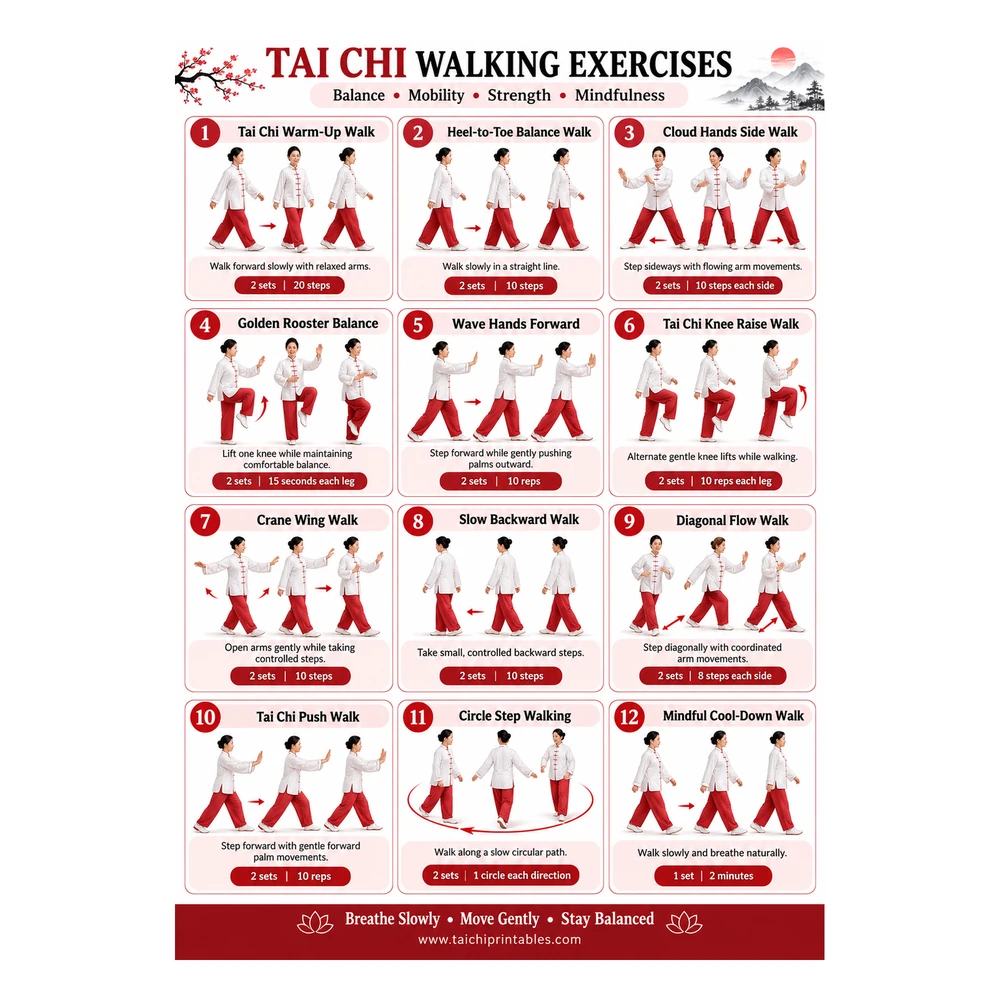
The two share more than the sceptics usually allow. The arm patterns, the turning of the trunk, the breathing, the emphasis on slowness and relaxation — these are the same in both, because they come from the same tradition. What changes is the base. Standing practice loads the legs and trains balance continuously; seated practice removes that load and that risk, and concentrates on the upper body, the trunk and gentle leg movements.
A useful way to think of it: standing tai chi is the full version, and chair tai chi is the same language spoken at a quieter volume. For some people the quieter volume is a temporary stage on the way back to standing. For others — because of joints, balance or health — it is simply the right volume for them, permanently, and there is nothing second-rate about that.
Who it suits, and who may find it too gentle
Chair tai chi suits beginners who want to start moving again without fear of falling; people whose balance, knees or stamina make standing exercise difficult at the moment; and anyone rebuilding confidence after a period of doing very little. It also suits people who simply enjoy calm, structured movement and are honest that a demanding class would put them off entirely.
It may honestly be too gentle for you if you already walk daily, stand comfortably and are looking for a physical challenge — in which case a standing routine will probably hold your interest better. The real test is not what a routine looks like from the sofa. It is whether, after a few weeks of it, your own movement feels a little easier than it did before.
Before you start: a few sensible precautions
Use a sturdy chair without wheels, pushed against a wall if you want extra security, and sit with both feet flat on the floor. Move only within a range that feels comfortable, breathe normally, and never push through pain. Stop if you feel dizzy or unwell, and rest. If you have a health condition or are returning to exercise after illness or injury, check with your doctor before starting. This article is general educational information, not medical advice.
Frequently Asked Questions
Is chair tai chi real exercise?
Yes — gentle, low-intensity exercise, but exercise all the same. You are moving your arms, trunk, head and legs deliberately and continuously, with control and steady breathing. What it is not is vigorous exercise, and it should not be compared with a workout that leaves you out of breath.
Is chair tai chi only for older people?
No. It suits anyone who needs or prefers supported exercise: beginners, people with limited mobility, people rebuilding activity after a quiet spell, and people who simply like calm movement. Age matters far less than what your body can comfortably do today.
Can chair tai chi replace walking?
Honestly, no. If you can walk comfortably, walking gives your legs and balance something a chair cannot. Chair tai chi works best as an addition to whatever standing and walking your day already includes — or as a starting point if standing exercise is not currently realistic for you.
How often would I need to practise?
Little and often is the pattern that suits gentle practice: short sessions on most days, or every other day, rather than one long session a week. Any benefit arrives gradually, through the routine becoming a habit — which is precisely what seated practice is good at.
Final thoughts
So, is chair tai chi legit? As gentle exercise for people who need to sit — yes, plainly. As a substitute for standing exercise in people who can stand — no, and it should never be sold as one. Judged on what it actually is, rather than on what it is not, seated tai chi earns its place: real movement, honestly limited, and for the right person exactly the level at which a lasting habit can begin.