

It is a question that arises in kitchens and living rooms everywhere: you have been marching on the spot while the kettle boils, or stepping in place in front of the television — but does any of it count as steps? Does your phone or step counter agree? And if the number on the screen barely moves, was the effort wasted?
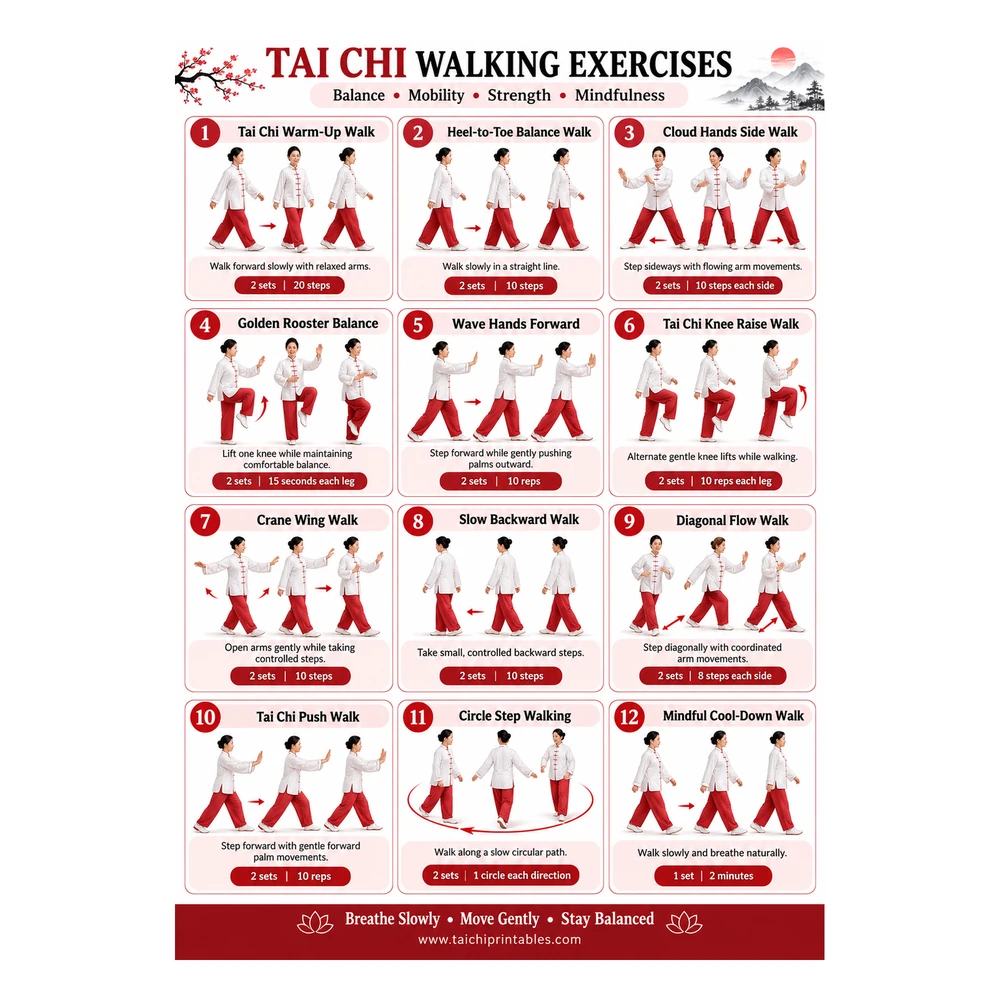
The short answer is that “counts” means two different things, and they have two different answers. This article separates them: what step counters actually record, and what your body actually gets — plus how the idea connects to gentle indoor exercise such as our tai chi indoor walking routine. If you would like the steps written out in order, our tai chi walking instructions explain each movement one at a time.
First, what does “count” mean?
When most people ask whether walking in place counts as steps, they are really asking one of two questions. The first is about the record: will my device add these movements to my daily step total? The second is about the value: does this movement do me any good, the way ordinary walking does?
The two answers do not always match, and that mismatch is the source of most of the confusion. A device can only record what its sensors can detect. Your body, on the other hand, responds to the movement itself — the lifting of the legs, the shifting of weight, the work of staying upright — regardless of what any screen says. Keep both questions in mind as we go through each in turn.
How phones and step counters detect a step
Modern phones and wearable step counters do not see your feet. They use motion sensors that detect patterns of movement — the rhythmic up-and-down and sway that normally accompany walking — and count a step each time the pattern repeats. Because the sensors sit wherever the device sits, what they detect depends a great deal on where you wear them and how you move.
Arm swing matters more than most people realise. A counter worn on the wrist largely reads the movement of that arm. Walk with your arms swinging naturally and the pattern is clear. Walk while holding a shopping trolley, a handrail or the back of a chair — as many people sensibly do — and the wrist may stay almost still, so the device can miss steps your legs genuinely took. A phone in a trouser pocket reads the movement of the leg instead, and may record the same walk quite differently.
Devices also vary. Different brands and models use different sensitivity and different rules for what qualifies as a step, and gentle, slow movement is the hardest kind for any of them to read. Two people doing exactly the same walk can finish with noticeably different totals. None of this means the devices are useless — they are reasonable guides to trends over time — but their numbers are estimates, not verdicts.
So does walking in place register?
Often, yes — with conditions. If you walk in place with a natural rhythm, lifting your feet properly and letting your arms swing, most counters will register a good share of the movement, because the up-and-down pattern they look for is present. If you shuffle with small steps, keep your arms still, or hold on to furniture, the same effort may record far fewer steps, or barely any.
Slow stepping is the hardest case of all. Very gentle marching, of the kind used in tai chi walking practice, can fall below what a device is tuned to notice. If your total looks suspiciously low after a session you know you did, the likeliest explanation is sensor blindness, not laziness.
Why it counts even when the number disagrees
Here is the reassuring part: your body keeps its own accounts, and it does not consult your phone. Walking in place lifts each leg in turn, shifts your weight from foot to foot, asks your ankles, knees and hips to work, and requires the small, constant adjustments that standing balance involves. All of that happened whether or not a sensor noticed it.
This is why health guidance generally talks about regular movement, not only about step totals. A step target is a convenient measuring stick — nothing more. If walking in place is the form of movement that fits your home, your weather and your confidence, it is real activity, and doing it regularly matters more than whether a device applauded it.
Making walking in place work well
A few small things make stepping in place both more comfortable and more likely to be recorded, if the record matters to you. Stand tall rather than leaning, on a clear patch of floor, in flat, secure shoes. Let your arms swing gently and naturally — this is good for your balance and rhythm as well as for any wrist-worn counter. Lift your feet rather than shuffling, but keep the steps modest; there is no prize for high knees. Keep support within reach if you are at all unsteady, accepting that holding on may reduce what a wrist device counts — your safety outranks your step total, always.
Short, frequent sessions suit most people better than one long march. A few minutes while the kettle boils, a few more during a television programme, and the movement quietly adds up across the day — recorded or not.
From marching on the spot to tai chi indoor walking
Walking in place is also the doorway to something a little richer. Tai chi walking takes the same ingredients — slow stepping, deliberate weight shifts, relaxed arms and steady breathing — and organises them into a small set of gentle movements you can practise in a hallway or living room. If you would like the technique itself, our guide on how to do tai chi walking teaches the basic step pattern in detail, and our indoor walking article shows how the movements fit into small spaces at home.
Seen this way, the step-count question answers itself. The counter is a rough guide. The practice — slow, regular, attentive movement — is the point.
A short note on safety
Walk in place on a clear, level floor, wearing shoes that grip, and keep a chair or counter within reach if your balance is uncertain. Stop and sit down if you feel dizzy, breathless beyond mild effort, or in pain. If you have a health condition, joint problems or a history of falls, check with your doctor about what level of activity suits you. This article is general educational information, not medical advice.
Frequently Asked Questions
Does a step counter count walking in place?
Usually at least partly, yes. Counters detect rhythmic body movement rather than seeing your feet, so marching in place with a natural arm swing often registers. Very slow, small or supported stepping may be under-recorded, and results vary between devices.
Why does my counter miss steps when I hold on to something?
If the device is on your wrist, it reads that arm’s movement. Holding a trolley, rail or chair back keeps the wrist still even while your legs walk, so steps are missed. A phone in a pocket may record the same walk more fully, because it reads leg movement instead.
Is walking in place good exercise?
It is genuine gentle activity: your legs lift and lower, your weight shifts, and your balance is quietly at work throughout. It is not the same as a brisk outdoor walk, but as regular movement at home — especially for people building confidence — it is well worth doing.
How long should I walk in place at a time?
Short sessions of a few minutes, repeated through the day, suit most beginners better than one long session. Build up gradually, rest whenever you need to, and stop if you feel dizzy or in pain.
Final thoughts
Does walking in place count as steps? On your device, it depends — on the device, on where you wear it, and on how you move. In your body, it counts without qualification: legs lifted, weight shifted, balance practised, time spent moving rather than sitting. Use the counter as a rough guide if it motivates you, but never let a low number talk you out of movement you know you did.