
Choosing the right footwear can make Tai Chi practice feel more comfortable and controlled. Unlike running or walking shoes, Tai Chi shoes are usually designed to be lightweight, flexible and close to the ground. They allow your feet to move naturally while you shift your weight, take small steps and turn through different positions.
When looking for tai chi shoes for women, it helps to understand what makes a shoe suitable for this type of movement. A good pair should fit securely, provide enough grip without sticking to the floor and allow your toes to spread comfortably. The right choice also depends on where you practise, the surface under your feet and your personal comfort.
You do not need an expensive or complicated shoe. The aim is to find footwear that supports steady, comfortable movement without getting in the way.
What Makes a Shoe Suitable for Tai Chi?
Tai Chi involves slow, controlled movements and frequent changes in body weight. You may step forward, move sideways, turn your body or pivot gently on your feet.
For these movements, footwear should allow you to feel the floor and move without unnecessary resistance. A shoe that is too heavy, stiff or slippery can make practice less comfortable.
Here are the main features to look for.
A Flat, Thin Sole
A relatively flat, thin sole helps you stay connected to the floor. It allows you to notice how your weight is distributed between your feet as you move from one position to another.
Very thick soles can make it harder to feel the surface beneath you. They may also change how your feet meet the floor during small steps and turns.
Look for a sole that is:
- Relatively thin compared with an ordinary walking or running shoe.
- Flat rather than strongly raised at the heel.
- Flexible enough to move with your foot.
- Protective enough for the surface where you practise.
A thin sole should not mean an uncomfortable or poorly protected foot. If you need more cushioning because of your personal comfort or foot concerns, choose a shoe that balances cushioning with flexibility and stability.
A Flexible Sole That Bends With Your Foot
Tai Chi movements involve natural changes in foot position. Your toes and the front of your foot may bend as you step, shift your weight or move through a stance.
A very stiff sole can restrict these movements. It may make the shoe feel awkward when you try to move slowly and carefully.
A flexible sole should bend naturally, particularly around the front of the foot. It should not feel as though you are wearing a rigid platform.
You can check this feature by gently bending the shoe in your hands. It should move without requiring excessive force. Avoid twisting or folding it aggressively, as that is not necessary to assess ordinary flexibility.
Enough Grip Without Sticking to the Floor
Grip is particularly important when practising Tai Chi. You want your feet to remain stable when you place them on the floor, but you also need to be able to make controlled turns.
A shoe with too little grip may slide unexpectedly. On the other hand, a sole that grips too strongly can catch against the floor when you try to pivot.
Look for a sole with a suitable balance:
- It should provide reliable contact with the floor.
- It should not feel slippery on the surface where you practise.
- It should allow gentle turning without catching or sticking.
- It should not have deep, aggressive outdoor-style tread that interferes with smooth indoor movement.
The right amount of grip depends on the flooring. A sole that works well on a wooden studio floor may feel different on a carpeted or tiled surface.
Lightweight Construction
Tai Chi shoes are generally lighter than many everyday trainers. A lightweight shoe can feel less cumbersome when you lift your feet for small steps or move through a sequence.
Heavy footwear may make the feet feel restricted, especially during longer practice sessions.
When trying on a pair, notice whether the shoes feel comfortable from the beginning. You should not have to work against their weight to lift or reposition your feet.
Lightweight construction is useful, but it should not come at the expense of a secure fit or suitable sole.
A Secure Fit Around the Heel
Your heel should stay comfortably in place when you walk, step backwards or change direction.
If the shoe slips up and down at the back, you may find yourself adjusting your foot repeatedly. A loose heel can also make it harder to feel secure during controlled movements.
Look for a shoe that holds the heel without squeezing it. The fit should feel stable when you take several small steps in different directions.
Avoid choosing a shoe that is so loose that your foot moves around inside it. Equally, do not tighten the shoe so much that it creates pressure or discomfort.
Enough Room for Your Toes to Spread
Your toes help you maintain contact with the floor and adjust your position during movement. They should not feel squeezed together.
A suitable Tai Chi shoe should have enough room around the front for your toes to rest naturally and spread slightly when your weight shifts.
Check that:
- Your toes are not pressing against the front of the shoe.
- The sides do not squeeze your little toe or big toe.
- You can move your toes comfortably.
- The front of the shoe does not feel narrow when you stand.
A shoe that looks elegant but squeezes your toes is unlikely to be a comfortable choice for regular practice.
Common Types of Tai Chi Shoes for Women
Tai Chi shoes come in several general styles. Each has a slightly different feel, so it is worth understanding the main differences before deciding what suits you.
Traditional Cotton-Soled Tai Chi Shoes
Traditional Tai Chi shoes often have a simple fabric upper and a relatively thin sole. Cotton or canvas materials are commonly used, giving the shoes a soft and lightweight feel.
Some traditional styles have a flat cotton-based sole, while others use a different sole material designed for indoor movement.
Possible advantages:
- Lightweight and simple in design.
- Usually have a relatively low profile.
- Allow a close feel to the floor.
- Often have a flexible construction.
Things to consider:
- Some styles provide limited cushioning.
- The fit may vary, particularly around the toes and heel.
- Certain cotton-soled designs may not provide enough grip on every floor.
- They may not offer much protection for outdoor use.
These shoes can be worth considering if you mainly practise indoors on a suitable, clean surface.
Soft Trainer-Style Tai Chi Shoes
Soft trainer-style shoes look more like everyday sports footwear but are often designed with a flexible sole and a relatively low profile.
They may provide more structure around the heel and upper than traditional fabric shoes.
Possible advantages:
- A more enclosed and supportive fit.
- Some cushioning under the foot.
- Often easier to wear for people who prefer a familiar trainer-style shape.
- Can be suitable for indoor practice when the sole has the right flexibility and grip.
Things to consider:
- Some designs have thick soles that reduce floor feel.
- Strong tread patterns may interfere with smooth turning.
- A heavily cushioned heel may change the way the foot sits.
- Some models are too stiff for comfortable Tai Chi movements.
Do not assume that every lightweight trainer is suitable. Check the sole, flexibility and fit rather than relying on appearance.
Barefoot-Style Shoes
Barefoot-style shoes are designed to allow more natural foot movement. They usually have a thin, flexible sole and a wider front section that gives the toes more room.
Some people like this style because it allows them to feel the floor more clearly.
Possible advantages:
- Thin soles provide a close connection with the floor.
- Flexible construction allows the foot to bend naturally.
- Wider toe areas may allow more room for the toes to spread.
- Many designs are lightweight.
Things to consider:
- The thin sole may provide less protection from hard or uneven surfaces.
- Some people find the lack of cushioning uncomfortable.
- A close-to-the-floor feel may take some getting used to.
- They may not be suitable for people who need more support or protection.
Barefoot-style footwear is not automatically the best choice. Comfort, foot shape and individual needs should guide your decision.
How to Check the Fit of Tai Chi Shoes
A shoe can have all the right features on paper and still feel uncomfortable on your feet. That is why checking the fit is just as important as looking at the sole or material.
Try shoes on when your feet are not unusually swollen or uncomfortable. If possible, test both shoes rather than judging the fit from one foot.
Step-by-Step Shoe Fit Check
- Try on both shoes
Put both shoes on and fasten them as you normally would. Shoe sizes and foot shapes can vary slightly from one foot to the other, so check both sides.
- Stand in a natural position
Stand with your feet about hip-width apart. Keep your knees relaxed and let your weight settle naturally.
Notice whether the shoes feel balanced. They should not make you feel as though you are standing on a raised or uneven surface.
- Check the toe room
Move your toes gently inside the shoes. They should not feel squeezed together or pressed against the front.
If your toes touch the front when you stand or shift your weight, the shoes may be too short. If the front feels narrow, look for a shape with more room around the toes.
- Check the heel
Lift each foot slightly and put it back down. Take a few small steps forward and backwards.
Your heel should remain comfortably in place. If it repeatedly slips out or rubs against the back of the shoe, the fit may not be suitable.
- Bend the front of the shoe
While seated, gently bend your foot and notice whether the shoe moves with it.
The front of the sole should allow natural movement. You should not feel as though the shoe is forcing your foot into a stiff position.
- Try a small weight shift
Stand with your feet comfortably apart and slowly move a little more weight from one foot to the other.
Notice whether the sole feels stable and whether your foot moves comfortably inside the shoe. Your heel should not lift excessively, and your toes should not be squeezed.
- Take a few short steps
Walk slowly forwards, backwards and sideways in a clear space. Keep the steps small.
The shoes should feel secure and should not catch unexpectedly on the floor.
- Try a gentle turn
If the floor is suitable and you feel steady, make a small, controlled turn.
Notice whether the sole allows your foot to turn without slipping or sticking. Do not force a pivot or twist your knee to test the shoe.
- Check for pressure or rubbing
After trying the shoes, check whether you feel pressure around the toes, sides, heel or top of the foot.
A shoe should not need to cause pain or rubbing before it becomes comfortable. If it feels uncomfortable during a short fitting, it may not be the right shape for you.
- Consider your usual practice surface
Think about where you will wear the shoes most often. A pair suitable for a clean indoor studio may not offer enough protection for outdoor paths.
Choose footwear that matches your actual practice environment.
Can You Practise Tai Chi Barefoot or in Socks?
You do not always need specialist Tai Chi shoes. Some people practise barefoot, while others prefer socks or ordinary lightweight footwear.
The best option depends on the floor, your comfort and how steady you feel when moving.
Practising Barefoot
Some practitioners enjoy practising barefoot on a clean, suitable indoor floor.
Without shoes, you can feel the surface directly and move your toes naturally. However, barefoot practice is not suitable for every person or every environment.
Before trying it, consider:
- Whether the floor is clean and clear of small objects.
- Whether the surface is dry and not slippery.
- Whether you are comfortable standing and moving without footwear.
- Whether you need protection or support for your feet.
If you have sensitive feet, foot discomfort or a condition that requires protective footwear, ask a healthcare professional before practising barefoot.
Practising in Socks
Socks can feel comfortable and are easy to put on. Some people prefer them when practising indoors.
However, ordinary socks can be slippery on smooth floors, particularly polished wood, laminate or tiles. This can make weight shifting and turning less secure.
If you choose to wear socks:
- Check that the floor is completely dry.
- Avoid ordinary smooth socks on slippery surfaces.
- Consider socks with suitable non-slip grips on the soles.
- Make sure they fit securely and do not bunch up under your feet.
- Stop if you feel your feet sliding or losing contact with the floor.
Non-slip socks are not a guarantee of stability. Their grip varies, and they may not be suitable for every surface or every person.
When Shoes Are the Better Choice
Shoes may be more suitable when you need protection from the floor, prefer a secure fit or feel unsteady without footwear.
If you have concerns about balance, foot comfort or standing safely, do not assume that barefoot practice is better. Choose the option that gives you a stable and comfortable starting point.
Indoor Versus Outdoor Tai Chi Practice
The surface you practise on makes a difference to the footwear you choose. A shoe that works well in an indoor class may not be appropriate for a garden path or outdoor exercise area.
Choosing Shoes for Indoor Practice
Indoor Tai Chi is often practised on wood, smooth flooring or another clean, level surface.
For indoor use, look for:
- A clean sole that will not mark or damage the floor.
- Enough grip to prevent unwanted sliding.
- A flexible design that allows gentle turns.
- A lightweight construction.
- A sole that does not catch or stick during movement.
Before starting, check the floor for dust, moisture and loose objects. Even suitable shoes can become slippery if the surface is dirty or wet.
Choosing Shoes for Outdoor Practice
Outdoor surfaces can be less predictable. You may encounter paving, grass, rough ground or small changes in level.
A very thin indoor sole may not provide enough protection from stones, rough surfaces or uneven ground.
For outdoor practice, consider footwear with:
- More protection under the foot.
- A secure fit around the heel.
- Grip appropriate for the surface.
- Enough flexibility for comfortable movement.
- A sole that is suitable for the ground rather than designed only for smooth indoor floors.
Avoid practising on wet grass, loose gravel or uneven ground if you feel unsteady. Choose a clear, level area whenever possible.
Simple Ways to Care for Your Tai Chi Shoes
Looking after your shoes helps keep them comfortable and suitable for regular use. The care routine depends on the materials and sole construction, so always follow the manufacturer’s cleaning instructions.
Clean the Soles Regularly
Check the soles for dust, dirt and small particles before practice. A dirty sole may behave differently on a smooth floor.
Wipe away surface dirt with a suitable cloth. Make sure the sole is completely dry before wearing the shoes again.
Let Shoes Dry After Use
If your feet become warm or the shoes collect moisture during practice, allow them to air out before putting them away.
Do not leave damp shoes in a closed bag for long periods. Store them in a dry, ventilated place.
Check for Wear and Damage
Look at the soles and upper material from time to time.
Pay attention to:
- Worn or smooth areas on the sole.
- Loose stitching or damaged fabric.
- Cracks or separation between the sole and upper.
- Changes in grip.
- Areas inside the shoe that rub against your feet.
If the sole has become damaged or its grip has changed noticeably, consider replacing the shoes before continuing to use them for practice.
Keep Indoor and Outdoor Shoes Separate
If you practise both indoors and outdoors, keeping separate footwear can be helpful.
Outdoor shoes may collect dirt, grit or moisture that you do not want to bring onto a clean indoor floor. A separate indoor pair can also make it easier to keep track of the sole condition.
What Else Should You Consider When Getting Ready for Tai Chi?
Footwear is only one part of preparing for a comfortable practice. Clothing, floor space and the type of session also matter.
Choose clothing that allows you to bend your knees, move your arms and take small steps without restriction. Avoid trousers that are too long or loose enough to catch under your feet.
Make sure there is enough clear space around you. If you practise at home, move furniture and other objects out of the way before beginning.
If you are new to Tai Chi, start with simple movements and take your time. A beginner-friendly routine is usually a better starting point than attempting a long sequence straight away.
For more advice about clothing and preparation, read what to wear for tai chi.
Women who are beginning Tai Chi later in life may also find it helpful to read our guide to tai chi for women over 60. It introduces the practice and offers ideas for getting started at a comfortable pace.
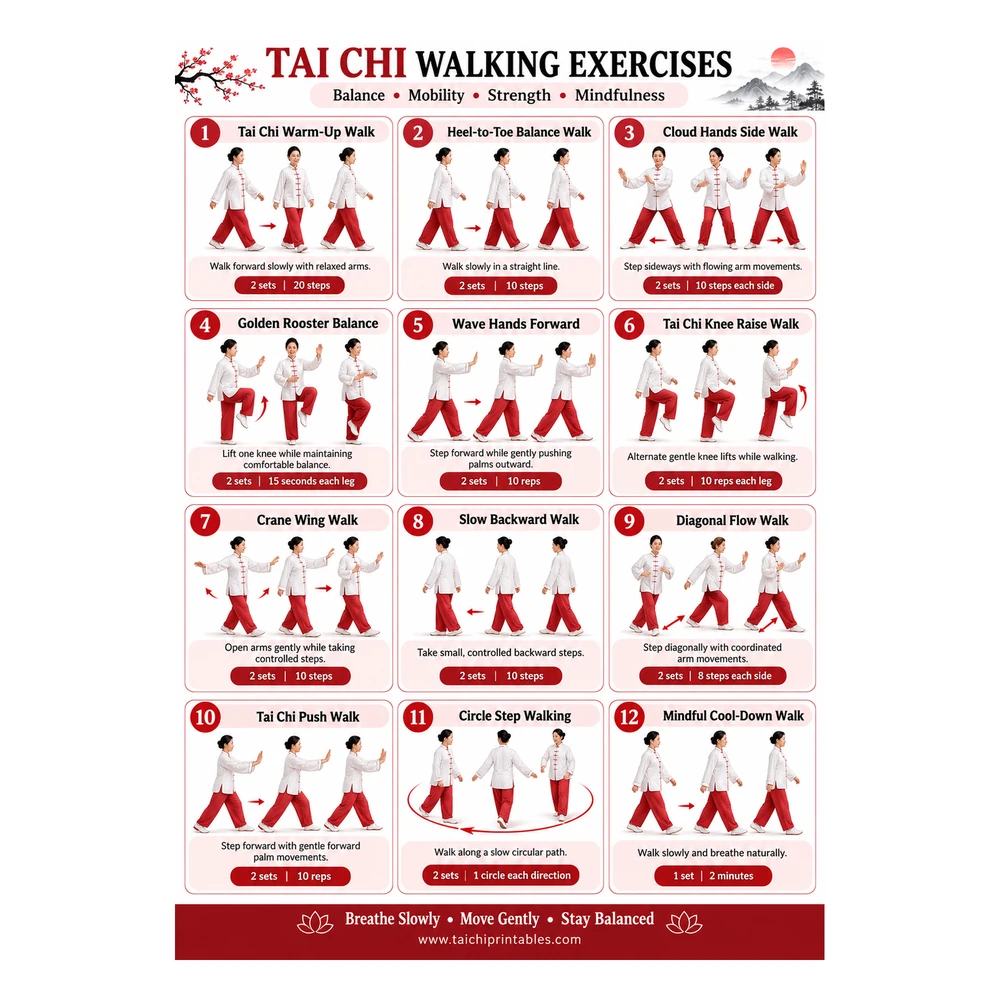
If you want to understand how different movements fit into a practice session, our guide to a tai chi workout provides further background.
Frequently Asked Questions
Do Women Need Special Shoes for Tai Chi?
No. Special Tai Chi shoes are not essential for everyone. Some people use traditional Tai Chi footwear, while others prefer lightweight, flexible shoes with a suitable sole. The important points are comfort, a secure fit, enough grip and the ability to move naturally.
Should Tai Chi Shoes Have Thin or Thick Soles?
Tai Chi shoes generally have relatively thin, flat soles because they allow you to feel the floor more clearly. However, the sole should still provide enough protection for your feet and the surface where you practise. A sole that is too thin for your needs may not be comfortable.
Are Running Shoes Suitable for Tai Chi?
Some running shoes may be too thick, heavily cushioned or stiff for Tai Chi movements. Their tread may also make turning more difficult. If you already own lightweight trainers, check whether the soles are flexible, relatively flat and suitable for controlled movement on your practice surface.
Is It Better to Practise Tai Chi Barefoot or With Shoes?
Neither option is automatically better. Barefoot practice can provide a direct feel of the floor, while shoes offer protection and may provide a more secure fit. Socks can be slippery on smooth surfaces, so take particular care if you choose to wear them. Select the option that feels safe and comfortable for you.
How Should Tai Chi Shoes Fit?
Tai Chi shoes should fit securely around the heel without squeezing your foot. There should be enough room for your toes to spread naturally, and the sole should bend comfortably as you move. Your feet should not slide around inside the shoes, and there should be no painful pressure or rubbing.
Final Thoughts: Choose Comfort, Flexibility and a Secure Fit
The best Tai Chi shoes for women are not necessarily the most traditional or the lightest pair available. What matters is how they feel when you stand, shift your weight, take small steps and turn.
Look for a flat, flexible sole, suitable grip, a secure heel and enough room for your toes. Consider whether you will practise indoors or outdoors, and remember that barefoot practice and socks are not suitable for every person or every surface.
Take time to try on different styles and test the fit with a few gentle movements. If you have particular foot or balance concerns, seek professional advice before changing your usual footwear.
Most importantly, choose shoes that allow you to concentrate on your Tai Chi practice rather than constantly thinking about your feet. Comfortable, suitable footwear can make it easier to settle into each movement and enjoy the practice at your own pace.