
Tai chi walking exercises combine slow, controlled steps with gentle arm movements and mindful breathing. They offer seniors aged 60+ and beginners a simple way to explore balance, mobility, coordination, and mindful movement at a comfortable pace.
Understanding tai chi walking benefits can help you decide whether this gentle movement practice fits your daily wellness routine. You do not need complicated equipment or a large exercise area to get started.
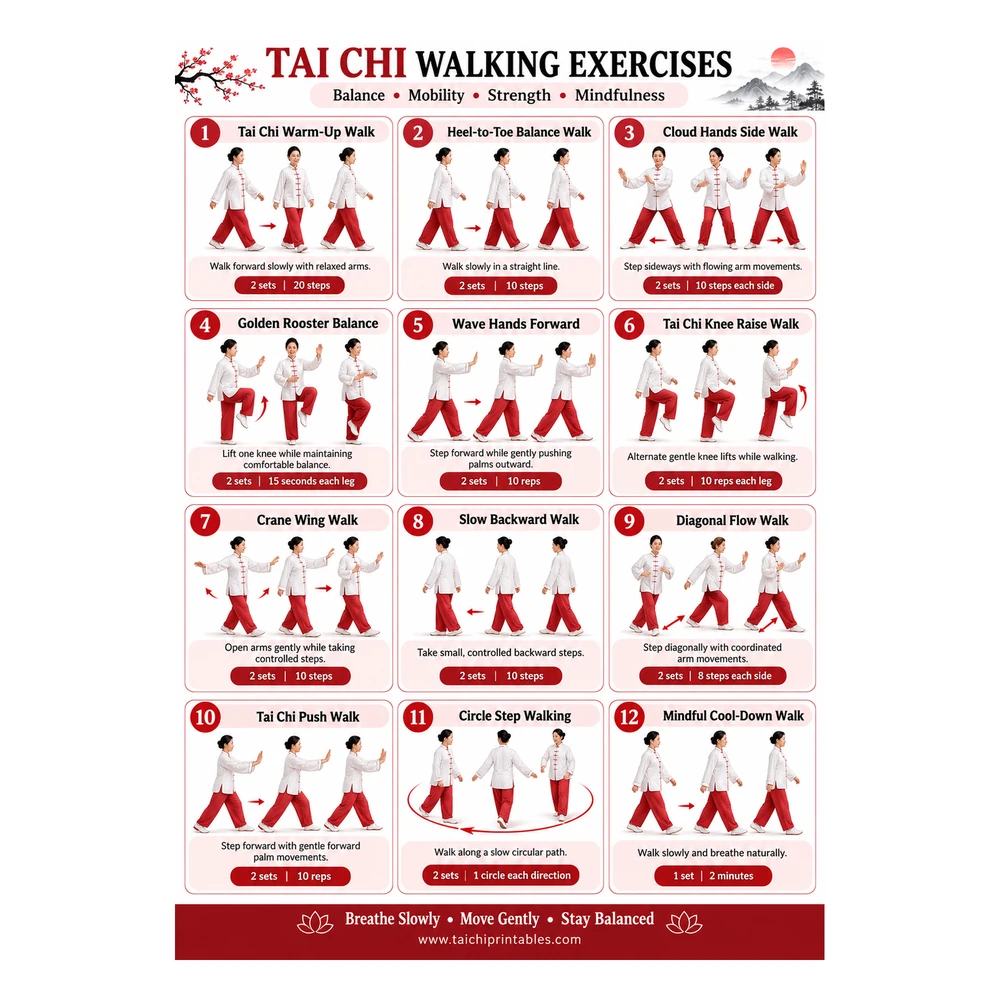
In this guide, you will discover 12 illustrated Tai Chi walking exercises, including step-by-step instructions, recommended sets and repetitions, and beginner-friendly tips. You will also learn how to combine selected movements into a simple practice session and access a printable exercise chart.
What Is Tai Chi Walking?
Tai Chi walking is a gentle movement practice that combines deliberate stepping, relaxed arm movements, controlled weight shifting, and natural breathing.
Instead of walking quickly, practitioners focus on each step and coordinate their movements at a comfortable pace. Some exercises involve walking forward, while others introduce sideways steps, circular paths, or gentle balance movements.
Tai Chi walking can be practiced indoors or outdoors in a suitable, uncluttered space. Beginners can start with simple movements and use a sturdy support when needed.
New to this practice? Read our Tai Chi Walking for Beginners guide to learn the fundamentals before exploring these exercises.
Tai Chi Walking Benefits: Gentle Movement and Wellbeing
Understanding tai chi walking benefits starts with looking at the different movement patterns involved. The practice combines walking, controlled stepping, arm coordination, and mindful attention.
Here are some general wellbeing aspects of this gentle activity.
1. Encourages Balance Practice
Several Tai Chi walking movements involve transferring body weight gradually from one leg to another. Exercises such as Heel-to-Toe Balance Walk and Golden Rooster Balance provide opportunities to practice controlled positioning.
2. Supports Everyday Mobility
Walking movements, gentle knee lifts, and sideways steps involve different parts of the body. Practicing these movements at a comfortable pace encourages awareness of how your body moves.
3. Develops Movement Coordination
Many exercises combine arm gestures with walking patterns. For example, Cloud Hands Side Walk and Wave Hands Forward involve coordinating upper-body movements with steps.
4. Promotes Mindful Movement
Tai Chi walking encourages you to pay attention to your posture, foot placement, and movement rhythm rather than rushing through an exercise.
5. Provides a Gentle Physical Activity Option
The movements can be performed slowly and adapted to individual comfort levels. Beginners can start with simpler walking patterns before exploring more coordinated movements.
6. Encourages a Consistent Wellness Routine
A structured collection of exercises can make it easier to organize regular movement practice. Having a printable chart nearby also provides a convenient visual reference.
Before You Start: Preparation and Safety
Before practicing any of the following Tai Chi walking exercises, prepare a comfortable and safe environment.
- Choose a clear walking area: Make sure there are no loose rugs, furniture, cables, or other obstacles in your walking path.
- Keep sturdy support within reach: Place a stable chair or countertop nearby, especially when practicing balance movements or backward walking.
- Wear suitable footwear: Choose flat, comfortable, non-slip shoes that allow you to move naturally.
- Start with comfortable movements: Use small steps and avoid forcing your knees, hips, or arms into uncomfortable positions.
- Breathe naturally: Avoid holding your breath while moving.
- Take breaks: Rest whenever you feel tired or need additional time between movements.
- Pay attention to your body: Stop exercising if you experience pain or dizziness. Check with a doctor before starting if you are unsure whether these movements are appropriate for you.
12 Tai Chi Walking Exercises
The following 12 exercises are taken directly from our illustrated Tai Chi Walking Exercises chart. Each movement includes its original name, a simple explanation, the recommended sets and repetitions, and a beginner tip.
1. Tai Chi Warm-Up Walk
Purpose: Begin with slow forward walking and relaxed arm movements.
How to Perform:
- Stand upright in a comfortable position.
- Relax your shoulders and let your arms hang naturally.
- Take a small, slow step forward with one foot.
- Allow your arms to move naturally as you walk.
- Continue taking controlled forward steps.
- Maintain a relaxed and comfortable walking pace.
Recommended Practice: 2 sets | 20 steps
Beginner Tip: Start with short steps and avoid rushing. Keep your arms relaxed rather than forcing a particular movement.

2. Heel-to-Toe Balance Walk
Purpose: Practice walking slowly in a straight line with controlled foot placement.
How to Perform:
- Stand upright with your feet comfortably positioned.
- Choose a clear, straight walking path.
- Slowly move one foot forward.
- Continue walking in a straight line.
- Place each step carefully and maintain a comfortable posture.
- Repeat until you complete the recommended number of steps.
Recommended Practice: 2 sets | 10 steps
Beginner Tip: Start with a wider walking position if a straight-line heel-to-toe pattern feels difficult. Keep a sturdy support within reach.

3. Cloud Hands Side Walk
Purpose: Combine sideways stepping with flowing arm movements.
How to Perform:
- Stand upright with your feet comfortably apart.
- Reach one arm across your body while stepping sideways.
- Transfer your weight onto the stepping foot.
- Continue moving along the walking path.
- Bring the arms back toward your body as you step.
- Repeat the sideways pattern for the recommended number of steps.
Recommended Practice: 2 sets | 10 steps each side
Beginner Tip: Keep your steps small and your arm movements gentle. Focus on coordinating both movements without rushing.

4. Golden Rooster Balance
Purpose: Strengthen balance with gentle body positioning and controlled steps.
How to Perform:
- Stand upright with your weight evenly distributed.
- Shift your weight onto one foot.
- Gently raise the other knee to a comfortable height.
- Hold the position with your arms beside your body.
- Lower your foot and return to a balanced standing position.
- Repeat the movement on the other leg.
Recommended Practice: 2 sets | 10 steps each leg
Beginner Tip: Keep a sturdy chair or countertop nearby for support. Lift your knee only as high as feels comfortable.

5. Wave Hands Forward
Purpose: Coordinate forward steps with smooth, flowing hand movements.
How to Perform:
- Stand upright with your feet comfortably apart.
- Raise one arm gently in front of your body.
- Take a slow step forward.
- Move the other arm forward as you continue walking.
- Alternate the arm movements with each step.
- Maintain a slow and comfortable walking pace.
Recommended Practice: 2 sets | 10 steps
Beginner Tip: Keep your palms relaxed and avoid pushing your arms too far forward. Use comfortable steps.

6. Tai Chi Knee Raise Walk
Purpose: Practice lifting your knees gently while walking forwards.
How to Perform:
- Stand upright with your shoulders relaxed.
- Shift your weight onto one leg.
- Raise the opposite knee slowly to a comfortable height.
- Return the foot to the ground gently.
- Take the next step with the supporting leg.
- Move forward at a comfortable pace.
Recommended Practice: 2 sets | 30 seconds
Beginner Tip: Begin with small knee lifts. Use a stable support nearby if you need additional balance assistance.

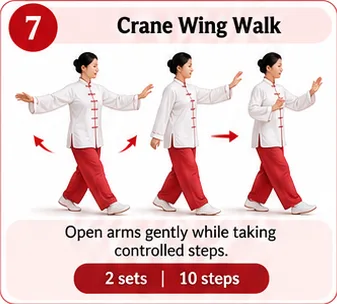
7. Crane Wing Walk
Purpose: Create a relaxed, open arm movement while walking forwards.
How to Perform:
- Stand upright with your arms relaxed by your sides.
- Raise one arm gently to the side as you step forward.
- Alternate the lifted arm with each step.
- Keep your movements smooth and controlled.
- Maintain a comfortable walking pace.
- Return your arms to a relaxed position between steps.
Recommended Practice: 2 sets | 10 steps each side
Beginner Tip: Avoid lifting your arms higher than feels comfortable. Keep your steps controlled and your upper body relaxed.
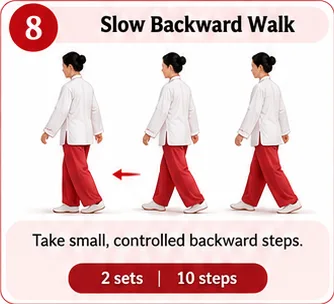
8. Slow Backward Walk
Purpose: Improve balance and awareness by walking backwards gently.
How to Perform:
- Stand facing forward in a clear area.
- Check that the path behind you is clear.
- Take a slow, deliberate step backwards.
- Shift your weight gradually onto the back foot.
- Continue taking small backward steps.
- Return to a forward position and repeat if appropriate.
Recommended Practice: 2 sets | 10 steps
Beginner Tip: Practice near a sturdy support and consider having someone nearby if you need assistance. Never take large or rushed backward steps.
9. Diagonal Flow Walk
Purpose: Practice coordination by stepping diagonally and rotating the body gently.
How to Perform:
- Stand facing forward with your feet comfortably apart.
- Step diagonally forward with one foot.
- Turn your torso slightly toward the direction of movement.
- Move your arms in the same diagonal direction.
- Continue the pattern for the recommended number of steps.
- Return to your original direction and repeat on the opposite side.
Recommended Practice: 2 sets | 10 steps each side
Beginner Tip: Keep the diagonal steps small and comfortable. Focus on coordinating your arms and legs rather than increasing your speed.

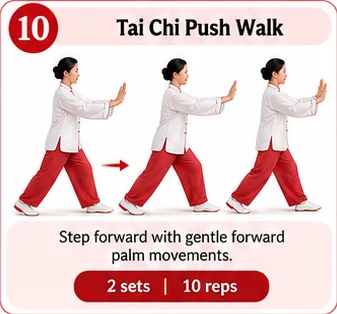
10. Tai Chi Push Walk
Purpose: Combine forward stepping with a gentle pushing motion.
How to Perform:
- Stand upright with your arms in front of your body.
- Take a slow step forward.
- Extend your arms forward in line with the movement.
- Shift your weight gradually onto the forward foot.
- Return your arms to the starting position as you step.
- Continue the pattern at a comfortable pace.
Recommended Practice: 2 sets | 10 steps
Beginner Tip: Keep your palms relaxed and avoid locking your elbows. Take small steps that feel natural.
11. Circle Step Walking
Purpose: Practice steady movement while walking in a wide circle.
How to Perform:
- Stand in a clear space.
- Take a small lateral step to the right.
- Continue stepping sideways in the same direction.
- Rotate gradually as you move around, keeping the circle wide.
- Complete the recommended number of circles.
- Repeat by stepping in the opposite direction.
Recommended Practice: 2 sets | 4 circles
Beginner Tip: Keep the circle wide enough to allow comfortable steps. Avoid sudden turns or quick changes in direction.

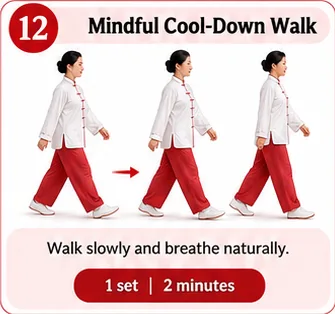
12. Mindful Cool-Down Walk
Purpose: Relax the body and slow the pace of movement after practice.
How to Perform:
- Stand upright and take a deep breath.
- Take slow, controlled steps forward.
- Lower your arms gently beside your body.
- Focus on relaxed walking and natural breathing.
- Reduce your pace as you continue.
- End in a calm standing position.
Recommended Practice: 2 sets | 20 steps
Beginner Tip: Avoid rushing the final movement. Keep your breathing natural and allow your walking pace to remain comfortable.
How to Structure a 10-Minute Practice Session
You do not have to perform all 12 movements every time you practice. Beginners can select a few exercises and combine them into a short, manageable session.
Here is one example using five movements from the chart.
| Time | Movement | Practice Details |
|---|---|---|
| 0–2 minutes | Tai Chi Warm-Up Walk | 2 sets | 20 steps |
| 2–4 minutes | Heel-to-Toe Balance Walk | 2 sets | 10 steps |
| 4–6 minutes | Tai Chi Knee Raise Walk | 2 sets | 30 seconds |
| 6–8 minutes | Cloud Hands Side Walk | 2 sets | 10 steps each side |
| 8–10 minutes | Mindful Cool-Down Walk | 2 sets | 20 steps |
A few practice reminders:
- Choose a suitable time of day and a comfortable space.
- Start with a short session (a few minutes) and increase gradually.
- Keep a sturdy chair or countertop nearby for support.
- Take breaks and slow down if you feel tired or short of breath.
- Use the movements as a gentle way to focus on your balance and posture.
If you need more time to complete the movements safely, allow your session to run longer than 10 minutes.
Get the Printable Chart
Want a convenient visual guide to follow during your practice?
Our Tai Chi Walking Exercises Printable PDF Chart includes all 12 illustrated movements, their names, short instructions, and recommended sets and repetitions in one easy-to-read A4 printable layout.
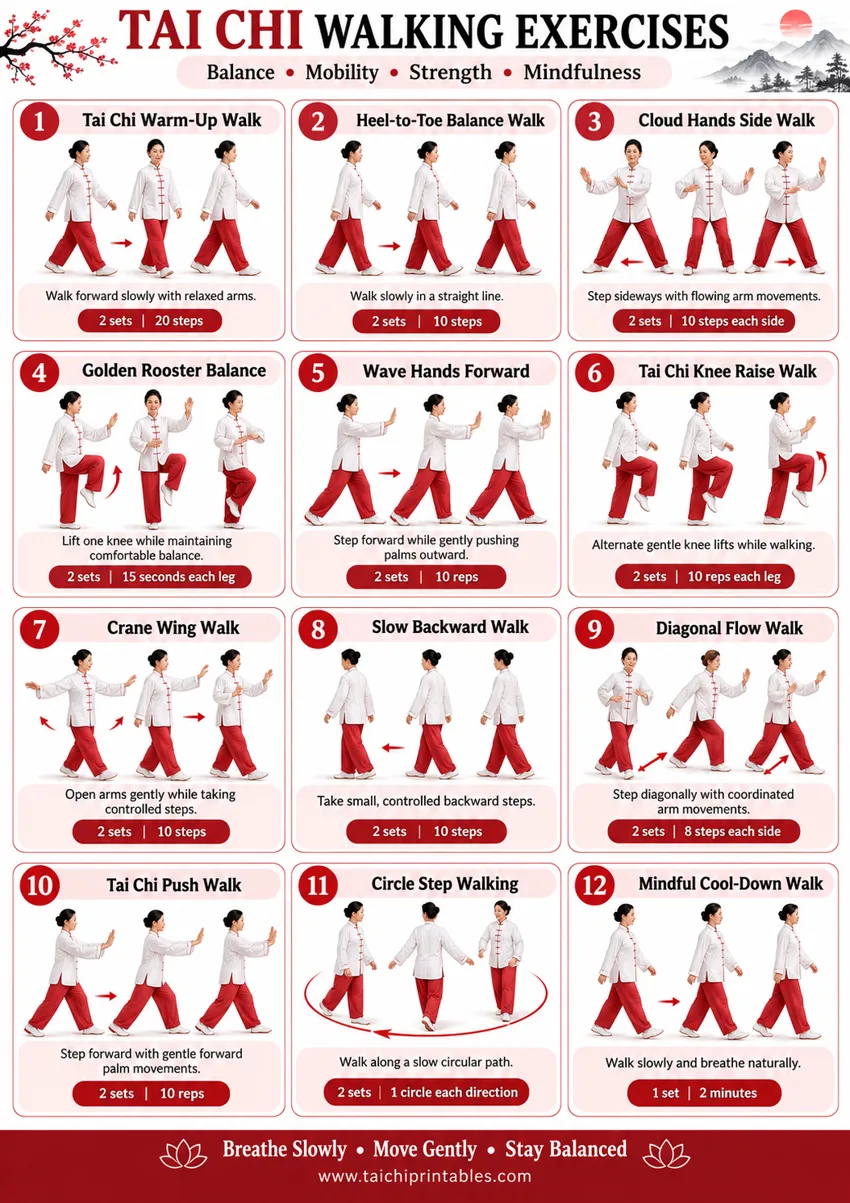
This printable is useful for seniors, beginners, and anyone who prefers having an exercise reference available while practicing.
Looking for a tai chi walking pdf download? This chart also works as a practical tai chi walking for beginners pdf — visit the printable chart page to see the available download.
Print the chart and keep it in a convenient place so you can refer to the illustrated movements during your routine.
Frequently Asked Questions (FAQs)
1. What is Tai Chi walking?
Tai Chi walking exercises combine slow, controlled walking with coordinated arm movements and deliberate stepping patterns. They encourage mindful attention to posture, movement, and breathing.
2. Is Tai Chi walking suitable for seniors?
Tai Chi walking offers gentle movement patterns that some older adults may find suitable for their activity preferences. Exercises should be adapted to individual mobility and comfort, with support available when needed.
3. Can beginners practice Tai Chi walking?
Yes. Beginners can start with simple movements such as Tai Chi Warm-Up Walk and Mindful Cool-Down Walk. Start slowly and introduce more coordinated movements as you become comfortable.
4. How often should I practice Tai Chi walking?
Practice frequency depends on your individual comfort, schedule, and physical abilities. Choose a manageable routine, allow time for rest, and consult a healthcare professional if you are unsure about an appropriate schedule.
5. Do I need special equipment for Tai Chi walking?
No special exercise equipment is required for these basic movements. You need a clear, flat walking area, comfortable non-slip shoes, and a sturdy chair or countertop nearby for support if necessary.
6. Where can I find the Tai Chi Walking Exercises Printable PDF Chart?
You can find the illustrated Tai Chi Walking Exercises Printable PDF Chart at Tai Chi Printables. It includes all 12 movements, instructions, and recommended repetitions in a convenient A4 format.
Final Thoughts
Tai Chi walking is an accessible way to explore slow, coordinated movements and mindful walking patterns. The 12 exercises in this guide introduce different movements, including forward walking, sideways stepping, knee raises, arm coordination, and circular walking.
If you are a beginner or an older adult, start with movements that feel comfortable and take your time learning each pattern. There is no need to rush or complete every exercise in one session.
Use the printable chart as a visual reference, practice in a safe environment, and make comfortable movement your priority.
Safety Note: This article is provided for general educational purposes only and is not medical advice. Consult your doctor before starting a new exercise routine, particularly if you are unsure whether these movements are suitable for you. Stop exercising if you experience pain or dizziness.