
If standing workouts do not feel comfortable or safe for you, you can still move every day — from a chair. Chair exercises are exactly what they sound like: gentle movements you do while seated, using the chair for support. This page gives you a complete starter routine of 12 seated exercises, plus a free printable chart you can download and keep by your chair.
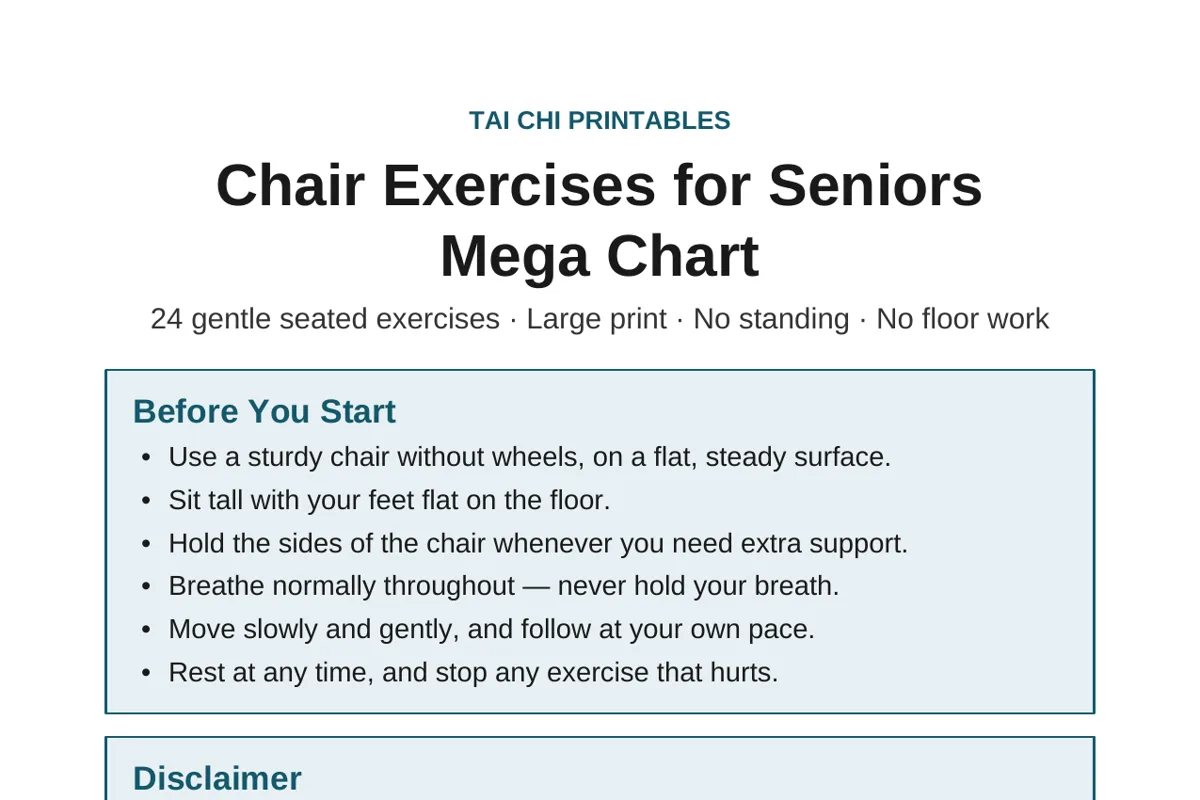
The routine below is taken from our Chair Exercises for Seniors — Mega Chart, a 6-page printable PDF with 24 gentle seated exercises in large print. The chart is free: it is priced at $0 in our shop, so you check out without paying anything, and the download links are yours to keep and reprint. Further down this page you will find the full routine in written form, the safety points to read first, and step-by-step instructions for getting the PDF.
What chair exercises are
A chair exercise is a movement performed while sitting in a sturdy chair. Your arms, shoulders, core and legs do the work while the chair supports you, so there is no standing, no floor work and no getting up and down. Movements are slow and controlled — raising an arm, straightening a leg, rolling your shoulders — and each one can be done for as few or as many repetitions as feels right on the day.
Public health guidance treats this kind of regular, gentle movement as worthwhile in its own right. The NHS physical activity guidelines for older adults say that adults aged 65 and over should aim to be physically active every day, even if it is just light activity, and should do activities that improve strength, balance and flexibility on at least two days a week. Seated exercise is one simple way to build more movement into a day at home, especially on days when walking or standing exercise is not a good option. Chair exercises are general exercise, though — not a treatment for any condition — and the safety section below matters.
What you need
Very little:
- A sturdy chair without wheels, placed on a flat, steady surface
- Comfortable clothing and a little clear space around the chair
- For the routine on this page, nothing else at all
Two exercises in the full 24-exercise chart use optional items you may already have at home: light water bottles for Bicep Curls (they can also be done with no weight at all) and a soft ball or folded cushion for the Inner-Thigh Squeeze. Everything else is just you and the chair.
Safety first: read this before you begin
These points come from the “Before You Start” page of the chart itself, and they apply to every exercise below:
- Use a sturdy chair without wheels, on a flat, steady surface.
- Sit tall with your feet flat on the floor.
- Hold the sides of the chair whenever you need extra support.
- Breathe normally throughout — never hold your breath.
- Move slowly and gently, and follow at your own pace.
- Rest at any time, and stop any exercise that hurts. Stop altogether if you feel pain or dizziness.
- Check with your doctor before starting a new exercise routine, especially if you have a health condition. The NHS gives the same advice: speak to a GP first if you have not exercised for some time, or if you have medical conditions or concerns.
A gentle seated routine: 12 exercises
Here is a starter routine built from 12 of the chart’s 24 exercises, kept in the chart’s own order: warm-up first, then arms and shoulders, core and back, legs and feet, and a cool-down to finish. Do fewer repetitions than listed whenever you need to — the numbers are a guide, not a test. If you would rather follow the routines on paper, all 24 exercises are in the free Chair Exercises for Seniors — Mega Chart (PDF).
Warm-up (seated)
1. Shoulder Rolls
Lift both shoulders up toward your ears, then roll them back and down in one smooth circle. After finishing one direction, reverse and roll them forward. Reps: 8–10 circles in each direction.
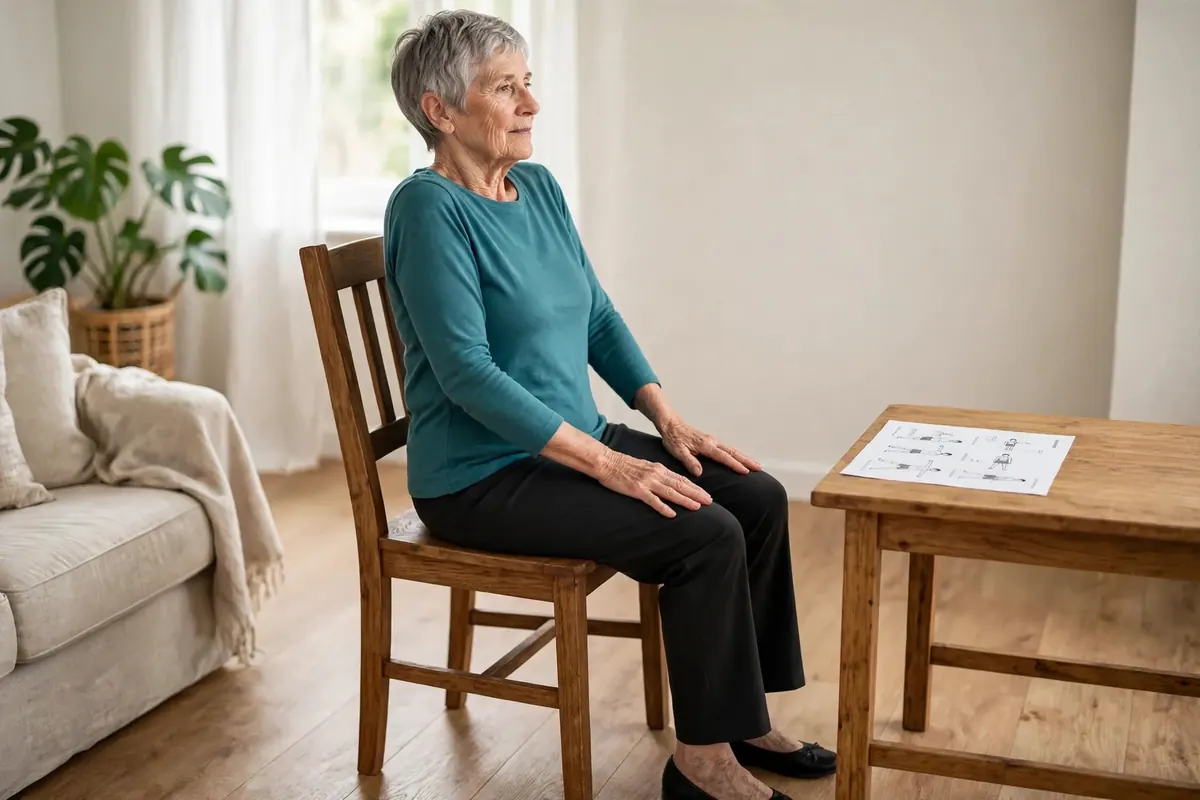
2. Neck Half-Circles
Let your chin drop gently toward your chest. Slowly roll your head toward one shoulder, back to the centre, then toward the other shoulder, tracing a small half-circle. Keep the movement small and slow, and do not roll your head all the way back. Reps: 4–5 half-circles to each side, moving slowly.

3. Seated Marching
Sit tall and hold the sides of the chair if you like. Gently lift one knee a few inches, lower it, then lift the other knee, as if marching slowly in place. Reps: 30–60 seconds, alternating knees.
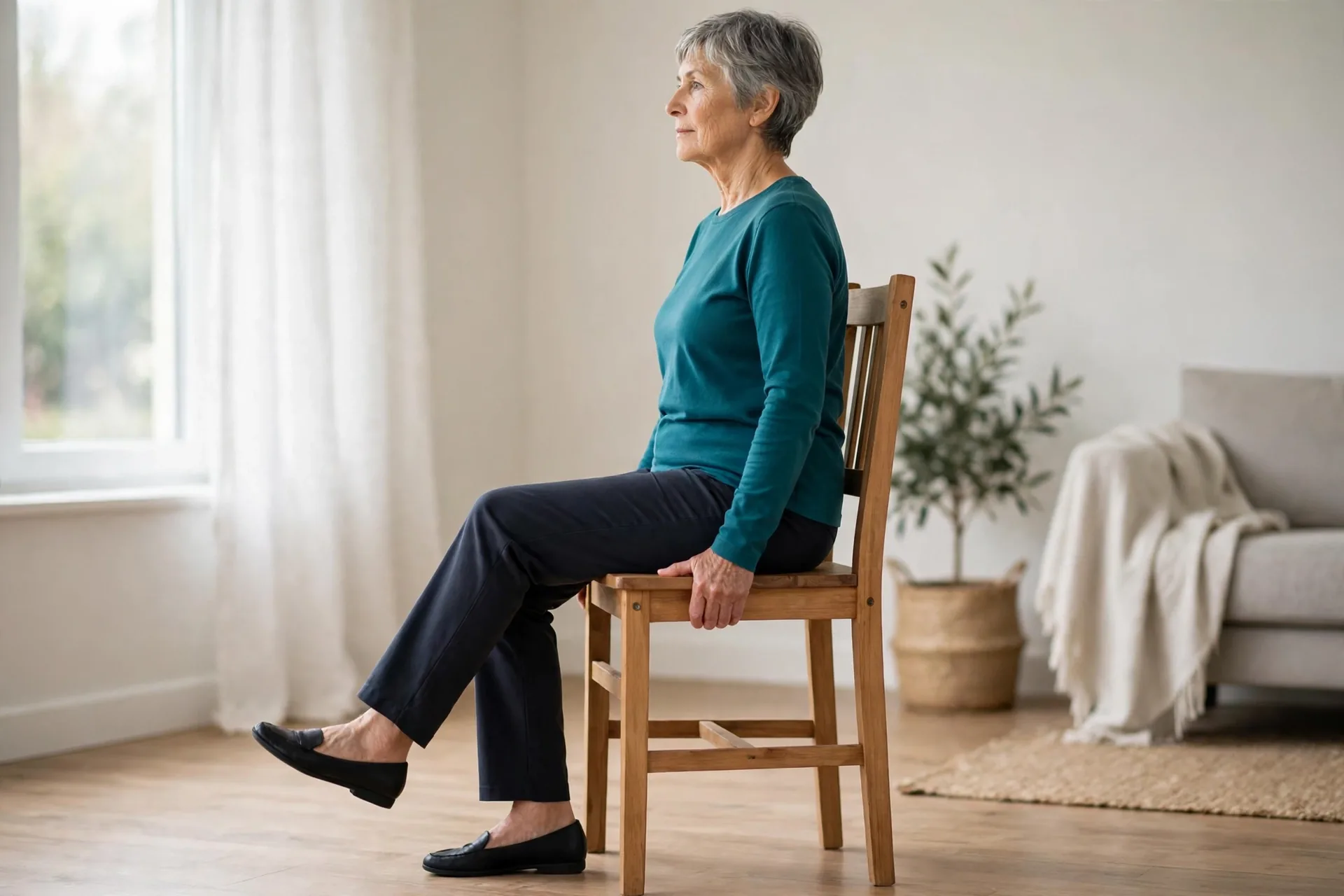
4. Ankle Circles
Lift one foot slightly off the floor, or keep your heel down and lift your toes. Draw slow circles with your toes, then repeat with the other foot. Reps: 8 circles in each direction, each foot.
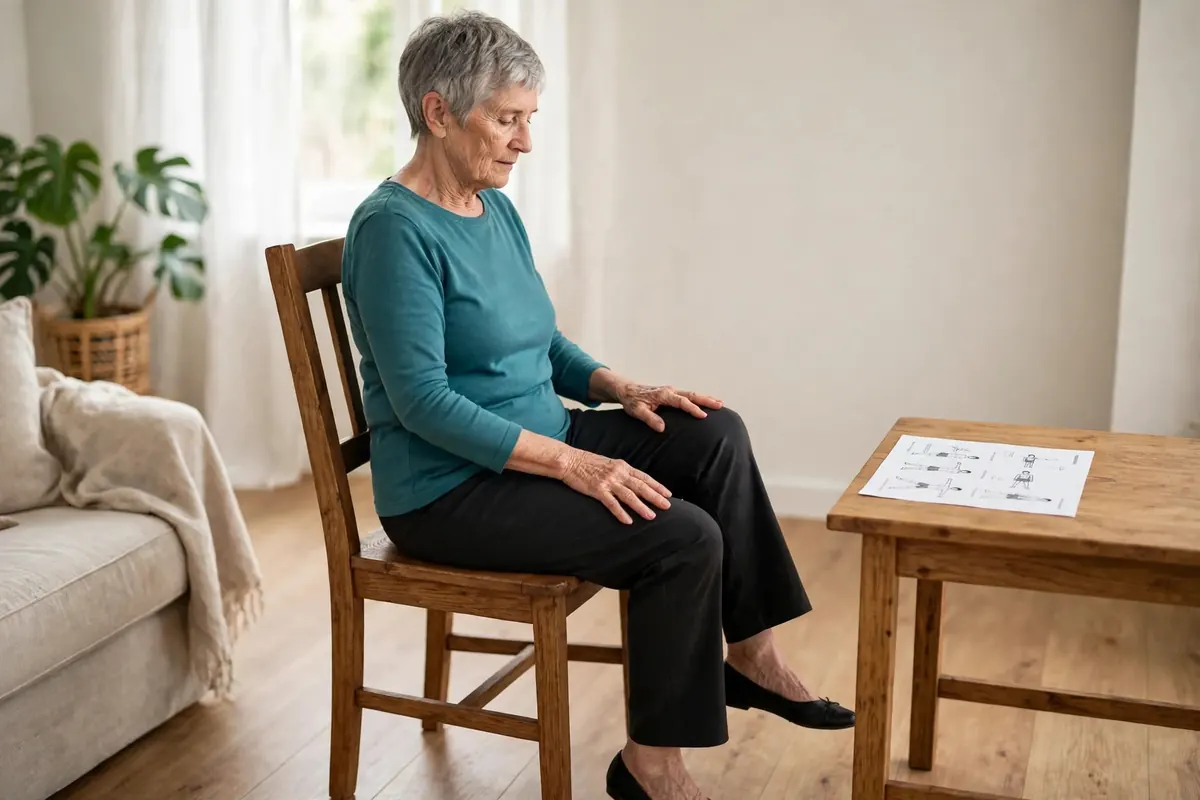
5. Wrist Circles & Finger Squeezes
Hold your hands in front of you and make slow circles with your wrists. Then open your hands wide, stretch your fingers out, and close them into gentle fists. Reps: 8 circles each way; open and close fists 10 times.

Arms and shoulders
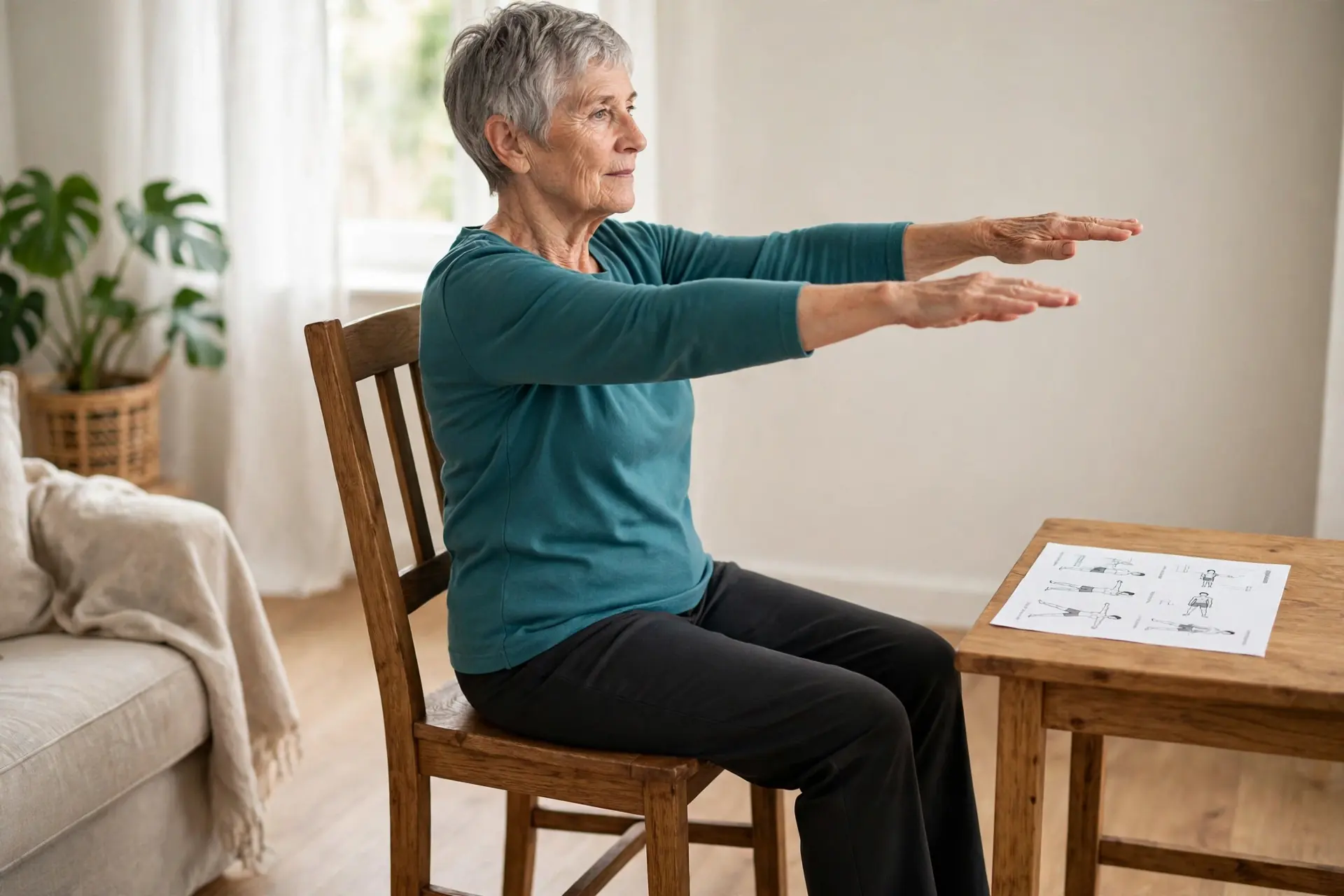
6. Seated Arm Raises
Start with your arms resting at your sides. Slowly raise both arms forward to shoulder height, then lower them back down with control. Reps: 8–10 reps.
7. Seated Rows
Sit tall with both arms reaching forward at shoulder height. Pull your elbows back as if rowing a boat, squeezing your shoulder blades together, then reach forward again. Reps: 10 reps.
Core and back
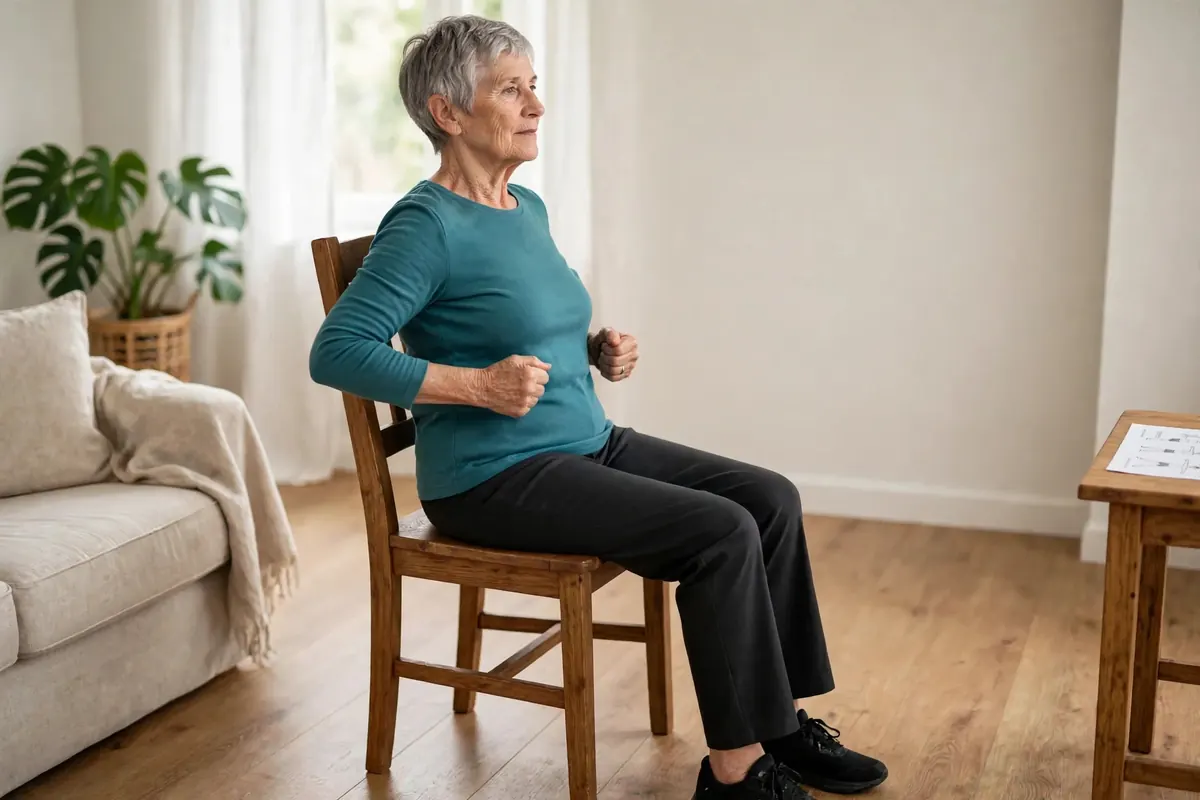
8. Seated Twists
Rest one hand on the chair arm for support. Turn gently from the waist to look over one shoulder, keeping your hips facing forward. Return to the centre, then repeat on the other side. Reps: 6–8 each side.

Legs and feet
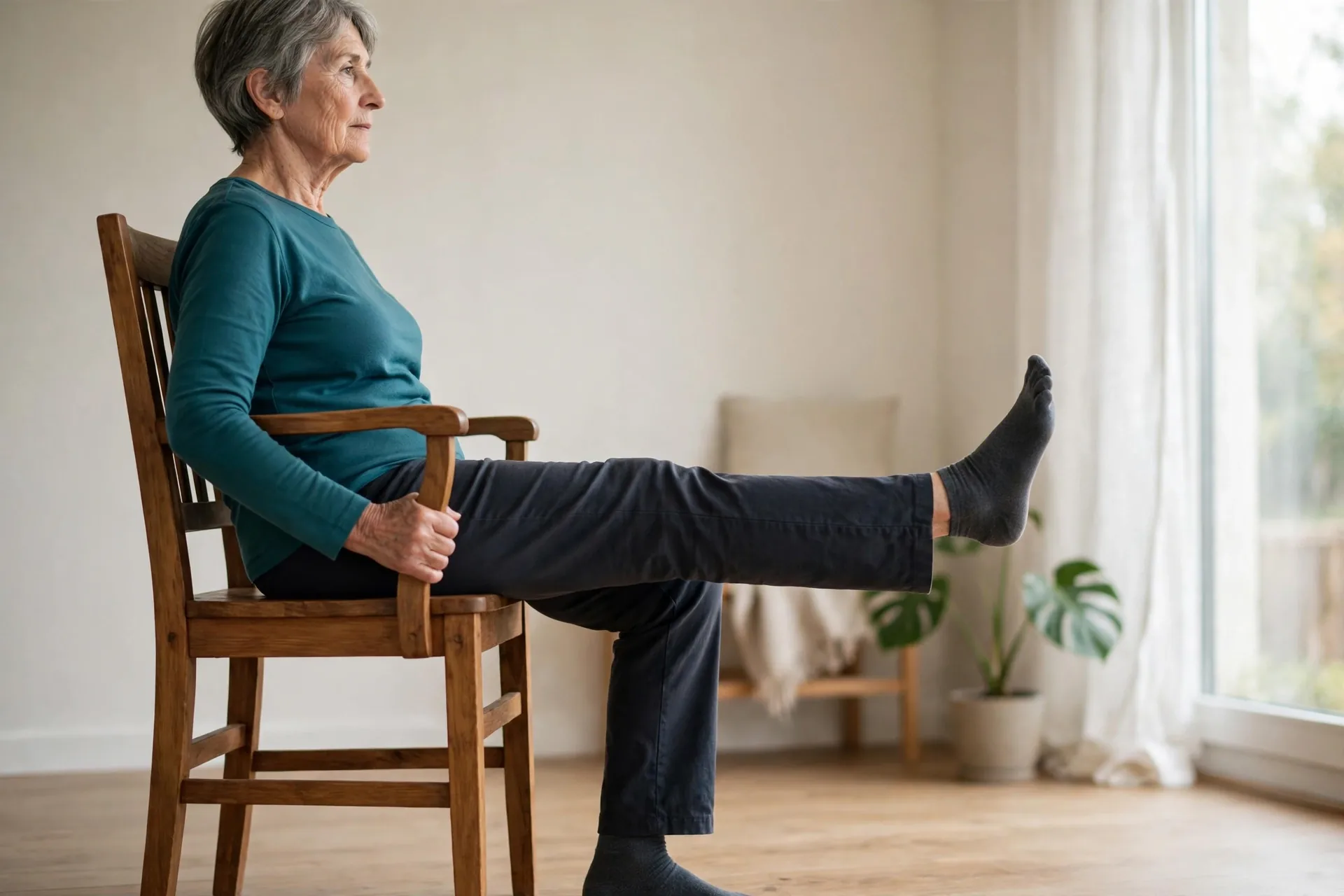
9. Leg Extensions
Hold the sides of the chair. Straighten one leg in front of you and flex your foot so your toes point up. Lower the foot slowly back down, then repeat with the other leg. Reps: 8–10 each side.
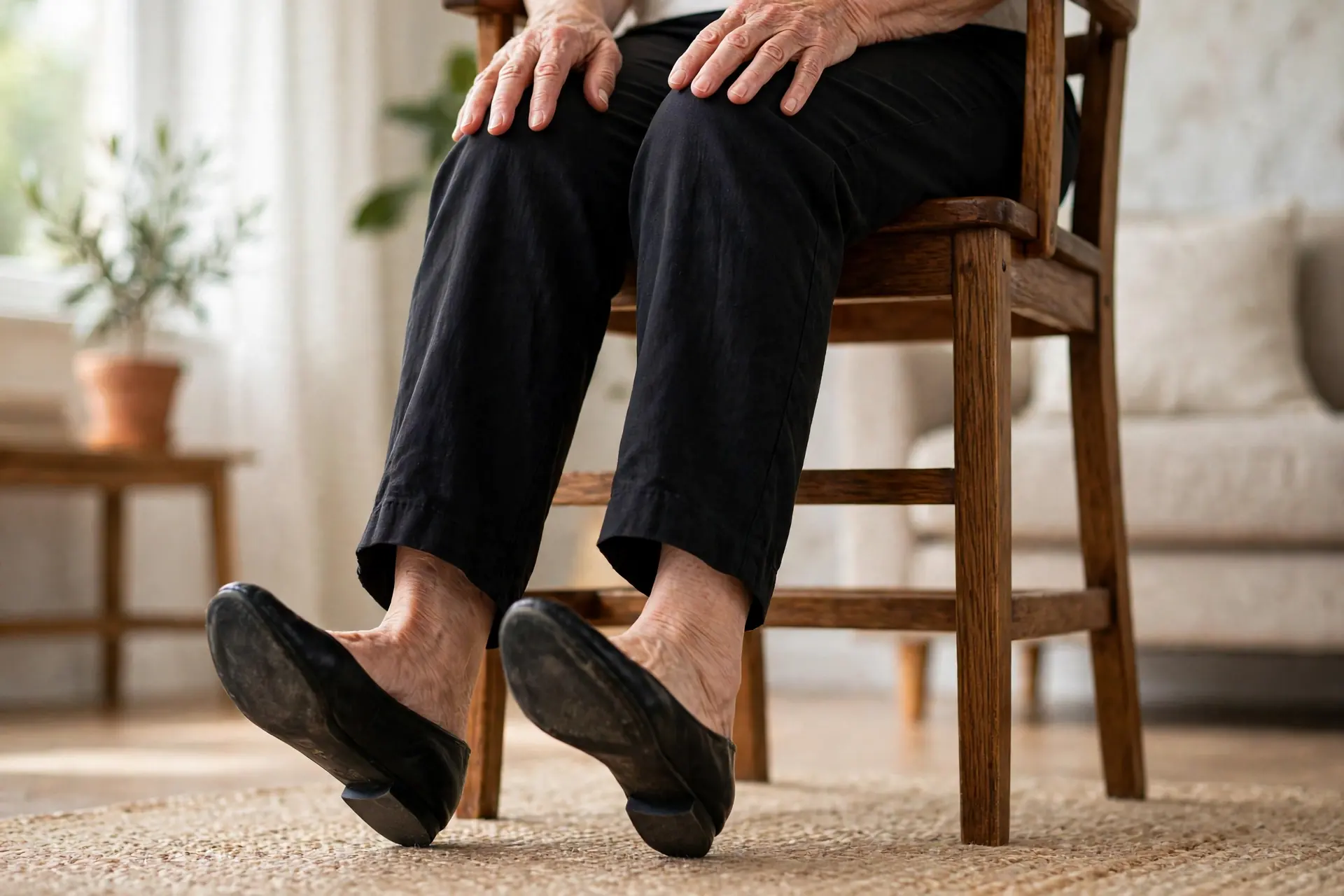
10. Heel Raises
With both feet flat on the floor, press through the balls of your feet to lift both heels as high as is comfortable. Lower them slowly back down. Reps: 12–15 reps.
Cool-down and stretch
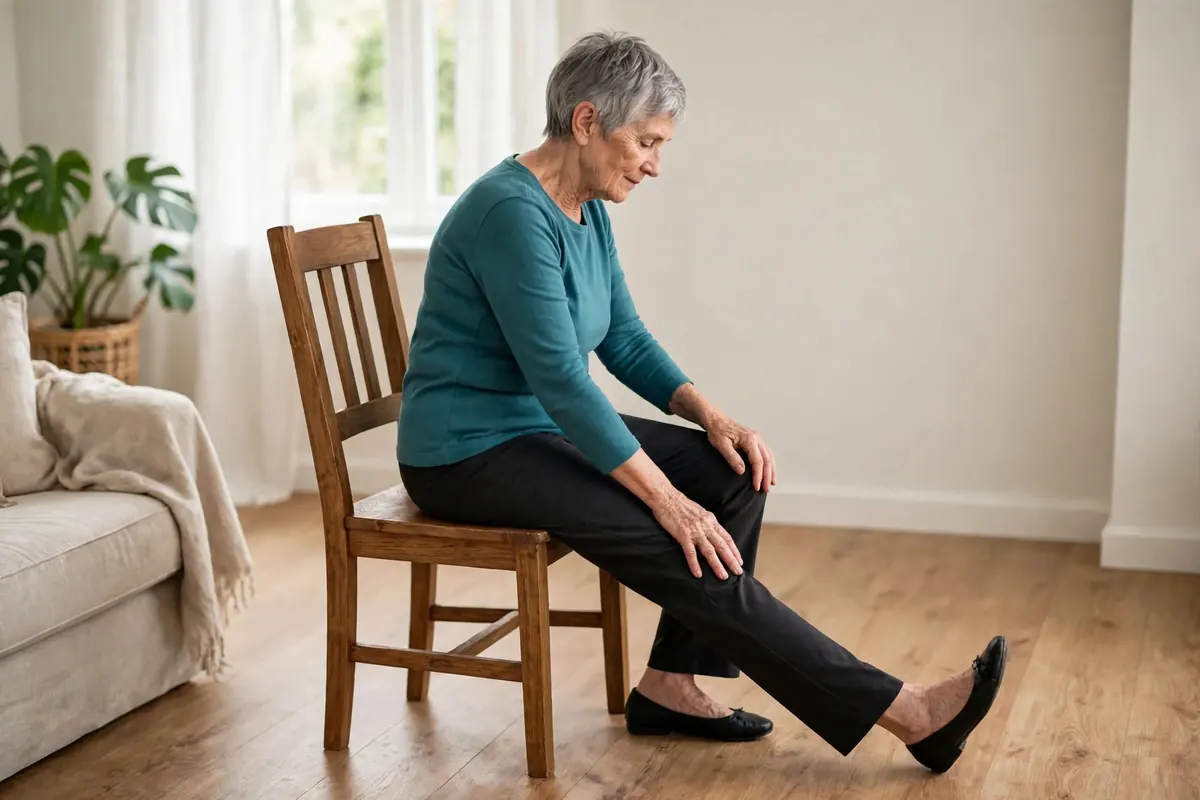
11. Seated Hamstring Stretch
Straighten one leg with your heel on the floor and toes pointing up, keeping the other foot flat. Sit tall and reach gently toward the raised foot until you feel a mild pull at the back of your thigh. Reps: hold 15–20 seconds each side.
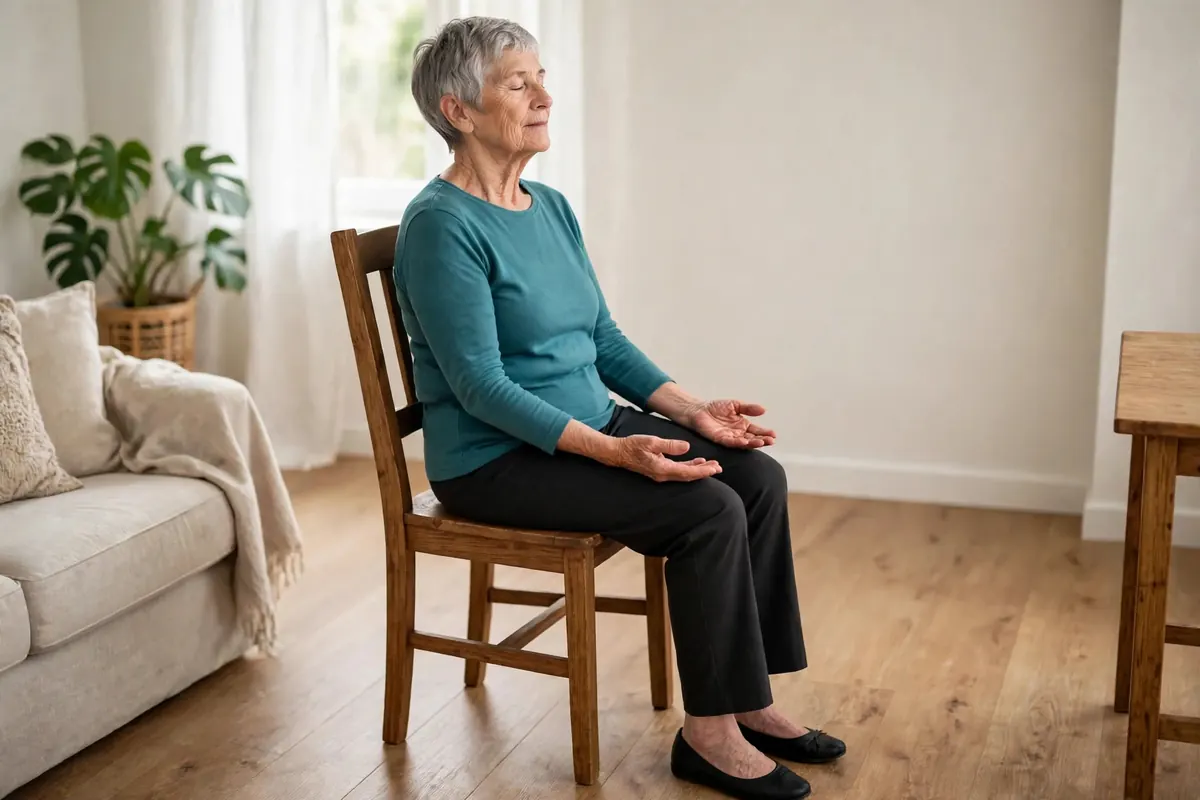
12. Deep Breathing Finish
Rest your hands on your belly. Breathe in slowly through your nose and feel your belly rise, then breathe out slowly through your mouth. Let your shoulders drop a little more with each breath out. Reps: 5 slow breaths.
That is the whole routine. Repeat it whenever it suits you, and always move at your own pace.
How to get the free chair exercises PDF
The full chart has all 24 exercises — the 12 above plus bicep curls, an overhead press, a chest opener, side bends, knee-to-chest, a posture hold, toe raises, seated leg lifts, heel slides, the inner-thigh squeeze, a figure-4 stretch and a shoulder stretch — arranged in the order you would do them, in large print across 6 pages. Here is how to download it:
- Go to the Chair Exercises for Seniors — Mega Chart product page and add it to your cart. The price is $0.
- Complete the checkout. No payment is needed — the total stays at $0.
- Your download links appear on the order confirmation page, and they are also sent in your confirmation email.
- Choose your paper size — you get both US Letter and A4 versions — download the file, and print it at home at 100% scale. The chart is black-and-white friendly, so it prints cleanly in greyscale too.
You can reprint the chart for your own personal use whenever you need a fresh copy — one for home, one to take with you.
What to try next
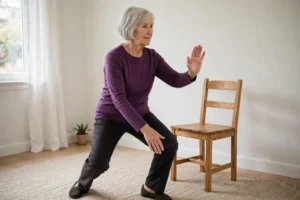
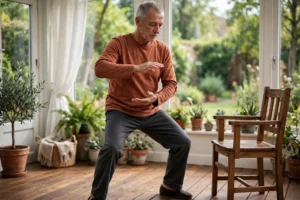
Once this seated routine feels familiar, there are two natural next steps. Our Balance Exercises for Seniors printable adds gentle balance work: six fully seated exercises, plus eight standing exercises you do only while holding a sturdy chair or countertop the whole time, with short daily routines and a weekly tracker. And if you enjoy slow, flowing seated movement rather than exercise sets, our chair tai chi guide walks you through a 10-minute seated tai chi routine, movement by movement.
Frequently asked questions
Is the chair exercises PDF really free?
Yes. The Chair Exercises for Seniors — Mega Chart is priced at $0 in our shop. You add it to your cart and check out without paying anything, and the download links appear on the confirmation page and in your confirmation email. There is no physical product — nothing will be shipped to you.
What do I receive when I download it?
Two PDF files of the same 24-exercise chart: one sized for US Letter paper and one for A4. Each version is 6 pages, in large print, and you can print either one — or keep the file on a phone or tablet instead.
How often should seniors do chair exercises?
There is no single right answer, and your doctor’s advice comes first. The NHS guidelines for older adults suggest being active every day, even lightly, with strength, balance and flexibility activities on at least two days a week. In practice, many people start with a few short sessions a week — this routine takes only a few minutes — and build up gradually as it feels comfortable. Rest whenever you need to, and stop if anything hurts.
Do I need to stand up, or get down on the floor, for any of these exercises?
No. Every exercise in this routine and in the full 24-exercise chart is performed sitting in your chair, including the warm-up and the cool-down stretches. That is the point of the chart: a complete routine with no standing and no floor work.
I have a health condition. Should I do these exercises?
Check with your doctor before starting, especially if you have a health condition, have not exercised for some time, or are unsure whether seated exercise is appropriate for you. This page and the chart are general educational information, not medical advice, and they are not a substitute for guidance from your own doctor or physiotherapist.
A final word
You do not need a gym, special equipment or the ability to stand for long stretches to move more each day. A sturdy chair, a few minutes and a printed routine you can follow at a glance are enough to start. Print the free chart, try the 12-exercise routine above, and go at whatever pace the day allows.
This article and the chart it describes are general educational information, not medical advice. Stop if you feel pain or dizziness, and check with your doctor before starting a new exercise routine, especially if you have a health condition.