

It is a particular, unsettling feeling: you are not dizzy, the room is not spinning, and yet you do not feel quite steady. You reach for the kitchen counter a little more often. Standing on one leg to put a sock on suddenly seems like a bad idea. If that sounds familiar, you are not imagining it.
This page cannot tell you why you feel unsteady — no article can. It explains what balance involves, when unsteadiness needs a prompt doctor’s check, and — for readers whose doctor is happy for them to exercise — shares gentle practice exercises. Practice material, not a treatment — and it comes after the doctor guidance, not instead of it.
See your doctor first. If you feel off balance — especially if the feeling is new, came on suddenly, is getting worse, or you have had a fall — talk to your doctor before starting any exercise routine. The NHS advises seeing a GP if “you’re worried about your balance or mobility” or “you’ve had a fall”. If you fall and cannot get up, or may have injured your head, back, neck or hip, get emergency help straight away.
Why this page cannot tell you the cause
Steadiness can change as we get older, and unsteadiness has no single cause. In general terms, the NHS page on falls lists what can sit behind falls and unsteadiness in older people: muscles getting weaker with age; health conditions that affect mobility or balance; low blood pressure; side effects of some medicines; and problems with eyesight or hearing — a range of possibilities, not a checklist to diagnose yourself with.
This matters practically: some causes on that list are things a doctor can check and address — reviewing your medicines, testing your eyesight, checking your blood pressure. The CDC’s older adult falls pages make the same basic point: falls among adults 65 and over are a recognised health concern, not an inevitable part of ageing. Feeling unsteady is worth getting checked — not something to worry about alone, or to try to fix with an exercise chart first.
What steadiness involves, in plain language
Keeping your balance is something your body does constantly, without you thinking about it — standing still, walking across a room, turning your head while you move. It depends on several things working together — three of which the NHS highlights on its falls page:
- Your muscles. Your legs and trunk make the small, constant adjustments that keep you upright; the NHS notes that muscles getting weaker with age is one common contributor to falls.
- Your eyesight. Your eyes tell your brain where you are in the room. The NHS lists eyesight problems among the possible causes, and recommends regular eye tests.
- Your ears. Your ears play a part in balance as well as hearing: in the NHS’s words, “ear problems can affect your balance”.
A doctor can look at the whole picture: the NHS explains that a GP will check your balance by watching you get up and move around, may review your medicines, and may refer you to a specialist falls service for checks such as muscle weakness or eyesight problems, and strength and balance training. Home exercise sits alongside that assessment, not instead of it.
When to get checked promptly
Some situations should not wait. Based on NHS guidance, speak to your doctor promptly — or get urgent help — if:
- You have had a fall — the NHS advises seeing a GP after any fall, even one you got up from feeling fine.
- The unsteady feeling is new, came on suddenly, or is getting worse.
- You are worried about your balance or mobility — itself an NHS-listed reason to see a GP; no fall needed first.
- You suspect your medicines might be part of it — raise this with your GP or pharmacist rather than stopping anything yourself.
- You fall and cannot get up, or may have injured your head, back, neck or hip: get emergency help straight away.
If any of those apply to you today, the exercises below can wait until you have been checked.
Gentle balance practice: seated first, standing only while holding on
For readers whose doctor is happy for them to exercise, gentle practice rehearses the skills steadiness uses — shifting your weight, holding a narrower stance, moving slowly and in control — with support within reach. It is practice, not a remedy: this page makes no claim that these exercises will change anyone’s symptoms, prevent falls, or improve a medical condition.
The twelve exercises below are taken from our Balance Exercises for Seniors — Printable Chart & Guide. The first five are fully seated. The last seven are standing exercises from the guide’s supported-standing section, each done while holding a sturdy chair back or countertop for the whole exercise. If standing feels unsteady today, do the seated part only: the guide itself says Part 1 is a complete seated set on its own.
Seated practice
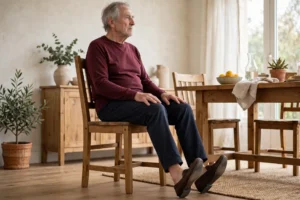
1. Seated Torso Turns
Sit tall with your feet flat and your hands resting in your lap. Turn your upper body gently to one side, hold for a moment, return to the centre, then turn to the other side. Keep your hips facing forward. Reps: 6–8 each side.

2. Seated Heel-Toe Taps
Sit tall with your feet flat. Slide one foot forward and tap your heel on the floor in front of you, then tap your toe in the same spot. Bring the foot back and repeat with the other foot. Reps: 8–10 each foot.

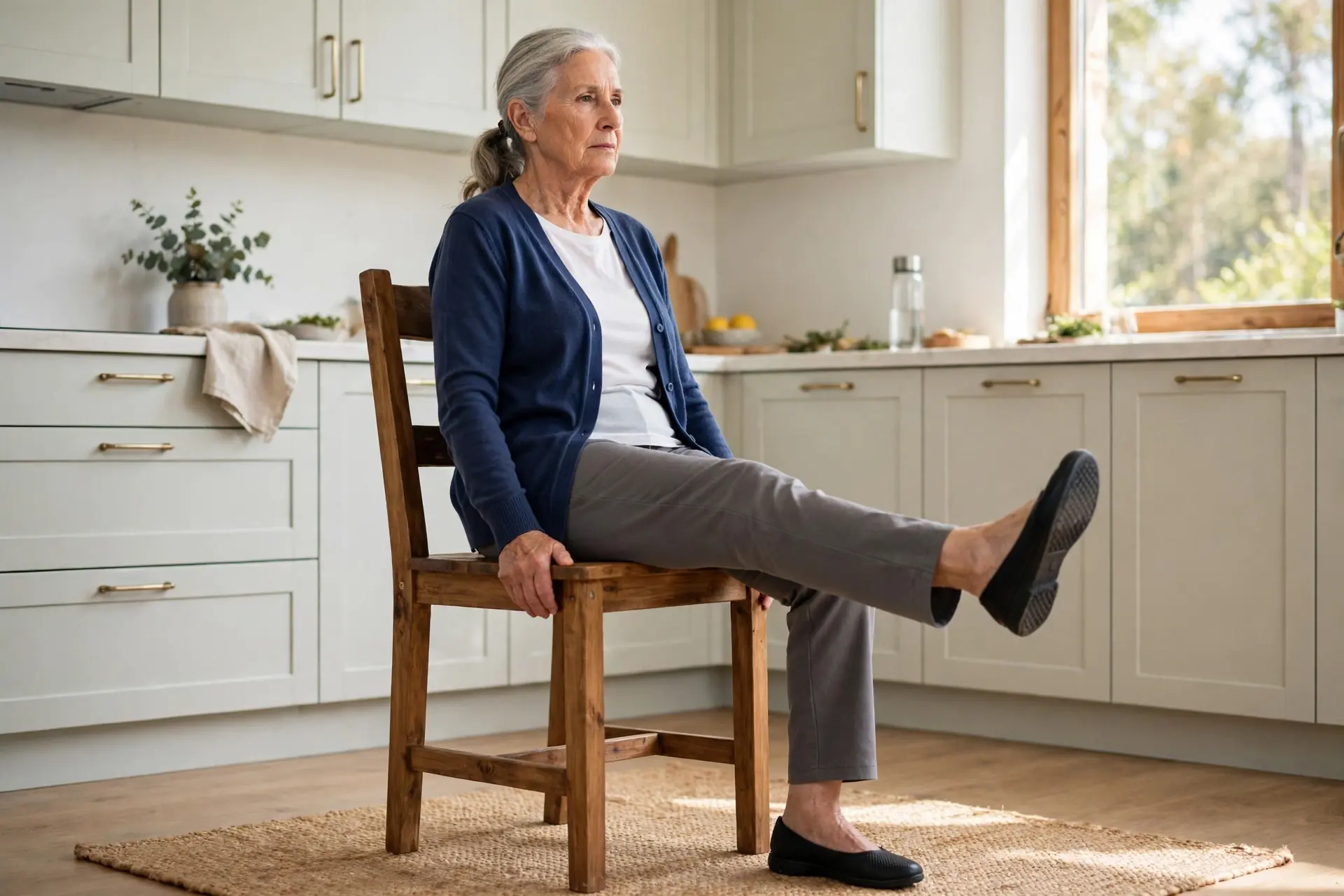
3. Seated Leg Extension with Hold
Hold the sides of the chair. Straighten one leg in front of you, hold it steady, then lower the foot slowly back to the floor. Repeat with the other leg. Reps: hold 3–5 seconds, 6–8 each side.
4. Seated Weight Shifts
Sit tall with both feet flat and your hands resting on your thighs. Slowly shift your weight over to one side, then back through the centre to the other side, moving gently and without rushing. Reps: 10–12 shifts.
5. Seated Reach and Return
Sit tall with your feet flat. Reach one hand slowly toward the opposite knee, then return to sitting tall. Repeat with the other hand reaching toward the other knee. Reps: 6 each side.

Supported standing practice — hold on the whole time
6. Heel Raises
Stand behind a sturdy chair and hold the chair back with both hands. Press through the balls of your feet to lift both heels as high as is comfortable, then lower them slowly back down. Reps: 12–15 reps.
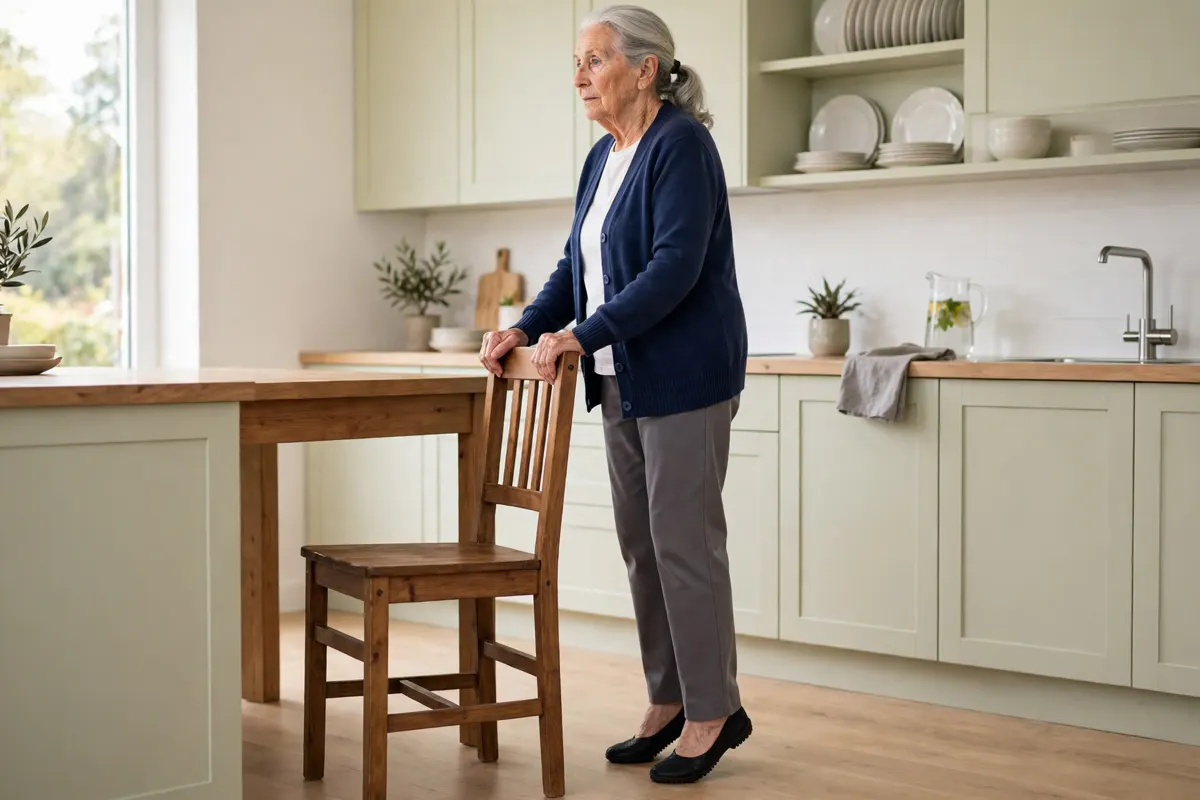
7. Toe Raises
Stand holding the chair back with both hands, with your heels on the floor. Lift the fronts of both feet, pulling your toes up toward your shins, then lower them slowly back down. Reps: 12–15 reps.
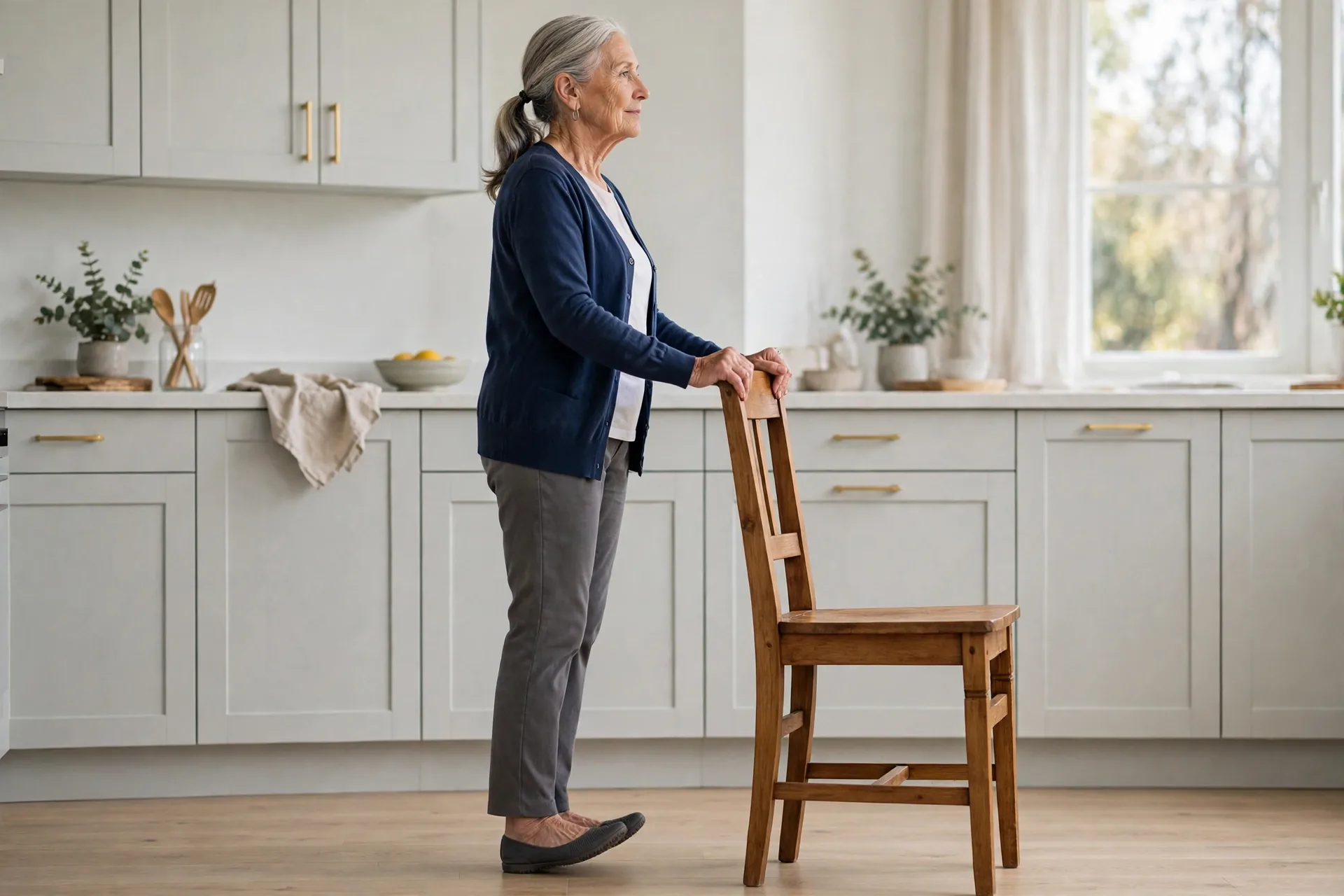
8. Side Leg Raises
Stand behind the chair and hold the chair back with both hands. Lift one leg out to the side a few inches, keeping your toes pointing forward. Lower it slowly, finish the set, then repeat with the other leg. Reps: 8–10 each side.

9. Standing Marching
Stand behind the chair and hold the chair back with both hands. March in place, lifting one knee a few inches at a time, keeping hold of the chair the whole time. Reps: 30–60 seconds.
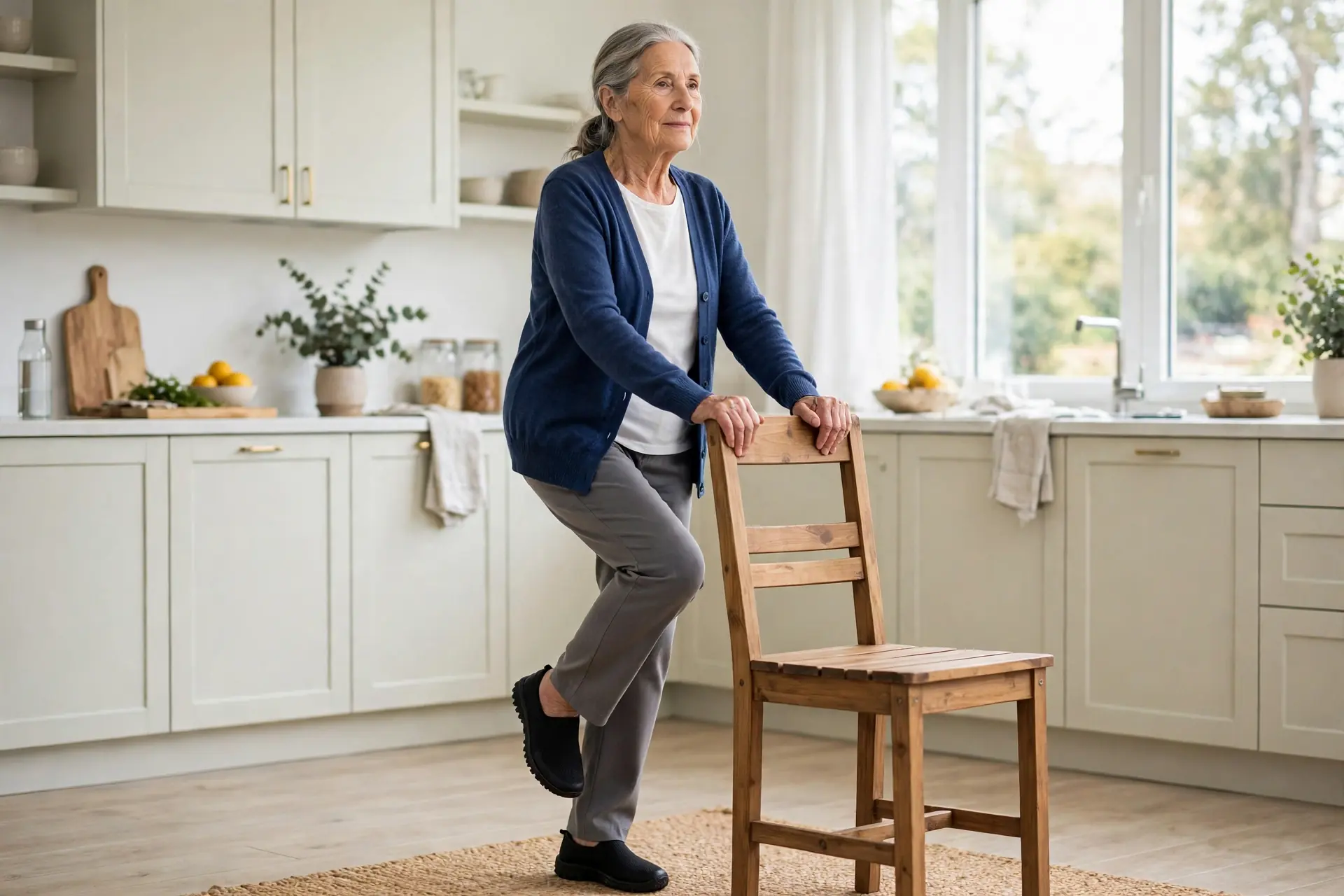
10. Heel-to-Toe Stance Hold
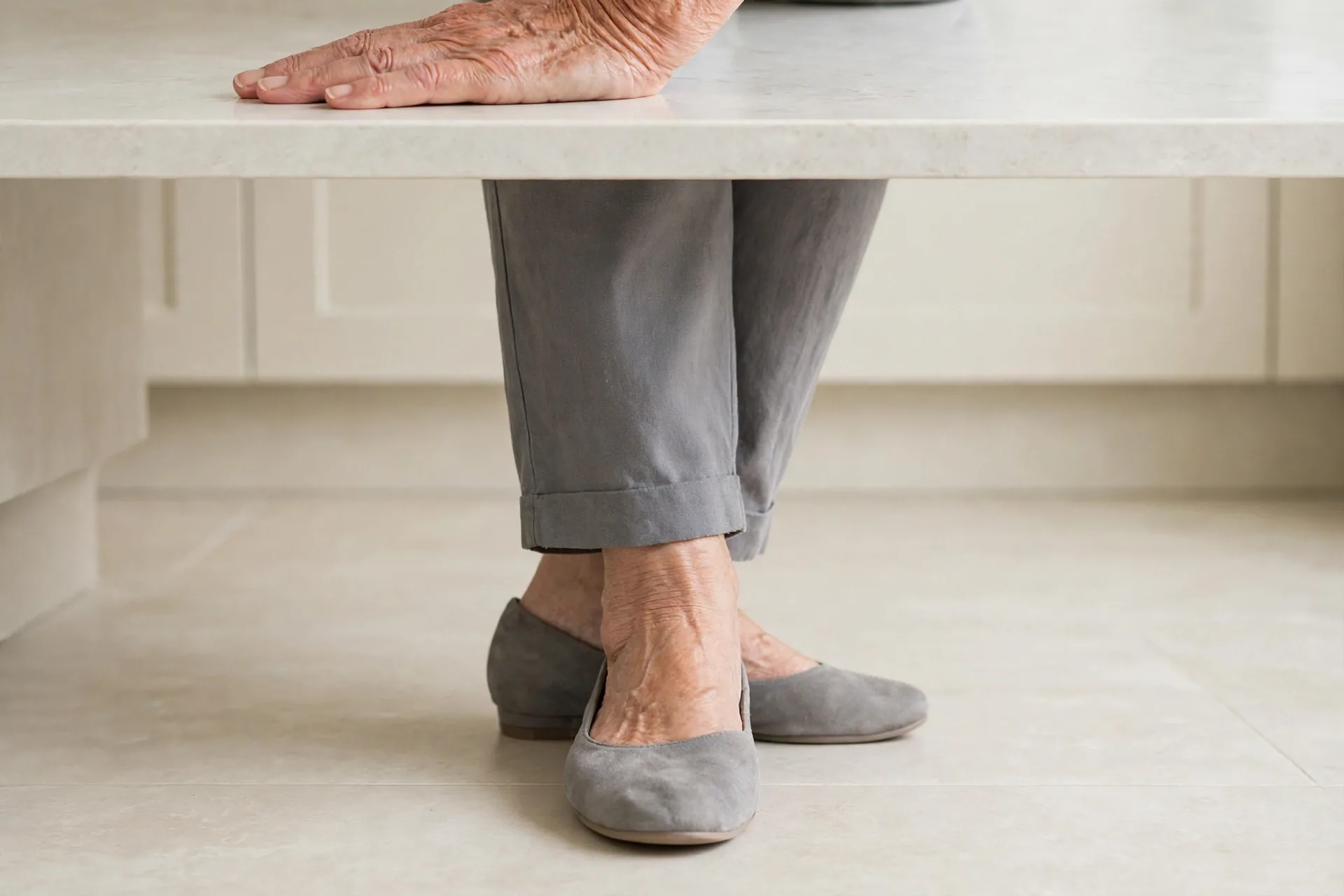
Stand behind the chair or beside a counter, holding your support with one or both hands. Place one foot directly in front of the other, heel touching toes, and hold the position. Then swap feet and hold again. Reps: hold 10–20 seconds, then swap feet.
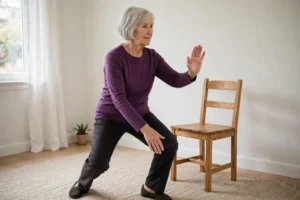
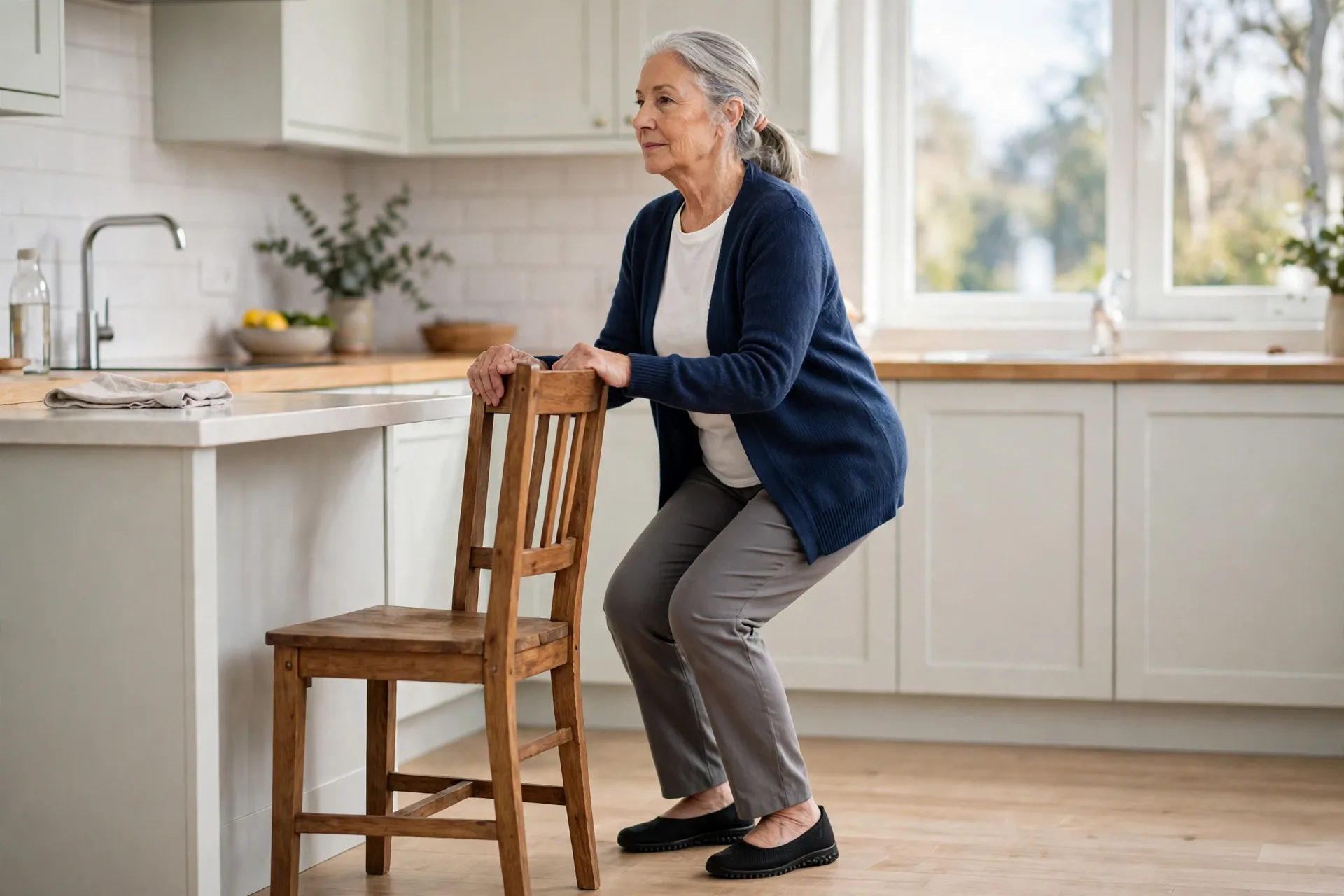
11. Mini Knee Bends
Stand behind the chair and hold the chair back with both hands, feet hip-width apart. Bend your knees a little, keeping them pointing over your toes, then straighten up slowly. Keep the bend small. Reps: 8–10 reps.
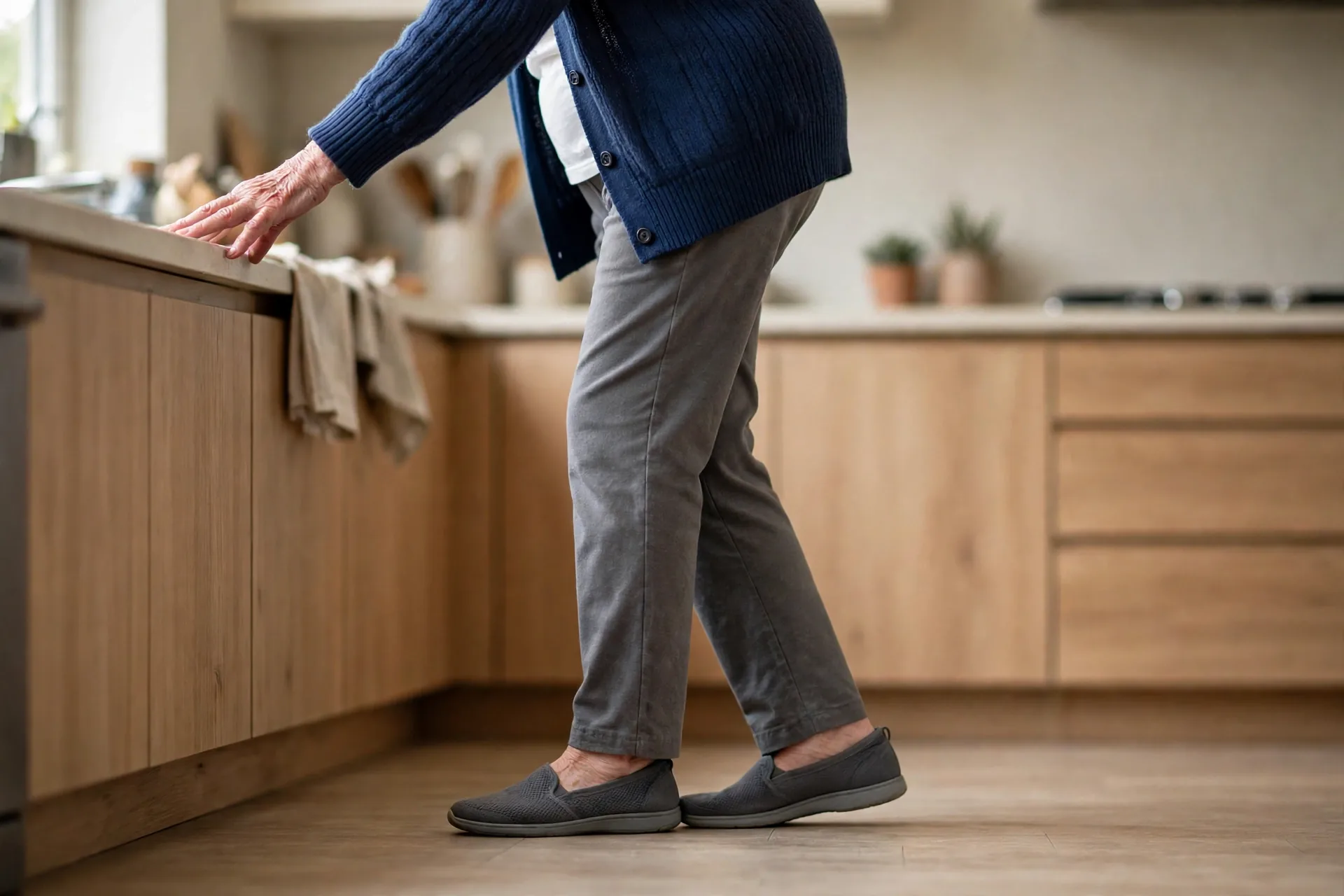
12. Tandem Walk Along the Counter
Stand beside a counter and hold it with one hand — keep hold for the whole exercise. Take slow heel-to-toe steps sideways along the counter, the heel of one foot touching the toes of the other, then step back the other way, still holding the counter. Reps: 4–6 steps each way.
How the printable guide structures the practice
The exercises above are twelve of the eighteen items in the Balance Exercises for Seniors — Printable Chart & Guide: six seated exercises in Part 1, eight supported-standing exercises in Part 2, and a daily practice guide in Part 3. Part 3 arranges them into Morning (about five minutes), Midday and Evening routines, plus a weekly tracker — a seven-day grid with a box for each routine, to tick off as you finish. The tracker’s instruction sets the tone: “Aim for gentle, regular practice — there is no need to do every session, every day.”
The guide is a large-print printable PDF, priced at $0 in our shop, in US Letter and A4 versions. For leg strength alongside this, see our leg exercises for seniors routine. For a complete seated routine for the whole body, the free chair exercises article sets out twelve gentle exercises with a free printable chart. Neither replaces your doctor’s advice about your own balance.
Safety first: the guide’s own rules
These points come from the “Before You Start” page of the guide itself, and they apply to every exercise above:
- For every standing exercise, hold a sturdy chair back or a countertop for support — keep hold for the whole exercise.
- Keep the floor around you clear of loose rugs, cords and clutter.
- Wear flat, non-slip shoes.
- Have someone nearby if you feel unsteady.
- Part 1 is fully seated. If standing feels unsteady, do Part 1 only.
- Move slowly and gently, breathe normally, and rest at any time.
- Stop straight away if you feel dizzy or in pain.
- Check with your doctor before starting a new exercise routine, especially if you have a health condition or a history of falls.
Frequently asked questions
Why do I feel off balance but not dizzy — what is causing it?
This page cannot answer that for you, and you should be wary of any page that claims it can. The NHS lists possible contributors in general terms (covered above), but only a doctor who can examine you, review your medicines and hear your history can work out what applies in your case.
Will these exercises fix my balance?
No honest page can promise that, and this one does not. These exercises are gentle practice material — a structured way to rehearse weight shifting, stance and slow controlled movement, seated or holding solid support. They are not a treatment, and this page makes no claim that they prevent falls or improve any condition. Public-health guidance does recommend regular strength and balance activity for older adults — the NHS falls page advises “activities that improve strength and balance at least twice a week” — but that is general guidance, not a guarantee, and your doctor’s advice comes first.
Do I have to stand up to practise?
No. The seated exercises on this page — and all six in Part 1 of the guide — are fully seated: a complete set on their own. The standing exercises are optional, and only ever done while holding a sturdy chair back or countertop for the whole exercise. If standing feels unsteady today, stay seated.
What should I do if I feel dizzy or more unsteady while exercising?
Stop straight away and sit down — that is the guide’s own rule: “Stop straight away if you feel dizzy or in pain.” Do not push through it, or just try again the next day. New or increased dizziness during exercise is exactly the kind of change to tell your doctor about promptly — the routine can wait.
A final word
Feeling less steady than you used to is unsettling, and it deserves a proper answer — one that starts with your doctor, who can look at the whole picture: medicines, eyesight and hearing, strength, history. With that guidance in place, gentle supported practice is a sensible companion — seated moves any day; standing moves only with a firm hold on solid support. Start with the conversation. The practice can follow.
This article and the guide it describes are general educational information, not medical advice. They do not diagnose or treat any condition. Stop if you feel pain or dizziness, and check with your doctor before starting a new exercise routine, especially if you have a health condition or a history of falls.