
If you have not exercised in years — or if most exercise routines look like they were written for somebody else — the hard part is not the exercising. It is finding a starting point that does not ask too much on day one. So this page keeps that starting point as small as it honestly can be: twelve seated moves, picked as the easiest ones from a 24-exercise chair chart, with permission to do fewer of everything, rest whenever you like, and stop after two moves if that is what the day allows.
Nothing here involves standing, getting down on the floor, or equipment. You stay in your chair throughout, and every movement is small: rolling your shoulders, circling your ankles, lifting your heels while your feet stay on the floor. And under several of the moves there is a “make it easier” line — shrinking a move down still counts as doing it.
What “easy” means on this page
Easy is not a watered-down version of a real routine. It is a different decision about where to begin, resting on four rules taken from the chart itself:
- Smaller numbers are fine. Every repetition count below is a guide, not a test. Doing half the listed number is a complete effort, not a failed one.
- Rest is part of the routine. The chart’s own instruction is to rest at any time. Resting between moves — or between the two directions of one move — is built in.
- Two-move days count. Some days you will do all twelve moves. Some days you will do two and make a cup of tea. Both days count as starting.
- Small movements are real movements. The NHS physical activity guidelines for older adults say adults aged 65 and over should aim to be active every day, “even if it’s just light activity”, and to break up long periods of sitting with some movement. This routine is one way of doing exactly that.
What you need
- A sturdy chair without wheels, placed on a flat, steady surface
- Comfortable clothing — whatever you are already wearing is fine
- Nothing else: no weights, no bands, no ball, no mat
Safety first: read this before you begin
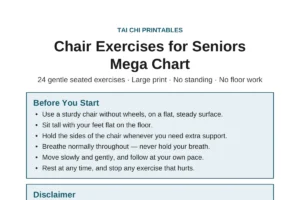
These points come from the “Before You Start” page of the chart itself:
- Use a sturdy chair without wheels, on a flat, steady surface.
- Sit tall with your feet flat on the floor.
- Hold the sides of the chair whenever you need extra support.
- Breathe normally throughout — never hold your breath.
- Move slowly and gently, and follow at your own pace.
- Rest at any time, and stop any exercise that hurts. Stop altogether if you feel pain or dizziness.
- Check with your doctor before starting a new exercise routine, especially if you have a health condition. The NHS gives the same advice: speak to a GP first if you have not exercised for some time, or if you have medical conditions or concerns.
The routine at a glance
| Move | What you do | Reps |
|---|---|---|
| 1. Shoulder Rolls | Roll both shoulders in slow circles | 8–10 circles in each direction |
| 2. Neck Half-Circles | Roll your head gently toward each shoulder | 4–5 half-circles to each side |
| 3. Seated Marching | Lift one knee, then the other, marching in place | 30–60 seconds, alternating knees |
| 4. Ankle Circles | Draw slow circles with your toes — heel can stay down | 8 circles in each direction, each foot |
| 5. Wrist Circles & Finger Squeezes | Circle your wrists, then open and close your hands | 8 circles each way; open and close 10 times |
| 6. Seated Arm Raises | Raise both arms forward to shoulder height | 8–10 reps |
| 7. Chest Opener | Clasp your hands behind your back and open your chest | Hold 10–15 seconds, repeat 3 times |
| 8. Heel Raises | Lift both heels while the balls of your feet stay down | 12–15 reps |
| 9. Toe Raises | Lift the fronts of both feet, heels staying down | 12–15 reps |
| 10. Heel Slides | Slide one heel forward until the leg is nearly straight, then back | 8 each side |
| 11. Shoulder Stretch | Bring one arm across your chest and press it gently closer | Hold 15 seconds each side |
| 12. Deep Breathing Finish | Slow breathing, hands resting on your belly | 5 slow breaths |
The 12 moves, one by one
1. Shoulder Rolls
Lift both shoulders up toward your ears, then roll them back and down in one smooth circle. After finishing one direction, reverse and roll them forward. Reps: 8–10 circles in each direction.
Make it easier: make the circles smaller and do fewer of them, and rest between the two directions if you like.
2. Neck Half-Circles
Drop your chin gently toward your chest, then roll your head slowly toward one shoulder, back through the centre, and toward the other shoulder. Do not roll your head all the way back. Reps: 4–5 half-circles to each side, moving slowly.

3. Seated Marching
Sit tall, holding the sides of your chair if you like. Lift one knee a few inches, lower it, then lift the other, marching in place. Reps: 30–60 seconds, alternating knees.

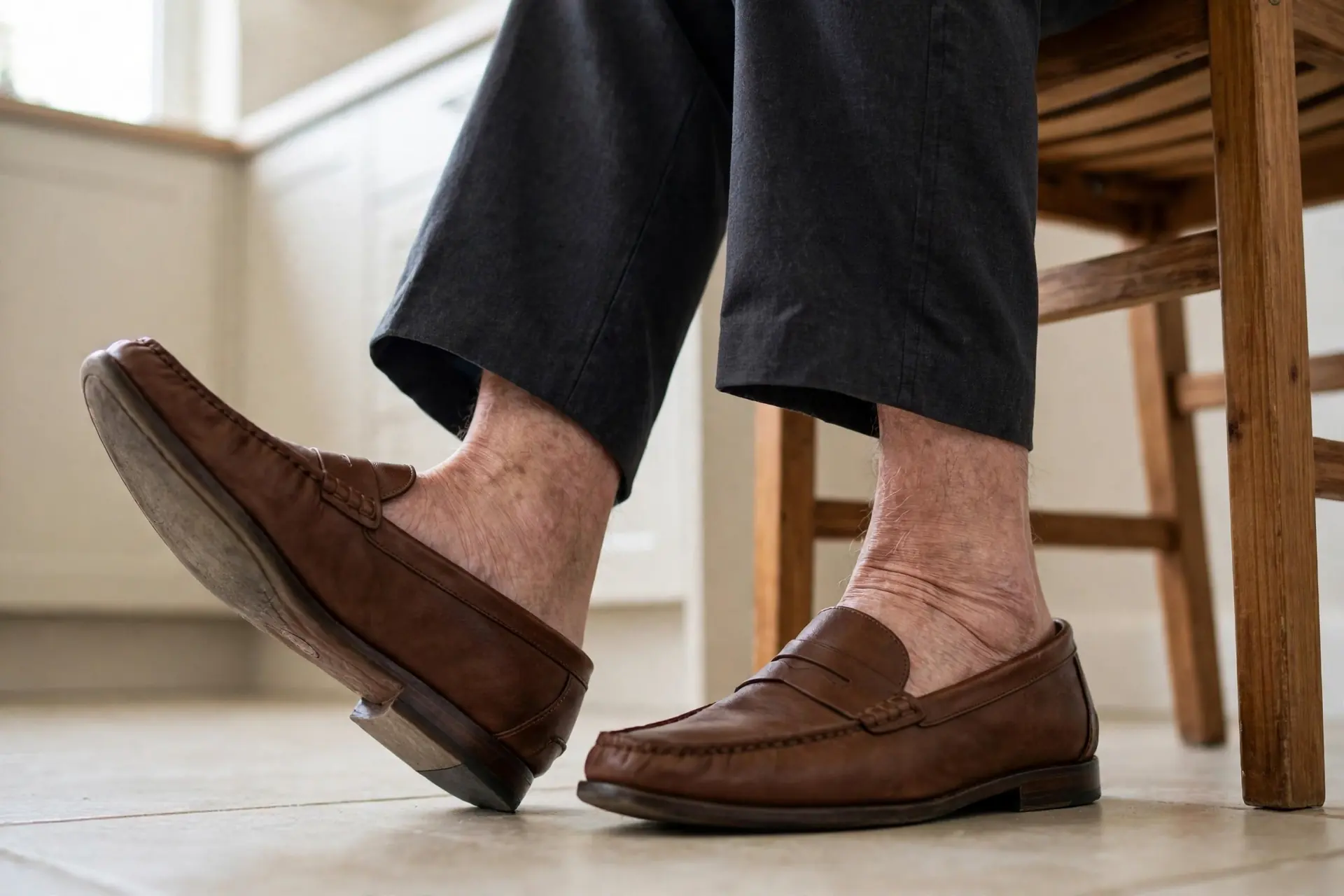
4. Ankle Circles
Lift one foot slightly off the floor, or keep your heel down and lift your toes. Draw slow circles with your toes, then repeat with the other foot. Reps: 8 circles in each direction, each foot.
Make it easier: use the chart’s own heel-down version — your toes do the circling while your heel stays on the floor, so your foot never has to hover.
5. Wrist Circles & Finger Squeezes
Hold your hands in front of you and make slow circles with your wrists. Then open your hands wide, stretch your fingers out, and close them into gentle fists. Reps: 8 circles each way; open and close fists 10 times.
Make it easier: smaller circles, or skip the circles and just do the opening and closing.

6. Seated Arm Raises
With your arms at your sides, raise both arms forward to shoulder height, palms facing down, then lower them slowly with control. Reps: 8–10 reps.

7. Chest Opener
Sit near the front of your chair and clasp your hands behind your back, then draw your shoulder blades together to open your chest. Reps: Hold 10–15 seconds, repeat 3 times.
Make it easier: if clasping your hands behind your back is difficult, open your arms wide instead.

8. Heel Raises
With both feet flat on the floor, press through the balls of your feet to lift both heels as high as is comfortable. Lower them slowly back down. Reps: 12–15 reps.
Make it easier: lift your heels only a little — the chart’s wording is “as high as is comfortable”.

9. Toe Raises
Keep your heels on the floor and lift the fronts of both feet, pulling your toes up toward your shins. Lower them slowly back down. Reps: 12–15 reps.
Make it easier: lift just enough to feel the fronts of your feet leave the floor, and stop well short of the listed number if that is enough for today.

10. Heel Slides
With your foot flat on the floor, slide your heel forward until your leg is nearly straight, then slide it back. Repeat with the other foot. Reps: 8 each side.

11. Shoulder Stretch
Bring one arm across your chest and use your other hand to press it gently closer until you feel a mild stretch. Hold, then switch sides. Reps: Hold 15 seconds each side.

12. Deep Breathing Finish
Rest your hands on your belly. Breathe in slowly through your nose and feel your belly rise, then breathe out slowly through your mouth. Let your shoulders drop a little more with each breath out. Reps: 5 slow breaths.
Make it easier: there is nothing to make easier — this is the rest built into the end of the routine. Stay for a few extra breaths if you like.

The short version
There is no clock on this routine. But if a small, fixed target makes starting easier, think of it as a short routine: one round of the twelve moves, the smallest number of repetitions listed, rests included wherever you want them. On a low-energy day, the honest version is smaller still — pick any two moves, do them gently, and call it done. The chart ends with the same thought: repeat it whenever it suits you, and always move at your own pace.
You can do this in any chair
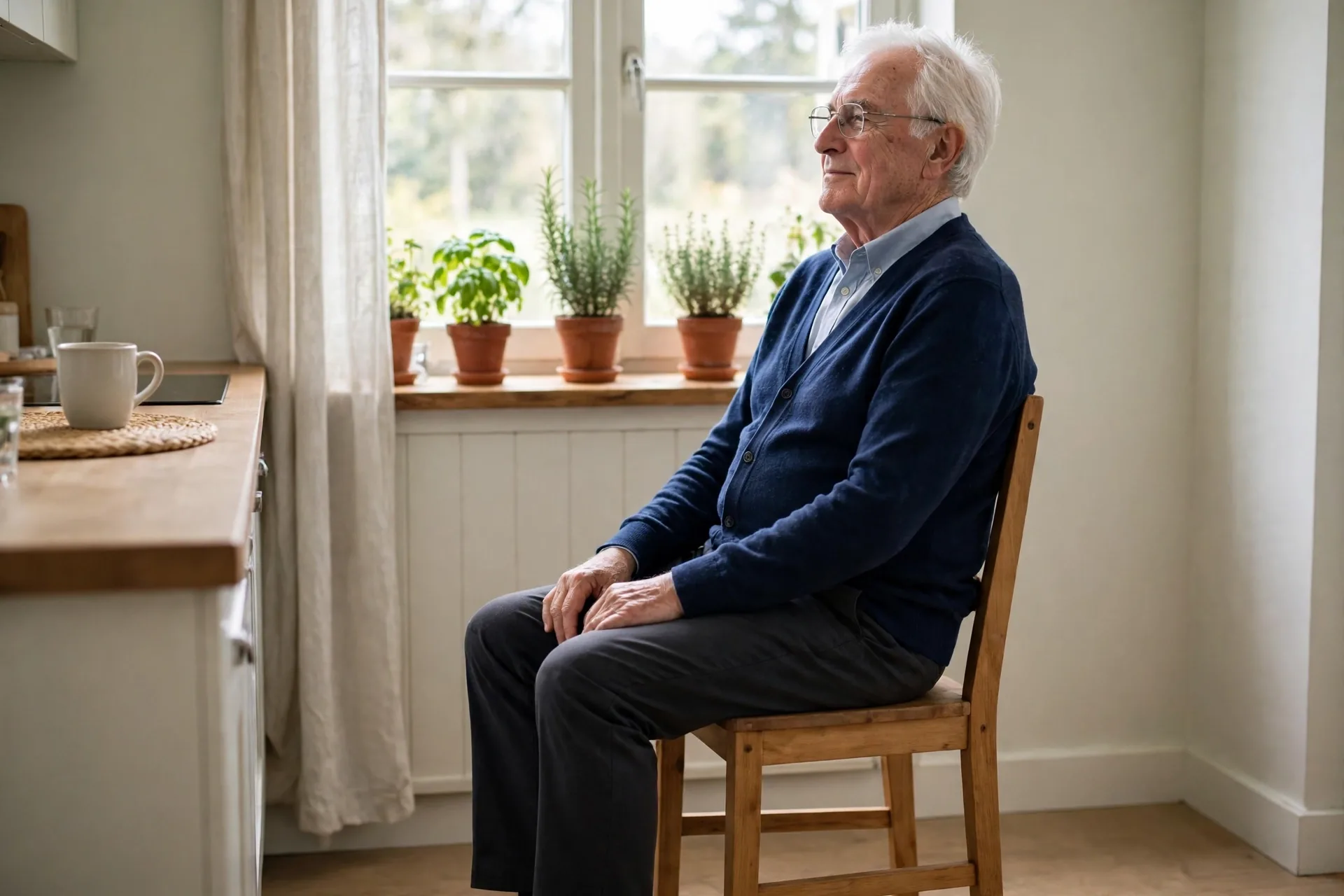
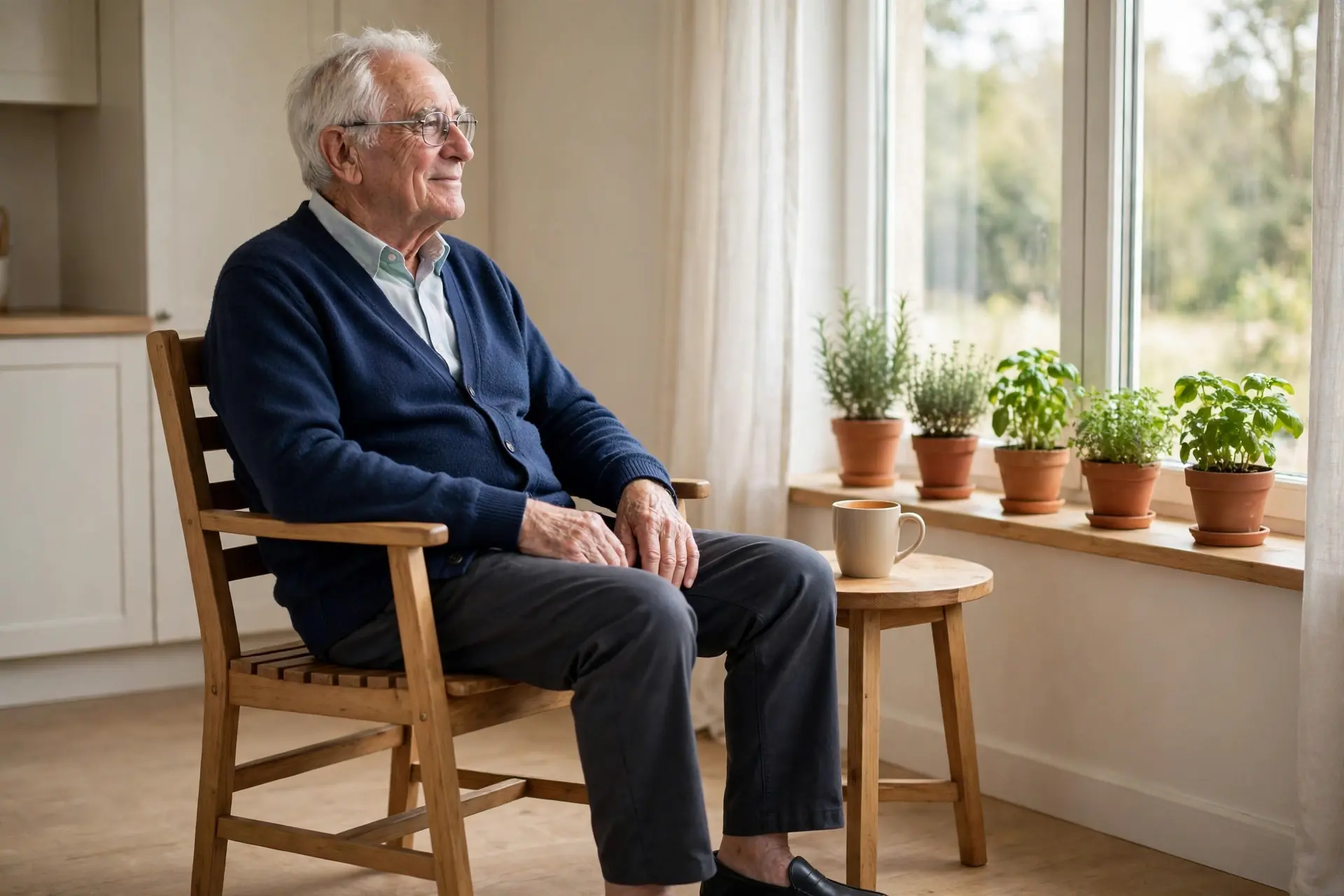
Because all twelve moves happen seated and need no equipment, the routine is not tied to a particular room or time of day: a kitchen chair while the kettle boils, a desk chair between tasks, a garden chair in the afternoon — anywhere you have a sturdy chair on a steady surface, in the clothes you are already wearing. It is also a gentle way to break up a long sit, which the NHS guidelines specifically suggest.
Where these moves come from — and what to try next
These twelve moves are the easiest selection from the Chair Exercises for Seniors — Mega Chart, a free printable PDF with 24 gentle seated exercises in large print. This page deliberately keeps only the gentlest twelve. If you would like the complete set — including the step-by-step instructions for downloading the free chart — our free chair exercises article sets out a fuller starter routine and walks through getting the PDF. When you are ready for a little more, the next steps stay seated too: our leg exercises for seniors routine adds gentle work for your legs, and our core exercises for seniors page covers seated moves for the muscles around your middle.
Frequently asked questions
What if I can only manage two exercises?
Then do two. The chart is explicit: rest at any time, follow your own pace, and do fewer repetitions whenever you need to. Two gentle moves — Shoulder Rolls and the Deep Breathing Finish, say — still break up your sitting and still move your joints, and the NHS guidelines treat light daily activity as worthwhile in its own right. There is no schedule you are behind on.
Is walking enough on its own?
Walking is genuinely valuable — the NHS counts a slow walk as light activity and brisker walking for health as moderate activity. The same guidelines also recommend activities that improve strength, balance and flexibility on at least two days a week, which walking by itself does not cover. That is the gap a short seated routine like this one can help fill. This is general guidance, not a personal prescription — your doctor’s advice comes first.
How often should I do this routine?
There is no single right answer. The NHS guidelines suggest being active every day, even lightly, with strength-type activities on at least two days a week. Start with whatever frequency feels manageable, and stop if anything hurts.
Can I get these exercises as a printable?
Yes. All twelve moves are part of the free 24-exercise Mega Chart described above. Rather than repeat the download steps here, we have kept them in one place: the free chair exercises article has the full walkthrough for getting the PDF, in both US Letter and A4 sizes.
What if one of the moves hurts?
Stop that move. The chart is plain about it: rest at any time, stop any exercise that hurts, and stop altogether if you feel pain or dizziness. A smaller version of the move, or fewer repetitions, is always an option on another day.
A final word
Starting again after a long break does not require a programme or an hour of your day. It requires one chair, a few small movements and a routine that meets you where you are. Twelve moves is enough. Two moves is enough. Begin there.
This article and the chart it draws on are general educational information, not medical advice. Stop if you feel pain or dizziness, and check with your doctor before starting a new exercise routine, especially if you have a health condition.