
Learning a handful of tai chi walking movements is one thing. Turning them into a routine you actually follow, week after week, is another. That is what a programme does: it decides in advance which days you practise, roughly what each session contains, and how things gently progress, so that on the day itself all you have to do is show up and walk slowly.
This guide explains how to build your own weekly tai chi walking programme at home: how to shape a session, how many days to aim for, how to progress without pushing, and how to keep track in the simplest possible way. For the step-by-step technique of the movements themselves, see our guide on how to do tai chi walking.
What a weekly programme actually is
A programme is not a strict timetable, and it is not a test. It is a light structure: a pattern for your week that you can repeat, adjust, and return to after interruptions. A good programme for a beginner has four ingredients — regular practice days, a simple session shape, gentle progression, and planned rest. If one of those is missing, people tend to drift: practising in bursts, doing too much on good days, or quietly stopping altogether.
The good news is that tai chi walking suits this kind of structure very well. The movements are gentle, sessions can be short, and the practice fits into a hallway, a garden path or a quiet corner of a park.
For the movements themselves, our tai chi walking instructions explain each step in order.
Start with two or three practice days
Most beginners do well with two or three sessions a week to begin with, on non-consecutive days if possible — for example, Monday, Wednesday and Saturday. Spreading sessions out gives your legs and balance time to recover between practices, and it keeps each session feeling fresh rather than like a chore.
Choose days and times that fit your real life, not an ideal version of it. A short session after breakfast may suit you better than a longer one in the evening. What matters is that the slot is realistic enough to survive a busy week. Once two or three weekly sessions feel easy and established, usually after a few weeks, you can add a fourth day if you would like to.
Give every session the same simple shape
A session is easier to start when you always begin the same way. A sensible shape for tai chi walking looks like this:
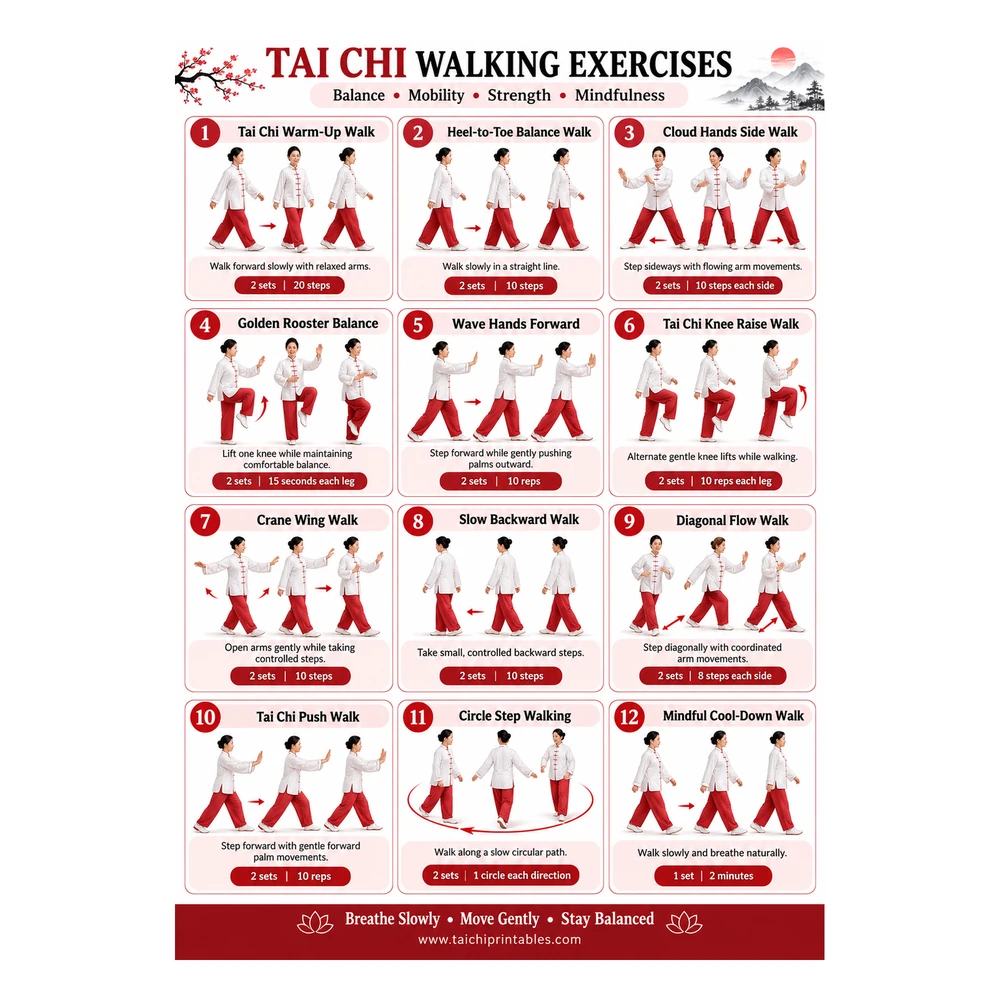
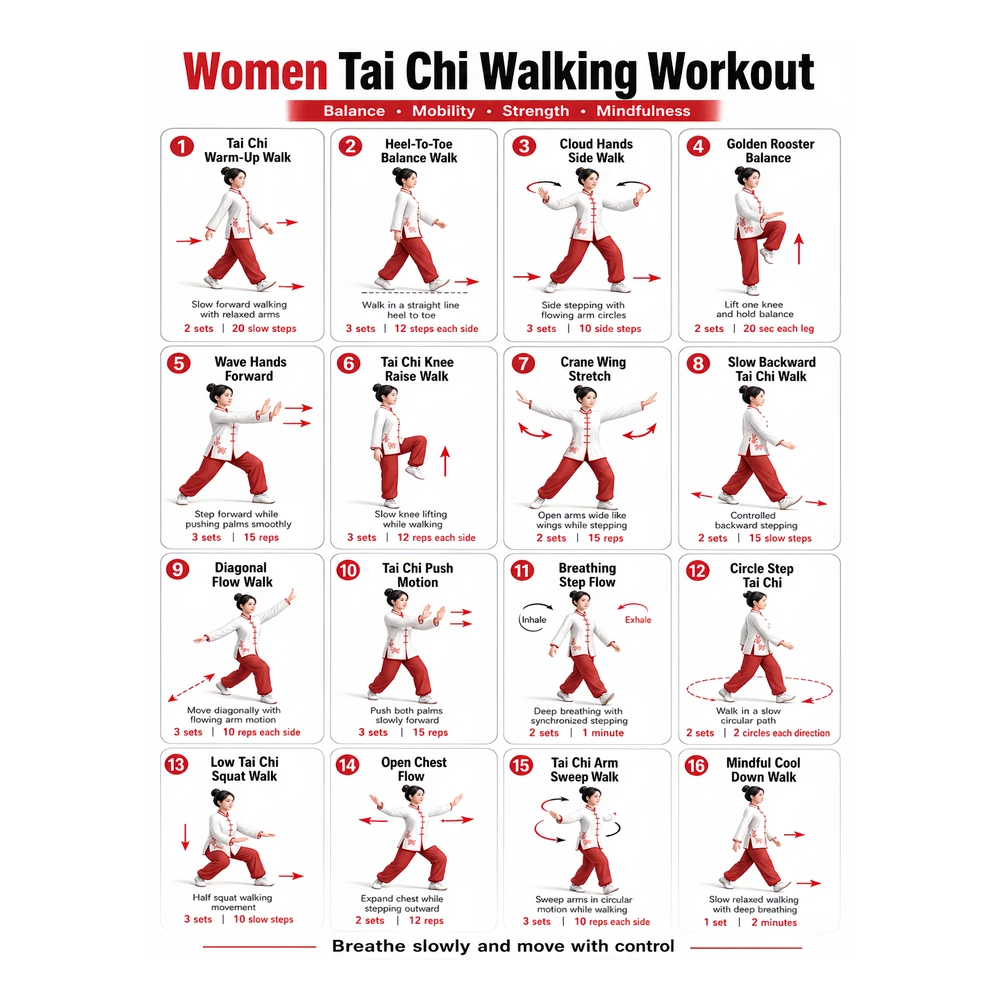
Begin gently. Start with a minute or two of quiet standing and easy walking — the Warm-Up Walk is made for exactly this — so your body eases into movement rather than being launched into it.
Practise a few movements. Choose two or three movements for the main part of the session, such as the Heel-to-Toe Balance Walk, the Cloud Hands Side Walk and the Golden Rooster beside a chair. Working on a small number at a time lets you learn them properly.
Finish slowly. End with a Cool-Down Walk and a few quiet breaths standing still. Finishing calmly is part of the practice, not an optional extra.
Early sessions might last ten minutes or so. There is no prize for length; a short session you complete is worth far more than a long one you abandon halfway.
Progress gently, one small step at a time
Progression in tai chi walking should be barely noticeable. When a session starts to feel comfortable, change just one thing: add a movement you have not included before, such as the Slow Backward Walk on a clear, checked route; walk for a few minutes longer; or revisit a familiar movement and work on making it slower and smoother.
Change one thing at a time, and give each change at least a week to settle before adding another. If a new movement feels unsteady or uncomfortable, leave it out and return to it later. A programme that grows slowly is one you can stay with for months, and staying with it is where the value lies.
Plan your rest days
Rest days are part of the programme, not gaps in it. Gentle exercise still asks something of your legs, your joints and your concentration, and older bodies in particular benefit from time between sessions. On rest days, ordinary daily activity — housework, a short stroll, gardening — is quite enough.
You can also plan an easier session rather than a full rest: a few minutes of the Warm-Up Walk, one favourite movement and the Cool-Down Walk. Having a lighter option written into your week makes it far more likely that you will do something on tired days instead of skipping practice altogether and losing momentum.
Keep track, simply
You do not need an app or a complicated chart to track a walking programme. A notebook or a calendar on the fridge works well: after each session, note the date, which movements you practised, and a word or two about how it felt. That is enough to show you your own progress over the weeks, which is encouraging on days when practice feels flat.
If you miss a session, just note it and carry on with the next planned day. Never try to catch up by doubling a session. A programme you return to calmly after interruptions is a programme that lasts.
Prefer a plan that is already written?
Building your own programme suits some people; others would rather follow one that has been laid out day by day. If that sounds like you, our 28-day tai chi walking challenge guide explains how a ready-made month of daily sessions is structured, week by week. Following a set plan for a month is also a good way to learn what a balanced week of practice feels like before designing your own.
Safety notes
Practise balance movements beside a chair, counter or wall, and keep support in reach for holds and backward walking. Check any route before walking it backwards, wear flat non-slip shoes, and stop if you feel dizzy or in pain. Build up gradually, and check with your doctor before starting if you have a balance condition, joint problems or a history of falls. This article is general educational information, not medical advice.
Frequently Asked Questions
How many days a week should I practise tai chi walking?
Two or three sessions a week is a sensible start for most beginners, ideally on non-consecutive days. Once that rhythm feels easy and established, you can add another day if you wish. Regular short sessions will serve you better than occasional long ones.
How long should each session be?
Start with around ten minutes, including a gentle warm-up walk and a slow finish. As the sessions become familiar, you can let them grow by a few minutes at a time. There is no ideal length — the right session is one you finish feeling calm, not tired out.
Should every session include all of the movements?
No. Working on two or three movements per session is a better way to learn them properly. Rotate which movements you include across the week, and always begin with an easy warm-up walk and end with a cool-down walk.
What should I do if I miss a week?
Simply resume. Start again with a shorter, easier session rather than trying to pick up exactly where you left off, and never double up sessions to catch up. Interruptions are normal; a good programme is one you can return to without fuss.
When should I add harder movements, like the backward walk?
When the movements you already practise feel steady and comfortable, add one new movement at a time and give it a week to settle. For the Slow Backward Walk, use a clear route you have checked first, with support nearby, and leave it out on days when you feel unsteady.
A programme that fits your life
The best tai chi walking programme is not the most ambitious one; it is the one still running in three months’ time. Two or three short sessions a week, each with the same gentle shape, one small improvement at a time, and rest planned rather than apologised for — that is all a programme needs to be. Write yours down, keep it somewhere visible, and let the weeks do the work.