
By mid-afternoon, most desk workers know the feeling. Your neck has stiffened into one position. Your shoulders have crept up towards your ears. Your lower back aches in a dull, background sort of way, and your eyes are tired from hours of screen. None of it is dramatic. All of it adds up, day after day.
Tai chi might seem an unlikely answer to a desk problem — it belongs in parks and village halls, surely, not next to a spreadsheet. But some of its simplest movements are unusually well suited to the working day. They are slow, quiet, need no equipment and no change of clothes, and a useful break can be as short as two or three minutes. This page explains how to use them.
What a desk day does to your body
The human body is not built to hold one shape for eight hours. When you sit at a desk, your hips stay bent, your chest rounds forward, your head drifts in front of your shoulders, and whole groups of muscles switch off while others — in the neck and shoulders especially — work overtime just holding you up. Meanwhile your legs barely move, your breathing gets shallow, and your eyes stay fixed at one distance for hours at a stretch.
The result is rarely an injury. It is more often a collection of small discomforts: stiffness when you finally stand up, a tight neck by evening, restless legs, and that foggy, heavy-headed feeling that coffee only partly lifts. The simplest countermeasure is also the oldest one: move, briefly and regularly, before the stiffness sets in.
Why short tai chi breaks help
Tai chi movements were designed around slow weight shifts, gentle turns and relaxed, upright posture — almost a point-by-point answer to what sitting all day does. A few minutes of practice asks your spine to lengthen, your shoulders to drop, your hips and knees to move, and your breathing to slow down and deepen. Many people find that even a short break leaves them feeling looser and clearer-headed than a walk to the kettle alone, simply because the movements deliberately undo the desk posture rather than just interrupting it.
To be clear about what this can and cannot do: short movement breaks are a sensible way to ease everyday stiffness and give your body variety during the day. They are not a treatment for back conditions, neck problems or any other medical issue. If you have persistent pain, numbness, headaches that keep returning or any symptom that worries you, see a doctor or physiotherapist rather than trying to exercise it away.
A five-minute desk break, movement by movement
You can do the whole of this short sequence in the space beside a desk. Do each movement slowly, for roughly half a minute to a minute, and skip anything that causes pain.
Neck rolls. Sit or stand tall. Let your chin drop gently towards your chest, then slowly roll your head towards one shoulder, back to centre, and towards the other shoulder, making small, easy half-circles. Keep the movement small and slow — your neck is not a joint to crank around. If you have any history of neck problems, replace the rolls with gentle turns of the head from side to side instead.
Shoulder rolls. Lift both shoulders up towards your ears, roll them back and let them drop, as if you were shrugging off a heavy coat. Repeat several times, then reverse the direction. Finish by letting your arms hang and giving them a soft shake. Shoulders that live near your ears all day appreciate being reminded where “down” is.
Seated twist. Sit tall with both feet flat on the floor. Rest one hand on the opposite knee and turn your upper body gently to look behind you, keeping your hips facing forwards. Breathe out as you turn, breathe in as you return to centre, then repeat on the other side. The turn should come from your waist, easy and unforced — you are wringing out stiffness, not cracking anything into place.
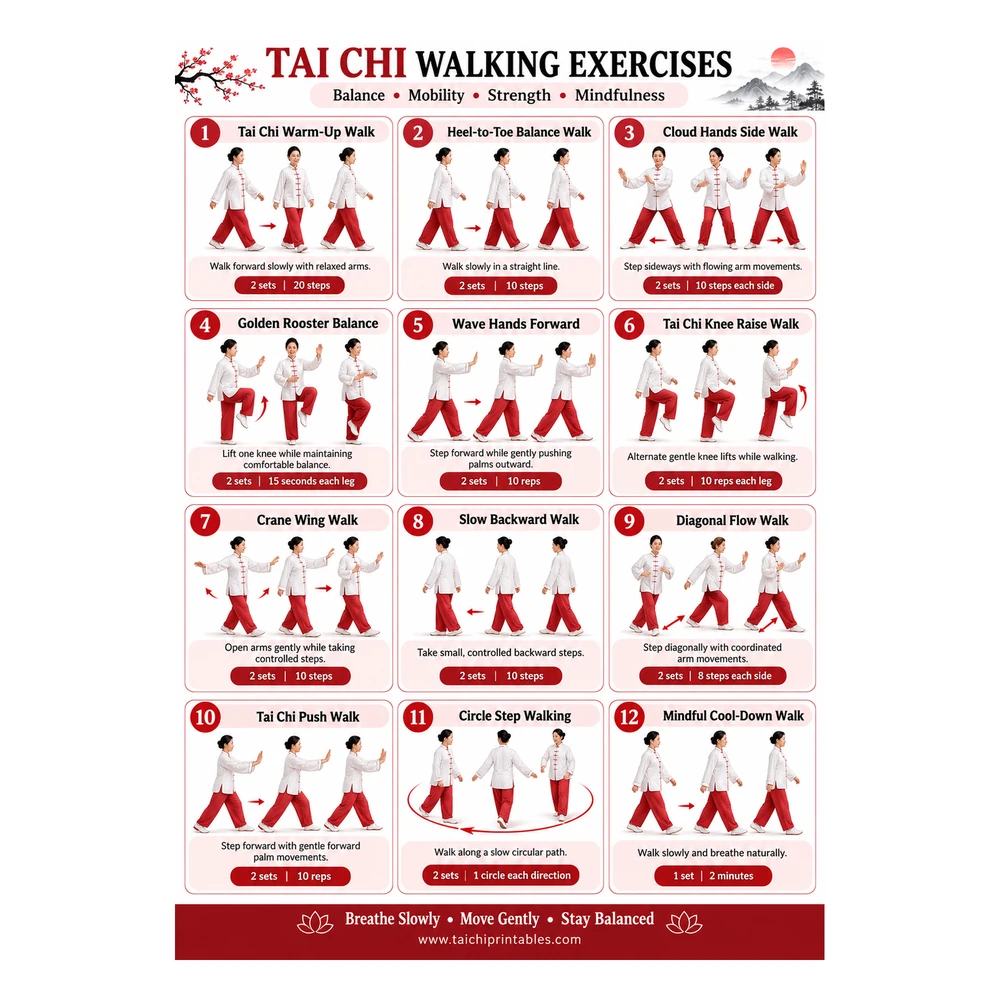
Standing weight shifts. Stand with your feet about hip-width apart, knees soft. Slowly shift your weight onto your right foot, then back through the centre and onto your left, like a slow pendulum. Let your arms hang and sway slightly with the movement. This is one of the foundation movements of tai chi, and after hours of sitting it wakes up your legs, ankles and sense of balance in about a minute.
Wrist and finger circles. Hold your arms out in front of you and circle your wrists slowly in both directions. Then open and close your hands a few times, spreading your fingers wide and making a soft fist. Anyone who types or uses a mouse all day will feel why this one earns its place.
One minute of slow breathing. Finish standing or sitting tall, hands resting lightly on your lower belly. Breathe in slowly through your nose and out even more slowly, letting your shoulders drop a little further with each out-breath. A minute is longer than it sounds, and it is often the part of the break that clears your head the most. Our guide to tai chi breathing for beginners explains the basics in more detail if you would like to take this further.
If you would rather stay seated for the whole break, our chair tai chi routine works through the same gentle movements from a chair.
Fitting breaks into a working day
The movements are the easy part. The harder part is remembering to do them. A few tricks help. Tie your break to something that already happens: every time you finish a call, send a report or make a drink, stand up and run through two or three movements. Set a gentle timer if your work allows it — many people find a break every hour or so about right, even if it is only two minutes long. And keep the bar low: a short break taken beats a perfect ten-minute routine postponed all day.
If you work in a shared office, you may feel self-conscious at first. In practice, colleagues barely notice someone standing, rolling their shoulders and shifting their weight for a few minutes — it looks like stretching, because that is more or less what it is. Start with the least conspicuous movements (shoulder rolls, wrist circles, weight shifts) and save the fuller sequence for home-working days or an empty meeting room.
Posture basics at your desk
Breaks work best alongside a decent sitting posture for the hours in between. Sit with both feet flat on the floor, your back supported, and your screen roughly at eye level so your head can stay balanced on top of your spine rather than drifting forwards. Let your shoulders rest down and back without forcing them. Every so often, notice your middle: a gently engaged core supports your sitting posture far better than slumping and then hauling yourself upright. If the phrase “engage your core” has always puzzled you, our plain-English guide to how to engage your core explains exactly what it means and how to feel it while seated — it takes about a minute to learn, and it changes how sitting feels.
None of this requires special furniture or a standing desk. Small adjustments, plus regular short breaks, will do most of the work.
Frequently Asked Questions
Do I need to change out of my work clothes?
Almost never. The movements in this sequence are small and gentle, and ordinary office clothes — trousers, skirts, shirts — allow them comfortably. You may want to loosen a tight tie or slip off high heels so you can stand with your feet flat. If your clothing genuinely restricts your movement, keep the seated movements for the office and do the standing ones at home.
How often should I take a tai chi break at work?
A short break every hour or so is a good aim, and two to five minutes is plenty. If your schedule will not allow that, take what you can get: one proper five-minute break mid-morning and another mid-afternoon is a solid pattern. Regularity matters more than length — your body responds to being moved often far better than to one heroic session at the end of the day.
Will this help with my back pain?
Gentle movement often makes an ordinary stiff, achy back feel more comfortable, and many desk workers find these breaks ease the end-of-day tightness. But tai chi breaks are not a treatment for back pain, and they are not a substitute for medical advice. If your back pain is severe, keeps returning, or comes with numbness, weakness or pain travelling down a leg, see a doctor or physiotherapist and follow their guidance about what exercise suits you.
For a fuller look at the same gentle movements, our tai chi for back pain guide explains how to keep them comfortable.
I work from home. Is this still useful?
Arguably more so. Home workers often move less than office workers — no walk to the station, no trips to the printer, meetings taken from the same chair all day. The same short breaks apply, and at home you have the advantage of privacy: you can do the full sequence, including the weight shifts and breathing, without an audience. Anchoring breaks to the end of video calls works well for many people.
Final thoughts
You do not need to become a tai chi student to borrow its best ideas for the working day — though plenty of office workers start exactly this way and end up curious about the full practice. Stand up regularly. Roll your shoulders down from your ears. Turn, shift your weight, circle your wrists, and breathe slowly for a minute. Small movements, taken often, are a fair exchange for the hours your desk asks you to sit still.
If you would like to learn the full practice behind these breaks, our tai chi for beginners guide starts from the very first steps.