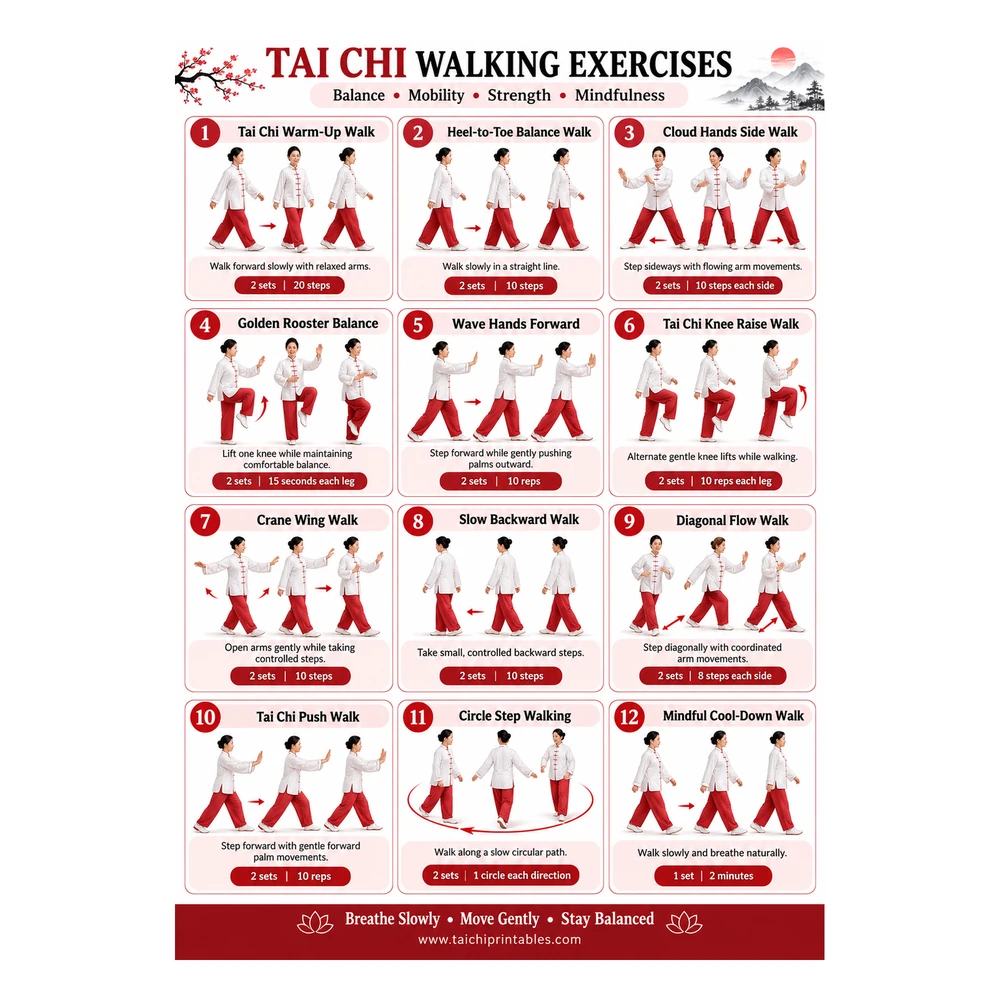

If you have ever watched tai chi being practised in a park, you may have noticed how calm everyone looks — and wondered whether the breathing is doing half the work. Many beginners ask about breathing before they ask about the movements, often worried that there is a special technique they must master first. The reassuring truth is that tai chi breathing for beginners is simple: you breathe naturally, you force nothing, and the breath gradually settles as the movements slow down.
This guide explains how breathing works in tai chi, a gentle general pattern that many teachers use, a few simple ways to practise, and the common mistakes that make breathing feel harder than it needs to be. Everything here is general educational information, not medical advice.
Why breathing matters in tai chi
Tai chi movements are deliberately slow, and the breath is one of the things that sets that pace. When you breathe slowly and steadily, it is much harder to rush through a movement. Many people find that paying gentle attention to the breath also gives the mind something quiet to rest on, which is part of why a short session can leave you feeling calmer and more settled afterwards.
Breathing is not a separate exercise bolted on to the movements. In tai chi, breath and movement are meant to support each other: the body moves slowly, the breath follows, and over time the two begin to feel like one continuous action rather than two things you are juggling at once.
Start with natural breathing
The first rule of tai chi breathing is that there is very little to learn at the start. Breathe in and out in whatever way feels normal and comfortable. Most people breathe through the nose during tai chi, but if your mouth opens a little, that is fine too. There is no need to take unusually deep breaths, and no need to breathe to a count.
In your first few sessions, simply let your breathing look after itself while you learn where your feet and hands go. As the movements become familiar, you will probably notice that your breathing slows down on its own. That is the natural order of things in tai chi: first the movement settles, then the breath follows.
A gentle pattern many teachers use
Once the basic movements feel comfortable, many teachers offer a simple guideline to help breath and movement work together. As a rough pattern, you breathe in as the body rises, opens or lifts — for example, as the arms float up — and breathe out as the body lowers, closes or settles — for example, as the arms sink back down. Movements that turn or step often sit comfortably on a slow breath out, though this varies from movement to movement.
Please treat this as a loose guideline, not a rigid rule. Real movements do not always divide neatly into “up” and “down”, and a movement may take longer than one comfortable breath. If the pattern does not fit, simply breathe naturally and carry on. Tai chi taught well never asks you to hold your breath or strain to match a pattern. The guideline is there to help when it helps, and to be set aside when it does not.
Simple ways to practise
Stand quietly and breathe
Stand with your feet about hip-width apart, a sturdy chair or countertop within reach, and let your arms rest by your sides. Breathe naturally for a minute or two, noticing the breath without trying to change it. This quiet standing is a traditional way to begin a session, and for a beginner it is a complete breathing practice in itself.
Pair your breath with one simple movement
Choose one easy movement, such as slowly raising both arms in front of you to about shoulder height and lowering them again. Breathe in as the arms rise and out as they lower, keeping everything slow. Repeat a few times. If your breath and arms fall out of step, smile and start again — that is practising, not failing.
Keep sessions short
A few minutes of calm breathing practice is plenty. You can include it at the start of a tai chi session, or use it on its own when you want a quiet moment in the day. Our beginners’ guide to starting tai chi at home shows how breathing fits into a simple first routine.
Common beginner mistakes
Holding your breath. This is the most common one, and it usually happens when you are concentrating hard on a new movement. If you notice you are holding your breath, pause, take a normal breath, and continue more slowly.
Forcing deep breaths. Breathing in tai chi should never feel like hard work. Deliberately taking the deepest breath you can, over and over, can leave you light-headed. Let the breath stay comfortable and ordinary.
Trying to control every breath. Counting each breath or policing your breathing turns a calming practice into a mental chore. Gentle awareness is enough.
Breathing too fast. If your breathing feels hurried, your movements probably are too. Slow the movement down, and the breath will usually follow.
Breathing and safety
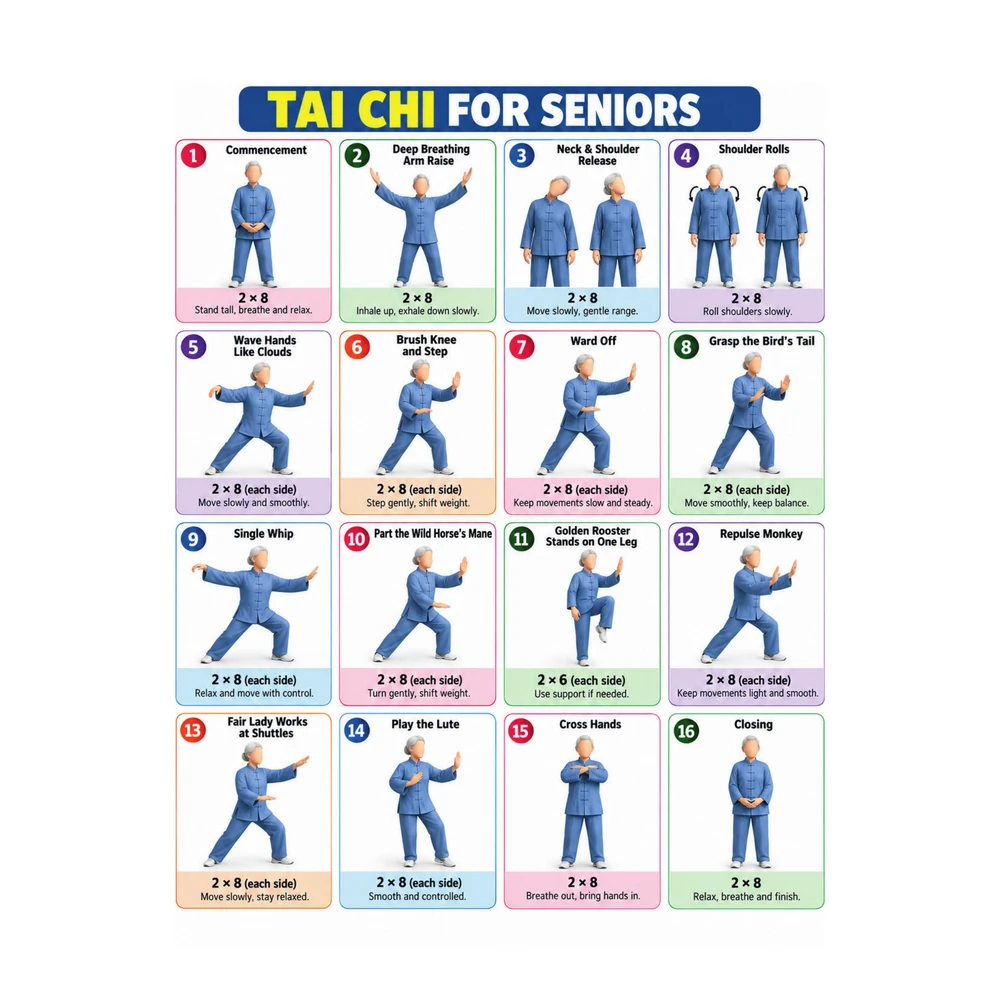
Never force your breathing, and never carry on if you feel dizzy, breathless or unwell. Sit down, rest, and let your breathing return to normal. If dizziness keeps happening, stop and speak to your doctor before practising again. If you have a heart or breathing condition, or any other health concern, check with your doctor before starting tai chi, and follow any advice they give you about breathing and exertion. Practise standing movements with support nearby, especially while you are new to them. When you are ready to see how breathing fits into a complete gentle routine, our Tai Chi for Seniors exercises article teaches one step by step.
Frequently Asked Questions
Do I need to learn tai chi breathing before I start the movements?
No. Begin with the movements and breathe naturally. Breath coordination is something that develops gradually with practice, and most teachers introduce it only after the basic movements feel familiar. There is nothing you need to master in advance.
Should I breathe through my nose or my mouth?
Either is acceptable. Most people find breathing through the nose comfortable during tai chi, but if your mouth opens a little as you breathe out, that is perfectly normal. Comfort matters more than the route the air takes.
What if my breathing never seems to match the movements?
That is normal, especially in the first few weeks. Coordination between breath and movement builds slowly, and even experienced practitioners lose it when learning something new. Keep the movements slow, breathe naturally, and let the matching arrive in its own time.
Can I practise tai chi breathing on its own, without the movements?
Yes. Standing quietly and breathing naturally for a few minutes is a traditional part of tai chi practice, and many people use it as a short calming pause in the day. Just keep the breathing comfortable and unforced, and sit down if you feel light-headed.
Is it normal for my breathing to feel uneven at first?
Yes. When you are concentrating on new movements, your breathing may speed up, shallow out or stop briefly without you noticing. This settles as the movements become familiar. If uneven breathing comes with dizziness or breathlessness, stop, rest, and check with your doctor.
Keep it simple
Tai chi breathing asks very little of a beginner: breathe naturally, do not force anything, and let the breath slow down as the movements do. The gentle pattern of breathing in as you rise and out as you settle can help once the basics feel familiar, but it is a guide, not a test. Practise a few quiet minutes at a time, with support nearby, and the breathing will take care of itself.