
Search for gentle exercise to do from a chair and you will meet two phrases that seem to mean the same thing: “seated tai chi” and “chair tai chi”. They appear on different websites, in different class listings and on different products, sometimes describing what looks like exactly the same activity. So is there a real difference, or is it just two names for one thing?
The honest answer is: mostly the same thing, with one useful distinction hiding underneath. This article untangles the two terms, explains the broader idea of seated exercise, and describes what a chair tai chi routine actually involves, so you can tell what you are getting whatever name it goes by.
The Short Answer
In everyday use, “seated tai chi” and “chair tai chi” are used almost interchangeably. Both describe tai chi movements adapted so that you practise them sitting in a chair: the flowing arm movements, gentle trunk turns, weight shifts and steady breathing of tai chi, performed without standing. If a class or a product uses one name and a friend recommends the other, you are almost certainly talking about the same kind of session.
The small distinction worth knowing is about scope. “Seated exercise” is a broad category — any exercise done sitting down. “Chair tai chi” is a specific member of that category: seated exercise that follows tai chi’s movements and principles. All chair tai chi is seated exercise, but not all seated exercise is tai chi.
Seated Exercise: The Broader Idea
Seated exercise is simply movement performed from a chair, and it comes in many styles. A seated exercise session might include marching your feet while sitting, lifting small hand weights, squeezing a ball between your knees, stretching with a resistance band, or doing general keep-fit movements to music. Some programmes mix several of these together. The chair is the common feature; the content can be almost anything that can be done sitting down.
This matters when you are choosing something to follow, because the label “seated exercise” alone tells you where you will be sitting, not what you will be doing. Two seated programmes can feel completely different: one brisk and strength-focused, another slow and flowing.
Chair Tai Chi: Tai Chi, Adapted to the Chair
Chair tai chi is narrower and more predictable. It takes the actual movement language of tai chi — the slow raising and lowering of the arms, the turning of the waist, the shifting of weight from side to side, the emphasis on relaxed shoulders and steady breathing — and adapts it so the whole session happens seated. The pace is slow, the movements flow into one another, and there is no equipment beyond the chair itself.
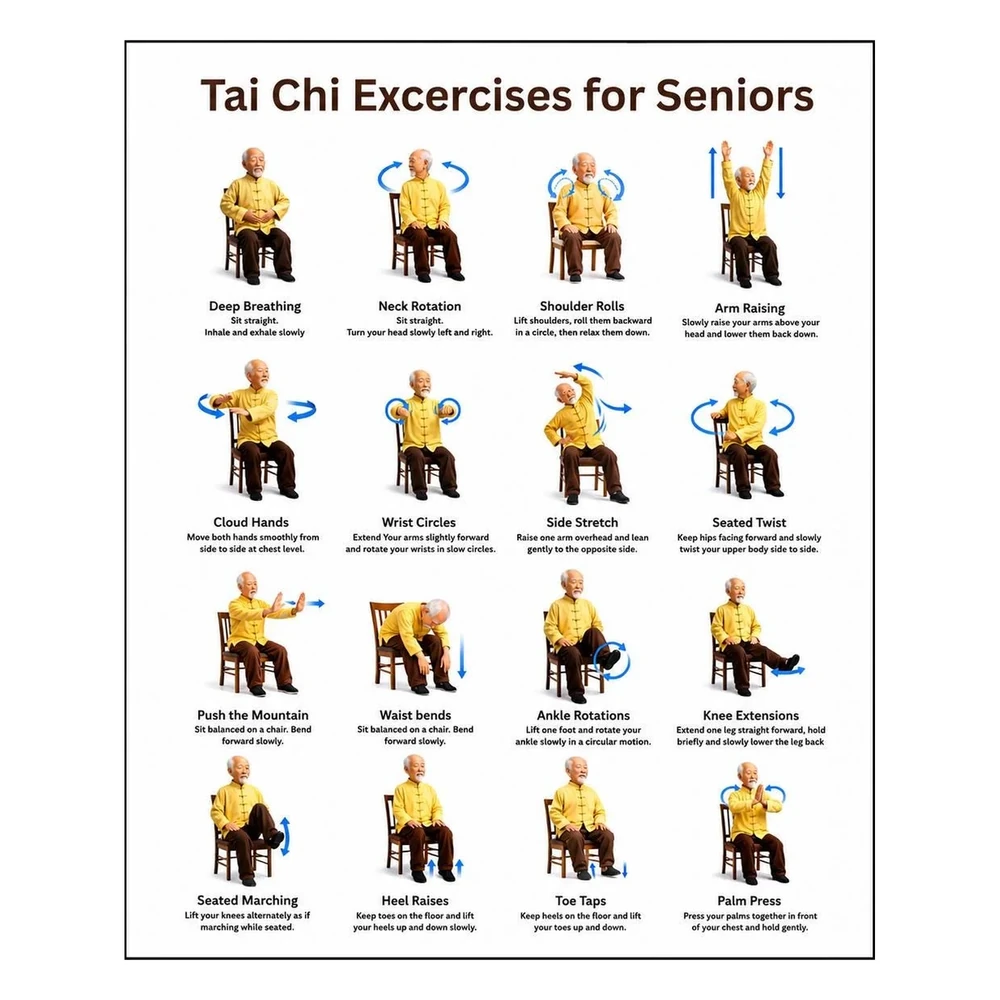
Our own chair tai chi routine is a typical example: a set of gentle seated movements in the tai chi style, each with simple steps, practised at a calm, unhurried pace. If you have read about whether chair tai chi works, the practice described there is exactly this — the name on the tin and the contents match.
Practical Differences You Might Meet
Because the terms are loose, the differences appear in the details of individual programmes rather than in the names. Here is what to check, whichever label is used:
- Equipment. Some seated programmes add hand weights, resistance bands or balls. Pure chair tai chi uses none of these — just you and the chair. Neither is automatically better, but they are different experiences, and if you want the slow, flowing style, check that no equipment is involved.
- Pace and style. General seated exercise can be brisk and repetitive, aimed at raising your heart rate. Chair tai chi is deliberately slow and continuous, with attention on breathing and smooth movement.
- Standing sections. A few “chair” programmes include standing exercises done while holding the chair. That can be a good thing, but it is not fully seated practice, and it is worth knowing before you start if standing is difficult for you.
- What the movements are based on. Chair tai chi movements come from tai chi itself. Generic seated routines draw from general fitness. If the flowing, meditative quality of tai chi is what appeals to you, the tai chi-based routine is the one you want.
Which Name Should You Search For?
Use both. Because teachers, websites and shops choose their terms inconsistently, searching only one phrase will hide perfectly good options that happen to use the other. When you find something, ignore the label for a moment and look at the description: Is it slow? Does it flow? Is any equipment needed? Is the whole session seated? Those four answers tell you far more than the title does.
For our part, we use “chair tai chi” for our seated routine, because the chair is the honest description of how it is practised: a sturdy, ordinary chair, in your own home, with the movements of tai chi adapted to it.
What a Chair Tai Chi Session Feels Like
Whichever name you meet it under, a chair tai chi session usually begins seated tall, feet flat on the floor, with a few slow breaths. The movements then work through the body: arms floating up and settling down, hands turning and drifting, the waist rotating gently, weight shifting from one side of the chair to the other, and the legs joining in with gentle lifts, extensions and ankle movements — all at a pace that lets you breathe steadily throughout. Sessions commonly run from ten to twenty minutes, and you can stop, rest or repeat movements as you wish.
Practise in a stable chair without wheels, pushed against a wall if you want extra security, on a clear patch of floor, in flat shoes. Keep movements within a comfortable range, stop if anything hurts or you feel dizzy, and sit quietly until you feel steady. If you have a health condition or any doubt about starting, check with your doctor first. This article is general educational information, not medical advice.
Frequently Asked Questions
Are seated tai chi and chair tai chi the same thing?
Almost always, yes. Both names describe tai chi movements practised sitting in a chair. The only distinction is that “seated exercise” in general is a broader category, while chair tai chi specifically means the seated practice is based on tai chi movements.
Does chair tai chi use weights or resistance bands?
Traditional chair tai chi does not — the movements use only your own body, performed slowly from the chair. Some general seated exercise programmes do add weights or bands, which is one way to tell the two styles apart when you are choosing.
Is chair tai chi the same as chair yoga?
No. They are cousins — both are gentle, chair-based practices — but they come from different traditions and feel different. Chair yoga is built around held poses and stretches; chair tai chi is built around slow, continuous, flowing movement.
Can chair tai chi be done standing?
Many of its movements can be adapted to standing, and some people mix seated and standing practice. But chair tai chi as designed is a fully seated routine, which is precisely why it suits people who prefer, or need, to stay sitting.
Which is better for a complete beginner?
If you want slow, flowing movement that needs no equipment at all, chair tai chi is the clearer choice, because the name promises a specific style. A general seated exercise programme may suit you better if you prefer variety or gentle strength work with simple equipment. Either way, start gently and choose the one you will actually enjoy repeating.
The Bottom Line
Seated tai chi and chair tai chi are two labels for, in practice, the same gentle activity: tai chi’s slow, flowing movements performed from a chair. The only difference worth remembering is that seated exercise as a whole is a bigger tent, which also includes weights, bands and general keep-fit routines. Look past the label to the pace, the equipment and the movements themselves, and you will know exactly what a session involves — whatever it happens to be called.