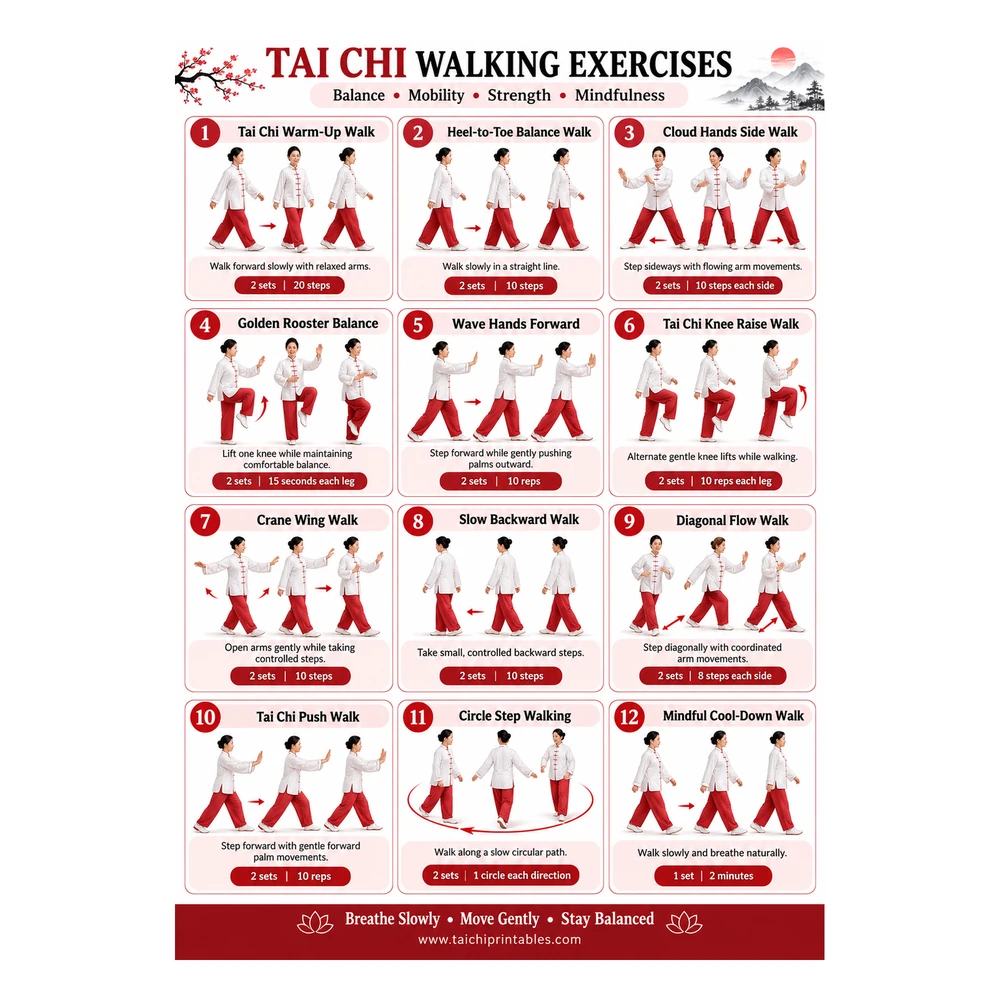

If you have spent any time looking at gentle exercise for older adults, you will have met two names that seem to travel together: tai chi and qigong. They are often mentioned in the same breath, sometimes as if they were the same thing. They are close relatives, but they are not identical — and for a complete beginner, qigong is often the simpler place to start. It asks less of your memory, less of your coordination, and gives you a calm, complete session from the very first day.
This article explains what qigong is in plain English, how it differs from tai chi, what a first gentle session actually feels like, and how to begin at home without any fuss or equipment.
What qigong is, in plain English
Qigong — pronounced roughly “chee-gong” — is a Chinese practice of gentle movement, breathing and quiet attention that has been around for a very long time. The name joins two ideas: “qi”, often translated as energy or life force, and “gong”, meaning work or practice. You do not need to take a position on the philosophy to benefit from the practice itself. Stripped of the theory, what you actually do in qigong is this: you move slowly and gently, breathe in a calm and regular way, and pay attention to what you are doing. That is the whole of it.
Where tai chi strings its movements together into a flowing sequence — one posture leading into the next, like a slow dance you learn over time — qigong usually works in simpler units. A typical qigong movement is repeated several times: raising and lowering the arms, gently turning the waist, swaying from side to side, opening and closing the hands. Then you move on to the next one. Because each movement is repeated rather than memorised as part of a long chain, there is very little to remember, and nothing to get “wrong” in the middle of a sequence.
Qigong can be done standing, and much of it can also be adapted to sitting in a chair, which makes it accessible on days when standing for long is not appealing.
How qigong differs from tai chi
The two practices share a family resemblance: both are slow, both emphasise relaxed posture and steady breathing, and both are gentle enough for older beginners. The differences are mostly practical.
Tai chi began as a martial art, and its movements still carry that heritage — each posture has a shape and a purpose that flows into the next. Learning a tai chi form takes time, because the sequence itself is part of the discipline. Qigong’s roots are more in health and meditation practices, and its movements tend to be simpler, more repetitive and quicker to pick up. A beginner can usually follow a full qigong session on day one, whereas a tai chi form unfolds over weeks.
Neither is better than the other. They suit different tastes: some people love the journey of learning a tai chi form; others prefer qigong’s simplicity and repetition. Many people practise both. We have a fuller side-by-side comparison in our article on qigong vs tai chi, if you would like the details before choosing where to begin.
What a first qigong session feels like
Because beginners often worry about what they are letting themselves in for, here is an honest picture of a gentle first session. It is a general description of how qigong is usually practised — not a set routine to memorise, just the shape of the thing.
You begin by standing still for a moment, feet about hip-width apart, knees soft rather than locked, arms resting loosely at your sides. You take a few slow breaths and let your shoulders drop. There is nothing to achieve in this part except arriving.
Then the movements begin, and they are simpler than most people expect. You might raise both arms slowly in front of you as you breathe in, and lower them as you breathe out — several times, unhurried. You might turn your waist gently from side to side, letting your arms swing softly with the turn. You might roll your shoulders, open and close your hands, or shift your weight slowly from one foot to the other. Each movement is repeated a handful of times, at a pace set by your own breathing.
Towards the end, the movements get smaller and quieter, and you finish by standing or sitting still for a minute, breathing normally, noticing how your body feels. The whole session might last ten or fifteen minutes. You will not be out of breath. You may feel warmer, looser and calmer than when you started — many people find exactly that — but the honest headline is how undemanding it all is. If you would like to see the kinds of movements involved, our collection of qi gong exercises shows the gentle style of movement qigong uses.
How to begin at home
Starting qigong at home needs almost nothing:
- A small, clear space. Enough room to raise your arms and turn without meeting the furniture.
- Comfortable clothes and flat shoes, or bare feet on a non-slip floor.
- A sturdy chair nearby — to sit on for seated movements, or to steady yourself if you feel unsteady standing.
- Ten quiet minutes. Morning suits many people; our qigong morning routine article looks at how a short session can start the day. But any time you will actually do it is the right time.
Begin with just two or three simple movements, repeated slowly, and add more over the following weeks if you enjoy it. Keep your breathing natural — let the breath and the movement find a rhythm together rather than forcing them to match. And keep everything within a comfortable range: qigong should never hurt, strain or leave you dizzy.
A short note on safety
Qigong is among the gentlest forms of exercise, but gentle is not the same as thoughtless. Move slowly, stay within what feels comfortable, and stop and sit down if you feel dizzy, unwell or in pain. If you have a health condition, balance problems or a history of falls, practise beside a sturdy chair or seated, and have a word with your doctor before starting any new exercise. This article is general educational information, not medical advice, and qigong is not a treatment for any condition — it is simply a calm way to move and breathe.
Frequently Asked Questions
Is qigong easier than tai chi for a beginner?
For most people, yes, at the very start. Qigong movements are usually repeated one at a time rather than linked into a long sequence, so there is much less to remember and you can follow a whole session on your first day. Tai chi repays the extra learning with a flowing form many people love. Plenty of beginners start with qigong and add tai chi later.
Do I need any equipment or special clothing?
No. Loose, comfortable clothes, flat flexible shoes or bare feet on a safe floor, a small clear space and a sturdy chair nearby are all you need. Nothing has to be bought specially.
Can qigong be done sitting down?
Yes. Many qigong movements — arm raises, waist turns, hand and shoulder movements, calm breathing — adapt well to sitting in a sturdy chair. Seated practice is a good option if standing for long is difficult, or on days when your energy is low. Keep your feet flat on the floor and your back supported if that feels better.
How long should a beginner’s qigong session be?
Ten to fifteen minutes is plenty to begin with, and five minutes is a perfectly respectable start. Little and often is the pattern that works — a short session most days will teach your body the movements and build the habit far better than one long session now and then.
Final thoughts
Qigong’s great gift to beginners is its simplicity. No long sequences to memorise, no equipment, no floor work — just slow movements, steady breathing and a few quiet minutes that belong to you. If tai chi has ever looked appealing but complicated, qigong is a calm way in: begin with a few gentle movements at home, keep everything comfortable, and let the practice grow at its own pace.