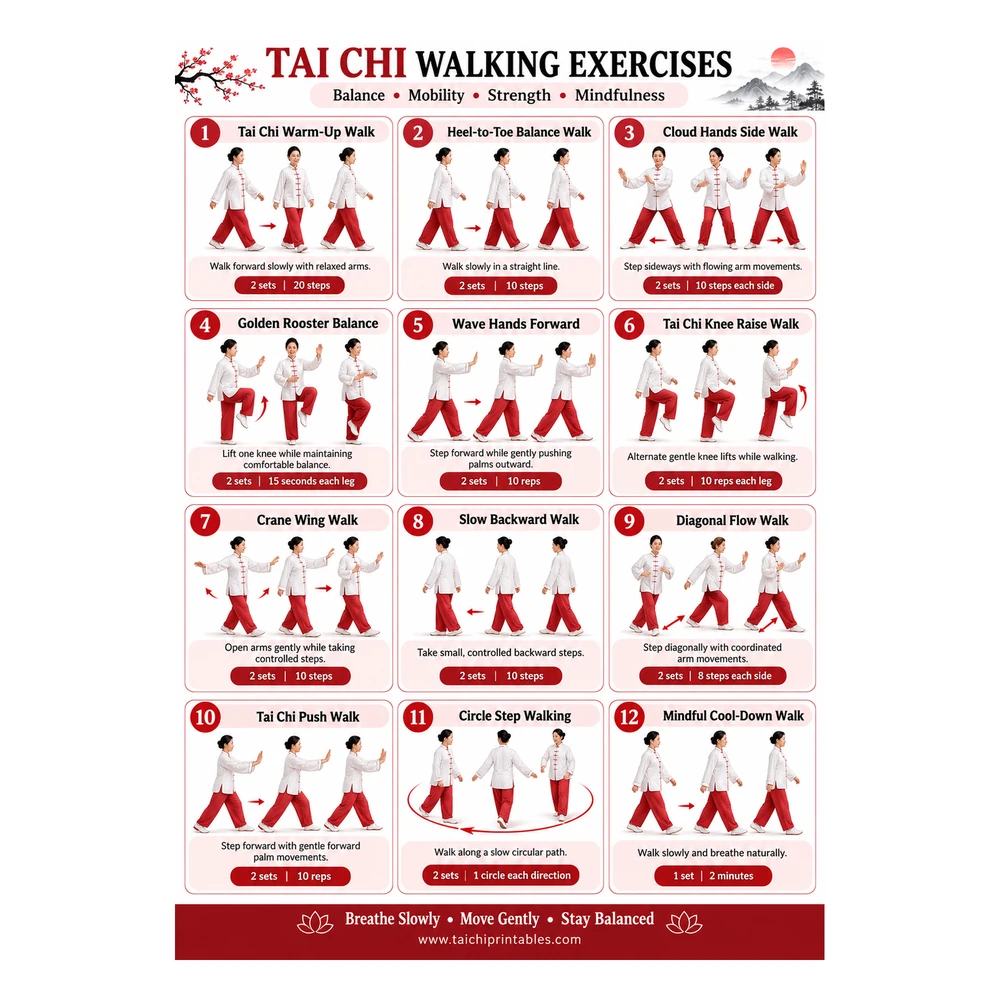

The first ten minutes of the day set the tone for the rest of it. Many of us begin stiff, groggy and already mentally busy — reaching for the kettle with one hand and the day’s worries with the other. A short qigong morning routine offers a different start: a few quiet minutes of breathing, gentle loosening and slow movement, done in your pyjamas, before the day has properly begun.
Qigong is a Chinese practice of gentle movement and breathing, generally even softer and simpler than tai chi. A morning routine built from it needs no equipment, no special clothing and no floor work. This page sets out a simple structure you can follow — waking breathing, gentle loosening, slow arm movements, and a moment of stillness to finish — and explains how to make it a habit that sticks.
Why mornings suit gentle practice
After a night in bed, joints feel stiff and movement feels effortful. That is normal, and it is exactly why slow movement suits the early hours better than anything brisk. Gentle motion warms the body gradually, in its own time, without demanding anything of cold muscles and sleepy balance. Many people find that a short morning practice leaves them feeling looser and clearer than starting the day abruptly — not energised in a dramatic way, just more comfortably awake.
There is a practical advantage too. A routine attached to waking up has a fixed place in the day. It does not compete with appointments, visitors or tired evenings. You wake, you practise, and it is done — the rest of the day cannot take it from you.
If you are new to qigong altogether, our guide to gentle qigong exercises introduces a set of simple movements for beginners, and our comparison of qigong vs tai chi explains how the two practices differ.
Before you begin
Keep everything easy. Practise in a clear patch of floor where you can stand and move your arms without bumping into furniture — beside the bed or in the kitchen while the kettle boils both work well. Wear whatever you slept in or loose morning clothes, and flat shoes, firm slippers or bare feet on a non-slip floor. Have a sturdy chair or a worktop within reach if your early-morning balance feels unreliable; first thing in the day is not the moment to test it.
Move gently throughout. Nothing in this routine should strain, stretch you to your limit or leave you breathless. If you feel dizzy at any point, sit down and rest. If you have a health condition or are recovering from illness or injury, check with your doctor before adding a morning routine. What follows is general educational information, not medical advice.
Step one: waking breathing
Stand tall, feet about hip-width apart, knees soft rather than locked, arms resting by your sides. Before you move at all, take a few slow breaths. Breathe in gently through your nose, letting your belly soften and rise a little; breathe out slowly, letting your shoulders drop. There is nothing to count and nothing to force — you are simply giving your breathing time to slow down and deepen on its own.
Stay with this for a minute or so. It sounds like very little, and that is the point. The breathing settles you, wakes up your posture, and marks a clear line between sleeping and the day beginning. Many people find their shoulders, jaw and hands unclench during this minute without being told to.
Step two: gentle loosening
Now wake the joints up, one area at a time, with small and easy movements. Turn your head slowly from side to side, only as far as feels comfortable. Roll your shoulders in slow circles, forwards and then back. Let your arms swing very gently around your waist as you turn your upper body a little from side to side. Make slow circles with your wrists, then open and close your hands a few times.
Work downwards. Shift your weight gently from one foot to the other. Rise slowly onto your toes and lower back down, holding the chair or worktop if you like. Circle each ankle in turn, with the toe resting lightly on the floor. Bend and straighten your knees a little, in a small, comfortable range. Every movement should feel like oiling a hinge, not testing it — small, slow and well within what is easy.
Step three: slow arm movements
With the body loosened, add the flowing arm movements that give qigong its character. Raise both arms slowly in front of you as you breathe in, as if lifting something light and fragile, and lower them slowly as you breathe out. Let your hands drift apart and float out to the sides, then draw them back together. Turn your palms gently as the arms move — up as they rise, down as they sink — and let your knees soften a little in rhythm with the movement.
Repeat each pattern a handful of times, slowly, following your breath rather than any count. The movements should feel almost lazy: no reaching for a stretch, no holding your breath, no effort in the shoulders. If your mind wanders to the day ahead, that is normal — bring it back to the feeling of the arms moving and the breath going in and out. That returning of attention is, quietly, part of the practice.
Step four: closing stillness
Finish the way you began: standing still. Let your arms come to rest by your sides, breathe slowly, and stand quietly for a minute. Notice how your body feels compared with when you woke — most people find their shoulders lower, their breathing slower and their joints less argumentative. Then get on with your morning. The whole routine, once it is familiar, takes around ten minutes, and on a rushed day a shortened version of a few minutes still counts.
Making it a habit
The secret of a morning routine is not intensity; it is repetition. Practise at the same point each morning — straight after getting up, or while the kettle boils — so the habit attaches itself to something you already do. Keep it short enough that you never dread it. A routine you do daily for ten minutes will do far more for you than a grand one you manage twice and abandon.
Expect the first week to feel a little awkward and the movements to need thought. By the second week the order will start to feel familiar, and by the third you may notice you miss it on the rare morning you skip. That is the habit taking hold, and it is worth more than any single session.
Frequently Asked Questions
How long should a qigong morning routine be?
Around ten minutes suits most beginners: a minute or two of breathing, a few minutes of loosening, a few of flowing arm movements, and a quiet minute to finish. There is no correct length. On busy mornings, five gentle minutes is still a proper practice, and on slow mornings you can linger longer if you are enjoying it.
Do I need to learn a traditional qigong form?
No. Traditional qigong includes many formal systems, some of them centuries old, and studying one with a teacher is a fine thing to do. But a simple home routine built from breathing, loosening and slow arm movements is a legitimate way to begin and to practise. Keep the movements gentle and comfortable, and the routine will serve you well without any formal name.
Is it better to practise before or after breakfast?
Most people find gentle movement easiest on an empty or nearly empty stomach, so practising before breakfast is the common choice. There is no strict rule, though — if you prefer to eat first, give yourself a little time to settle, and keep the movements as gentle as ever. Choose whichever arrangement you will actually repeat.
Can I do this routine sitting down?
Much of it adapts well to a chair. The breathing, shoulder rolls, wrist circles and arm movements can all be done seated, and the ankle movements work with your feet on the floor. If standing first thing feels unsteady, begin seated and stand for the parts you feel confident about, with support in reach. There is no requirement to stand for the practice to count.
What if I feel dizzy during morning practice?
Stop, sit down, and rest until the feeling passes completely. Dizziness first thing in the morning can have simple causes, such as standing up too quickly, but if it happens often, mention it to your doctor rather than simply practising around it. Never push through dizziness to finish a routine.
A calmer way to start
A qigong morning routine is a modest thing: breathe, loosen, move slowly, stand still. Ten quiet minutes before the day begins in earnest. It asks for no equipment and no athletic ability — only that you show up for it, morning after morning, and let the small habit do its slow work.