

Leg Exercises for Seniors: 12 Gentle Seated & Supported Moves
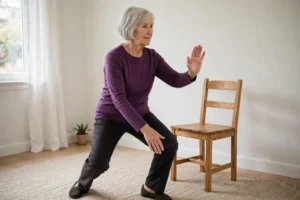
Standing up from a chair, walking to the kitchen, managing a kerb or a couple of front steps — your legs do the work for all of it. This page is a short routine devoted to legs only: twelve gentle moves that cover the fronts and backs of your thighs, your calves and ankles, and the muscles at the sides of your hips. There are no weights and no floor work, and only one move uses anything extra — a soft ball or a folded cushion.
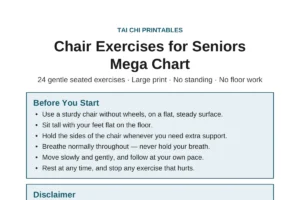
The routine comes from two of our printable charts. The first seven moves are done seated: six are taken from the “Legs & Feet” section of the Chair Exercises for Seniors — Mega Chart, and the seventh is a stretch from the same chart’s cool-down section. The last five are done standing while holding a chair or countertop the whole time, and are taken from the Balance Exercises for Seniors chart and guide. The standing part is always optional. If standing does not feel steady today, the seven seated moves are a complete session on their own — that is exactly how the balance guide itself puts it.
Why these leg moves are kept small and slow
Nothing in this routine asks for a big range of movement. You lift a heel, slide a foot forward, raise a leg a few inches, bend your knees a little. The repetitions are modest, and both source charts repeat the same instruction throughout: move slowly, rest at any time, and do fewer repetitions whenever you need to. A leg routine for older adults does not need to be strenuous to be worth doing, and it should never be a test you have to pass.
General public-health guidance takes the same measured view. The NHS physical activity guidelines for older adults say that adults aged 65 and over should aim to be physically active every day, even if it is just light activity, and should do activities that improve strength, balance and flexibility on at least two days a week. The NHS lists sitting exercises among the routines that can help strengthen muscles. A short set of seated and supported leg moves is one practical way to include that kind of activity at home. This page makes no promise about what the exercises will do for you — it simply sets the movements out accurately, with the safety points the charts themselves give, so you can decide with your doctor whether they suit you.
What you need
- A sturdy chair without wheels, placed on a flat, steady surface
- For the five standing moves: the back of that chair, or a countertop, to hold for support
- Flat, non-slip shoes
- A clear patch of floor around the chair — move loose rugs, cords and clutter out of the way first
- A soft ball or a folded cushion — only for the Inner-Thigh Squeeze. Nothing else: none of the other eleven moves uses weights or bands
Safety first: read this before you begin
These points come from the “Before You Start” pages of the two charts the routine is taken from, and they apply to every move below.
For all twelve moves:
- Sit tall with your feet flat on the floor, and hold the sides of the chair whenever you need extra support.
- Breathe normally throughout — never hold your breath.
- Move slowly and gently, and follow at your own pace.
- Rest at any time, and stop any exercise that hurts. Stop straight away if you feel dizzy or in pain.
For the five standing moves, in addition:
- Hold a sturdy chair back or a countertop for the whole exercise — keep hold from the first repetition to the last.
- Keep the floor around you clear of loose rugs, cords and clutter, and wear flat, non-slip shoes.
- Have someone nearby if you feel unsteady.
- If standing feels unsteady today, skip the standing moves and do the seated part only.
And before you start any new routine: check with your doctor first, especially if you have a health condition or a history of falls. The NHS gives the same advice — speak to a GP first if you have not exercised for some time, or if you have medical conditions or concerns.
The routine: 12 leg exercises
Do the moves in the order given: seated first, standing second. The repetition numbers are the charts’ own, and they are a guide, not a target — do fewer whenever you need to, and rest between moves for as long as you like.
Part 1 — Seated leg exercises
All seven moves are done sitting in your chair. The first six are the complete “Legs & Feet” section of the Mega Chart; the seventh is a stretch from the same chart’s “Cool-Down & Stretch” section.
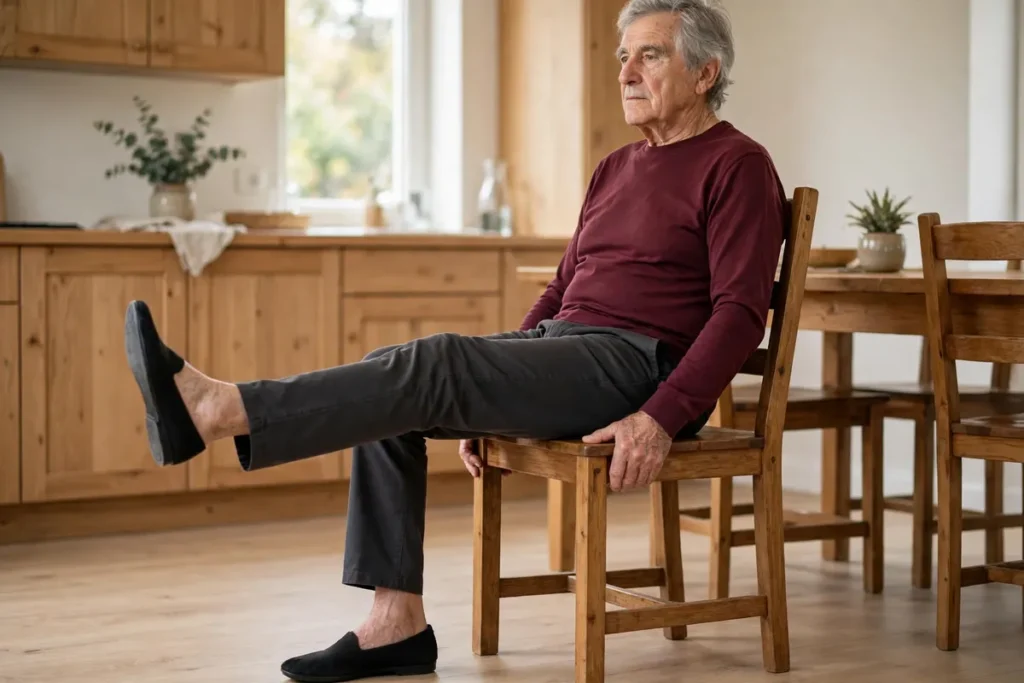
1. Leg Extensions
Hold the sides of the chair. Straighten one leg in front of you and flex your foot so your toes point up. Lower the foot slowly back down, then repeat with the other leg. Reps: 8–10 each side.
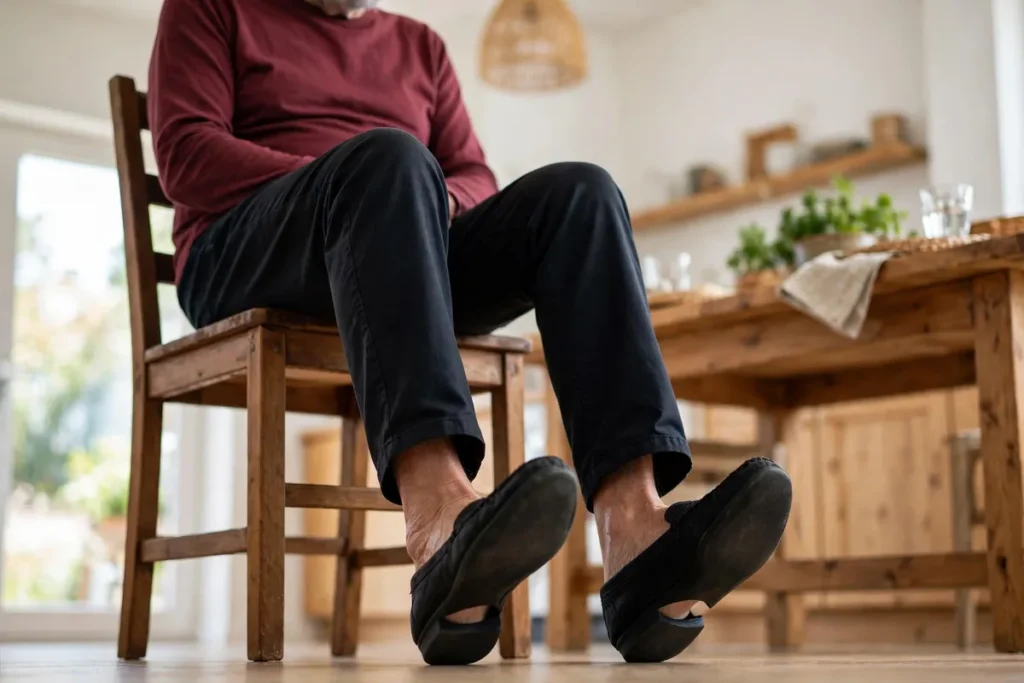
2. Heel Raises (seated)
With both feet flat on the floor, press through the balls of your feet to lift both heels as high as is comfortable. Lower them slowly back down. Reps: 12–15 reps.
3. Toe Raises
Keep your heels on the floor and lift the fronts of both feet, pulling your toes up toward your shins. Lower them slowly back down. Reps: 12–15 reps.
4. Seated Leg Lifts
Hold the sides of the chair. Straighten one leg and lift the whole leg a few inches off the floor, keeping it as straight as is comfortable. Lower it slowly, then switch sides. Reps: 8 each side.
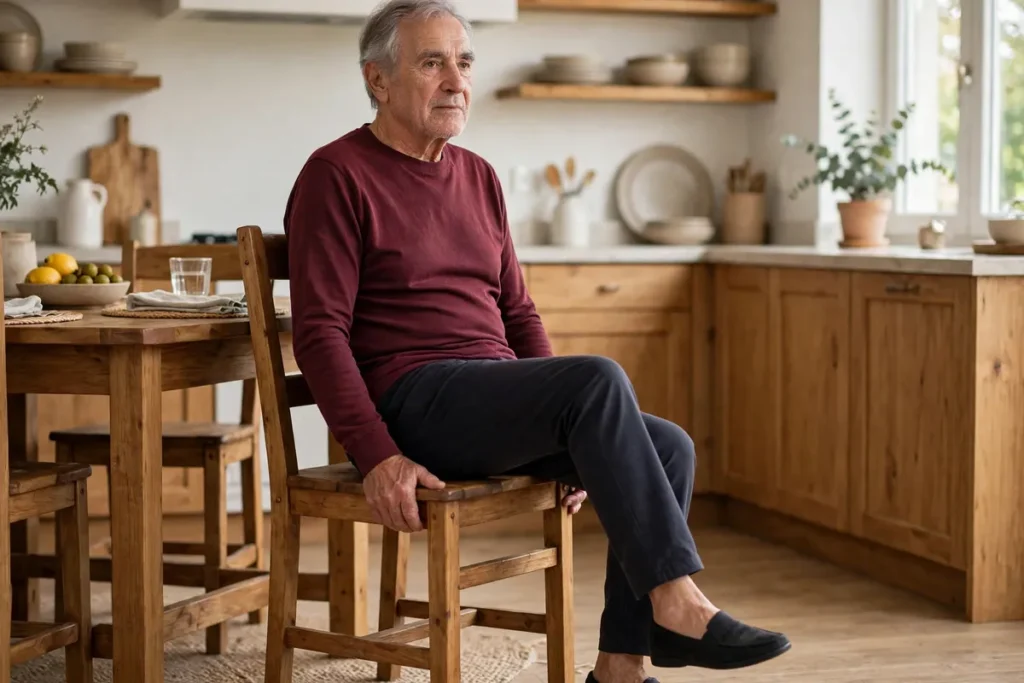
5. Heel Slides
Place one foot flat on the floor. Slowly slide your heel forward until the leg is nearly straight, then slide it back to the starting position. Repeat with the other foot. Reps: 8 each side.
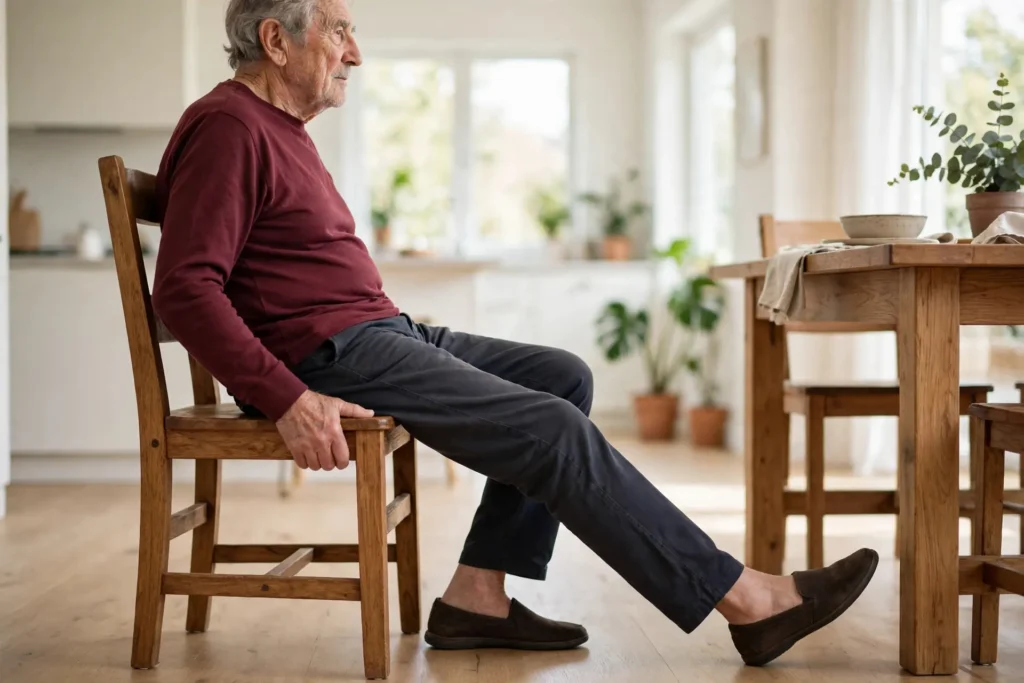
6. Inner-Thigh Squeeze
Place a soft ball or a folded cushion between your knees. Gently squeeze it with both knees, hold, then relax. Reps: Squeeze for 5 seconds × 8.

7. Seated Figure-4 Stretch
Rest one ankle on the opposite knee, forming a figure 4. Sit tall and lean forward very gently from the hips until you feel a mild stretch. If this position is not comfortable, keep both feet on the floor and move on to the next stretch. Reps: Hold 15–20 seconds each side.

Part 2 — Supported standing leg exercises
These five moves come from Part 2 of the Balance Exercises guide, where every exercise is done standing while holding the back of a sturdy chair or a countertop. Keep hold for the whole of each exercise. If you would rather stay seated today, finish after Part 1 — you still have a complete leg session.
8. Standing Heel Raises
Stand behind a sturdy chair and hold the chair back with both hands. Press through the balls of your feet to lift both heels as high as is comfortable, then lower them slowly back down. It is the same heel movement as exercise 2, done standing with support. Reps: 12–15 reps.
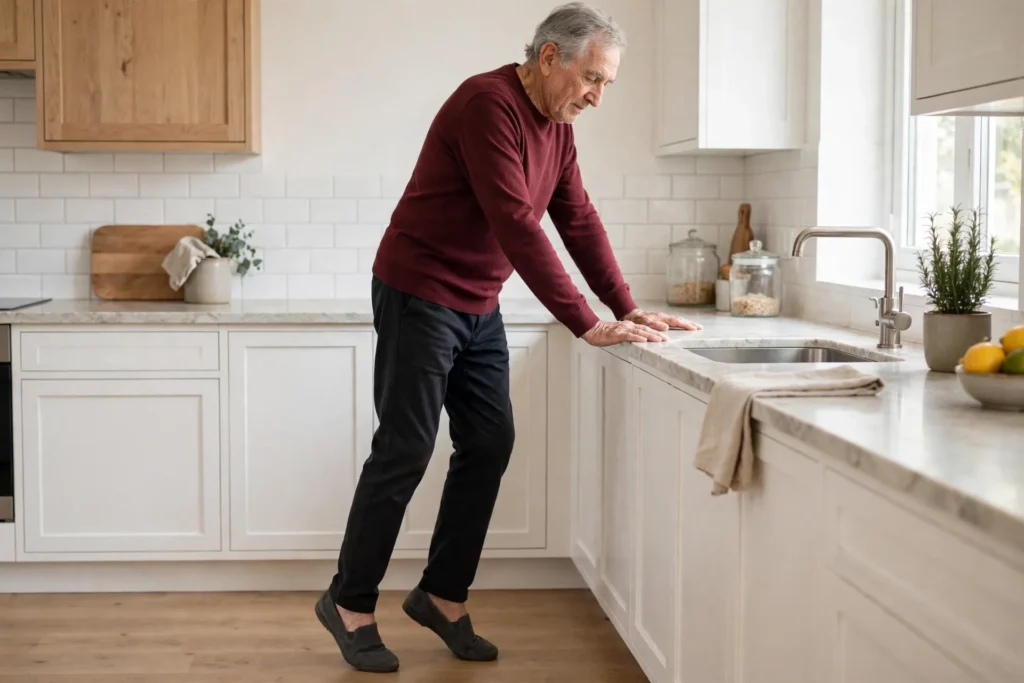
9. Side Leg Raises
Stand behind the chair and hold the chair back with both hands. Lift one leg out to the side a few inches, keeping your toes pointing forward. Lower it slowly, finish the set, then repeat with the other leg. Reps: 8–10 each side.
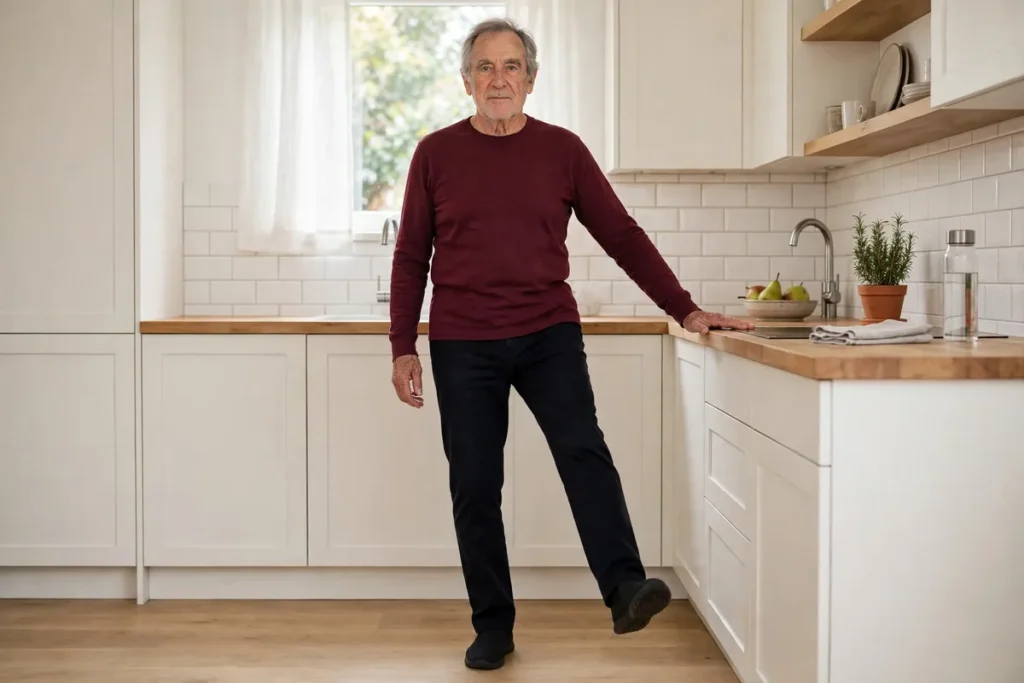
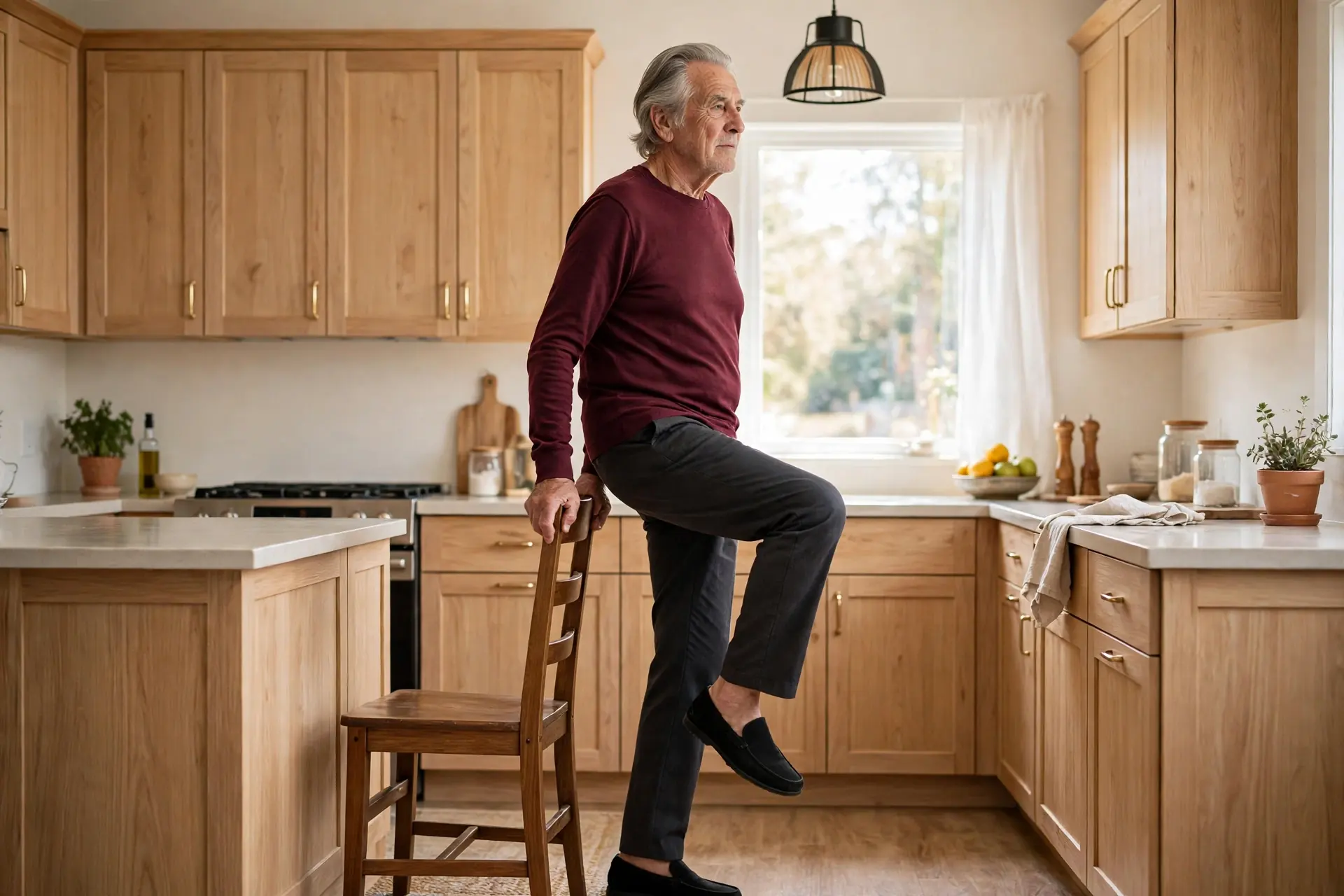
10. Standing Marching
Stand behind the chair and hold the chair back with both hands. March in place, lifting one knee a few inches at a time, keeping hold of the chair the whole time. Reps: 30–60 seconds.
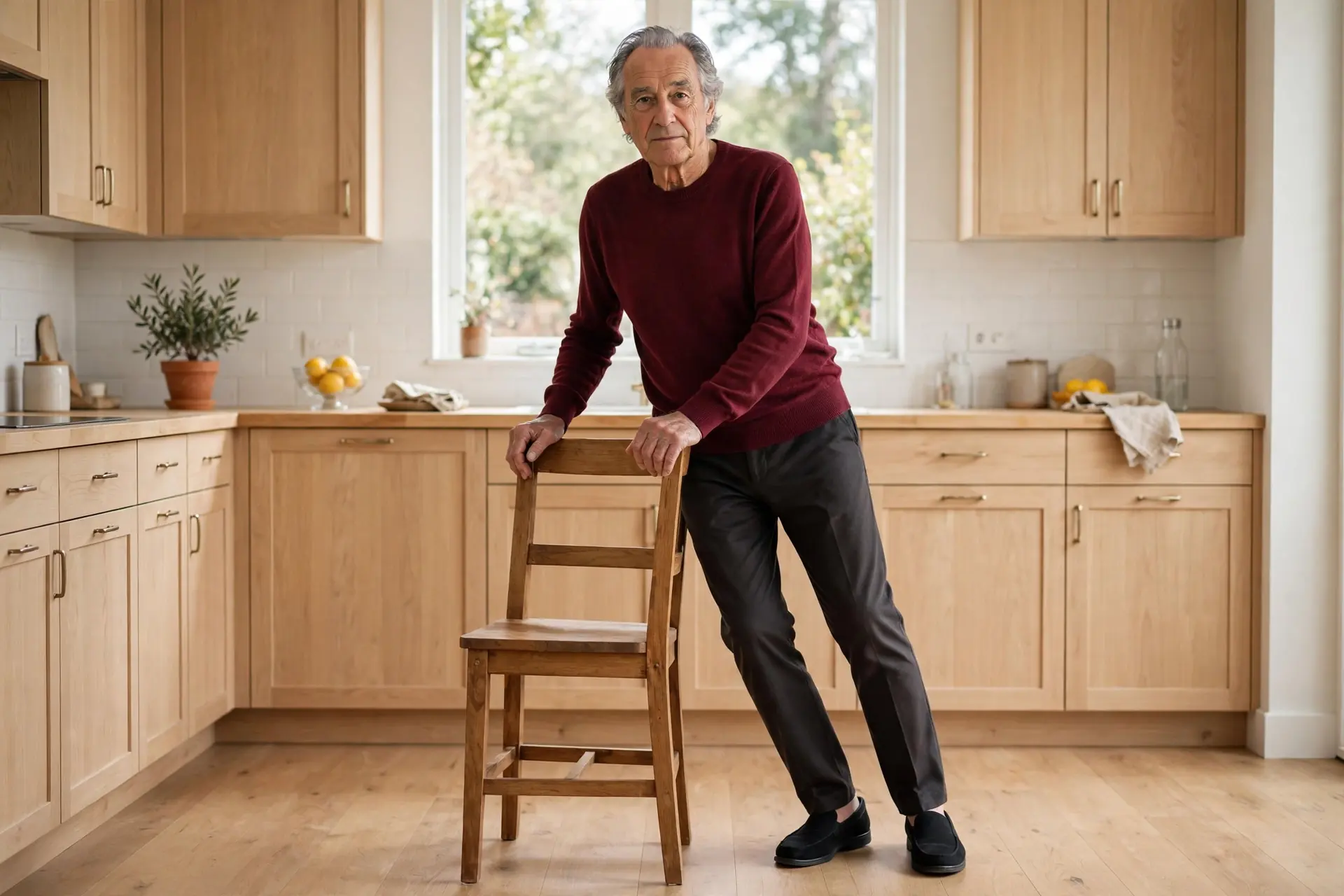
11. Weight Shifts Side to Side
Stand behind the chair and hold the chair back with both hands, feet hip-width apart. Shift your weight slowly over one foot, then across to the other foot, keeping hold of the chair throughout. Reps: 10–12 slow shifts.
12. Mini Knee Bends
Stand behind the chair and hold the chair back with both hands, feet hip-width apart. Bend your knees a little, keeping them pointing over your toes, then straighten up slowly. Keep the bend small. Reps: 8–10 reps.

The full charts, if you want more
This routine is a leg-only selection. The Chair Exercises for Seniors — Mega Chart contains the complete “Legs & Feet” section — all six of its exercises are in the routine above, including the Inner-Thigh Squeeze, which uses a soft ball or folded cushion — within its full set of 24 seated exercises covering warm-up, arms and shoulders, core and back, and a cool-down. The Balance Exercises for Seniors printable contains all eight of its supported-standing exercises (this routine uses five), six seated balance and core exercises, and short daily routines with a weekly tracker. And if what you want is a complete seated routine for the whole body rather than a leg-focused one, our free chair exercises article sets out a 12-exercise starter routine with the Mega Chart download.
Frequently asked questions
Do I have to do the standing exercises?
No. The seven seated moves are a complete leg session on their own, and the balance guide the standing moves come from says the same about its own seated part: if standing feels unsteady, do the seated exercises only. The standing moves are there for days when you feel steady — and only ever while holding a chair back or countertop for the whole exercise.
How often should seniors do leg exercises?
There is no single right answer, and your doctor’s advice comes first. The NHS guidelines for older adults suggest being active every day, even lightly, with activities that improve strength, balance and flexibility on at least two days a week. A short routine like this one fits naturally on a couple of days a week to begin with, with rest days in between — and resting more, or doing fewer repetitions, is always fine.
What if one of the exercises hurts?
Stop that exercise. Both source charts say the same thing: rest at any time, stop any exercise that hurts, and stop straight away if you feel dizzy or in pain. A smaller movement, or fewer repetitions, is always an option on a better day — pushing through pain is not.
Do I need any special equipment?
Almost none. For these twelve moves you need a sturdy chair without wheels, a countertop or the chair’s back to hold during the standing moves, flat non-slip shoes, and a clear patch of floor. No weights, resistance bands or gym equipment are involved. The one extra is for the Inner-Thigh Squeeze: a soft ball or a folded cushion to place between your knees.
I have a health condition, or I have fallen before. Should I do these?
Check with your doctor before starting, especially if you have a health condition or a history of falls — that is the wording both charts carry, and it applies here too. If your doctor is happy for you to exercise, the seated part keeps you in your chair throughout, and the standing part is only ever done holding solid support, ideally with someone nearby. This page is general educational information, not medical advice, and it is not a substitute for guidance from your own doctor or physiotherapist.
A final word
A leg routine does not need to be long or hard to be worth the few minutes it takes. Seven seated moves, five supported standing moves if you want them, everything slow and at your own pace — that is a complete session. Start with the seated part, add the standing moves only when they feel right, and stop whenever the day says stop.
This article and the charts it draws on are general educational information, not medical advice. Stop if you feel pain or dizziness, and check with your doctor before starting a new exercise routine, especially if you have a health condition or a history of falls.