
If you have decided to give tai chi a try, the hardest part is rarely the movements themselves. It is knowing what to do on day three, on day nine and on day twenty-two — and whether you are doing any of it properly. A simple 30-day plan solves that problem. It gives your first month a shape, so each short session builds gently on the one before, and you are never left standing in the middle of the room wondering what comes next.
This plan is a map, not a test. There are no grades at the end of the month and no pass mark to reach. Some people move through it more quickly, many move through it more slowly, and both are completely fine. What matters is that by the end of thirty days you have a short routine you know well, a habit of practising little and often, and a fair idea of whether tai chi suits you.
One thing worth saying at the start: this is guidance for structuring your own practice at home. It is not a fixed course, and it does not promise that anything in particular will happen by day thirty. Think of it as scaffolding — something to lean on while the habit takes shape, which you can set aside once you no longer need it.
Before you begin: how this plan works
The plan runs in four weekly stages. Sessions start at five to ten minutes in the first week and grow gradually to fifteen or twenty minutes by the fourth. That growth should feel almost unnoticeable. If at any point the sessions feel like a chore you dread, shorten them — a five-minute practice you actually do is worth far more than a twenty-minute one you keep postponing.
Practise at roughly the same time each day if you can. Anchoring the session to something you already do — after breakfast, before your evening meal — makes it much easier to keep. You need very little else: a small clear space, a sturdy chair or a wall within reach for balance, loose comfortable clothing, and flat shoes or bare feet on a floor that is not slippery.
The plan also assumes rest days. Aim to practise on five or six days out of seven rather than forcing all seven. Rest is part of how the body adapts, and a plan with breathing room in it is a plan you are far more likely to finish.
Week 1 (days 1–7): posture, breathing and standing still
The first week is deliberately unglamorous, and that is its strength. Begin every session by simply standing. Feet about hip-width apart, knees soft rather than locked, weight spread evenly across both feet, shoulders dropped, arms hanging loosely, head balanced as though gently suspended from above. Spend a minute there. Notice how much quiet work standing well actually involves.
Then breathe. Let the breath slow down on its own — in and out through the nose if that is comfortable, without forcing it deeper or longer than it wants to go. Many beginners are surprised to find that standing and breathing, done attentively, is already a practice in itself.
Add just one or two simple movements. Raising both arms slowly in front of you as you breathe in, and lowering them as you breathe out, is enough. So is gently shifting your weight from one foot to the other, letting the body sway like a slow pendulum. Five to ten minutes of this, most days, is a proper first week. End each session by standing quietly for a few breaths before you walk away — that small pause is part of the practice, not an afterthought.
Week 2 (days 8–14): adding a few simple movements
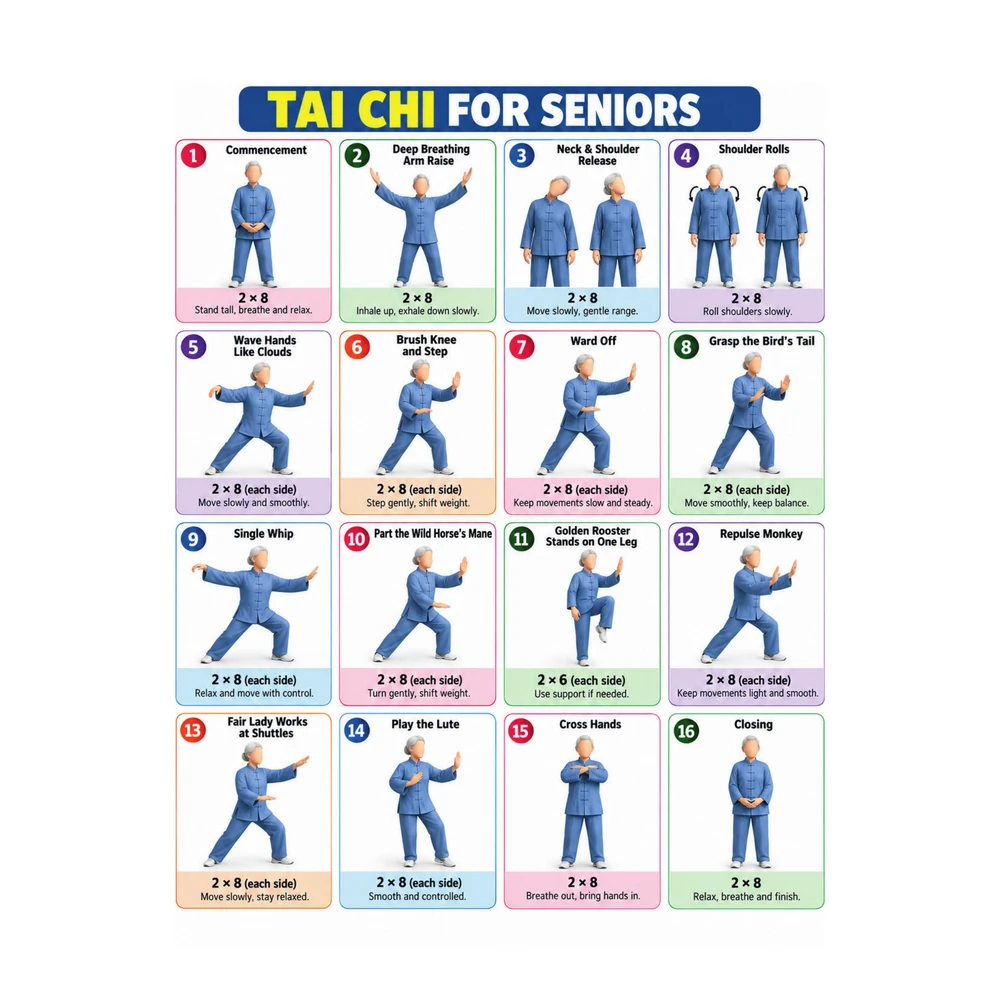
In the second week, keep everything from week one and add two or three more movements to your small collection. Choose simple ones: a gentle turning of the waist from side to side with the arms following softly, or a slow opening and closing of the arms as though holding and releasing a large, light ball.
Repeat each movement several times, slowly, rather than rushing to collect new ones. Depth matters more than variety at this stage. A movement you have repeated fifty times teaches you more than five movements you have each tried twice.
If your balance feels reasonably steady — and only if it does — you can introduce a simple stepping pattern: stepping one foot out to the side and bringing it back, holding the chair or resting a hand on the wall as you do. Sessions this week can stretch to ten or twelve minutes. Expect one side of your body to feel clumsier than the other. Everyone has a less obedient side; it is not a fault, just information.
Week 3 (days 15–21): linking movements together
Until now you have been practising movements one at a time, like separate beads. This week you begin threading them onto a string. Finish one movement and flow into the next without a full stop in between. The transitions will feel awkward at first. That is normal — the linking is a skill in itself, and it is where tai chi starts to feel like tai chi rather than a set of exercises.
Keep the same total collection of movements; the new work is in the joins. Let your breathing settle into the background rather than counting it. Sessions of twelve to fifteen minutes are plenty.
Expect an uneven week. Some days the sequence will flow, and some days you will feel as though you have forgotten everything. Both kinds of day are part of learning, and the clumsy days are not wasted — they are usually when the body is quietly reorganising what it knows.
Week 4 (days 22–30): a settled routine of your own
By the fourth week you should have a short sequence you can move through without stopping to think hard about what comes next. This week’s work is polish: slower, softer, more even. Let the movements shrink slightly if that makes them smoother. Try practising at a different time of day once or twice, just to prove to yourself that the habit belongs to you and not to the clock.
Then think about what comes next. You might simply keep this routine as a daily anchor and deepen it over the coming months — many people do exactly that, happily, for years. You might add new movements gradually, one every week or two. Or you might look for a local class, where a teacher’s eye and the company of others can carry you further.
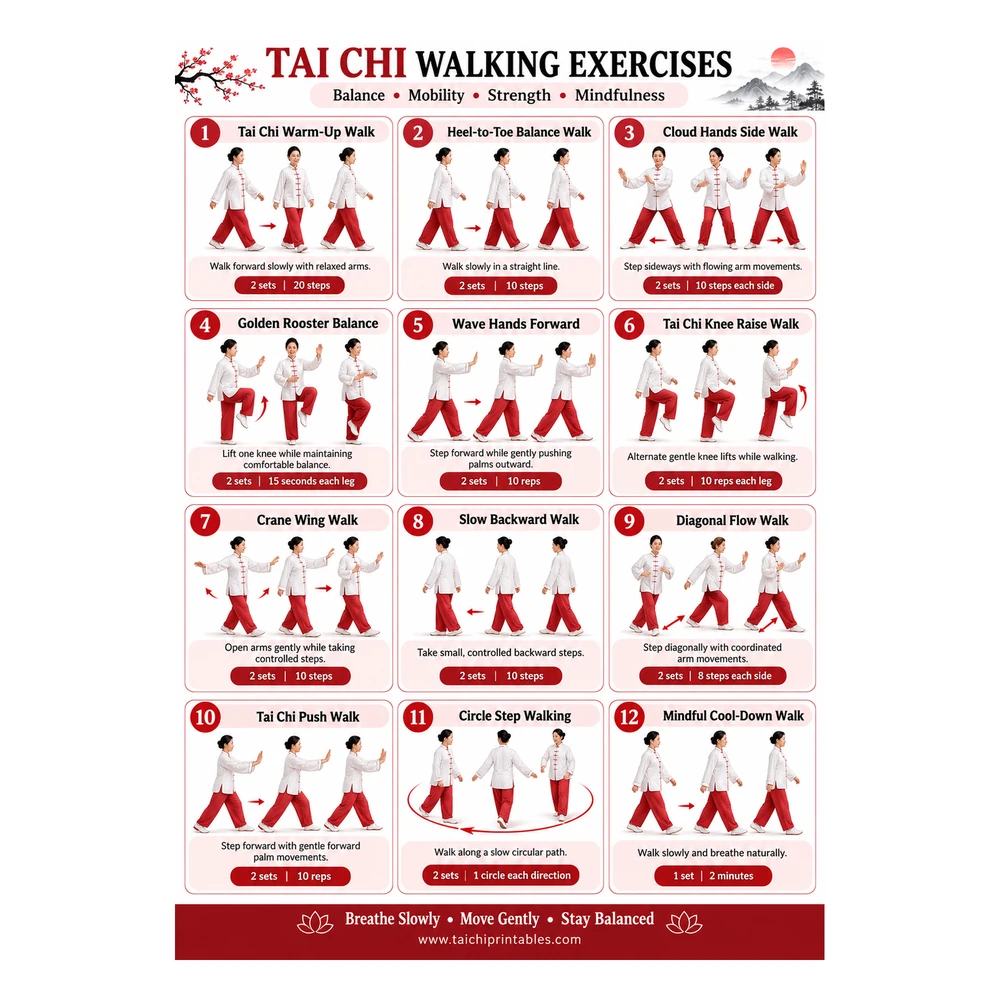
If walking appeals to you, tai chi walking is a natural next step: our tai chi walking programme explains how the walking practice is put together, and if you like the idea of a structured month built around it, the 28-day tai chi walking challenge follows a similar day-by-day rhythm to the plan you have just completed.
Rest days and missed days
Rest days are part of the plan, not a failure of it. Gentle exercise still asks something of muscles and joints, and they adapt during the pauses, not only during the practice. A planned rest day also protects the habit: a month with breathing room survives real life far better than a rigid streak.
Missed days need even less ceremony. Life will interrupt — visitors, colds, bad nights, busy weeks. When it does, simply continue where you left off. Do not double up sessions to catch up, and do not restart from day one; neither is necessary, and both turn a small interruption into a reason to quit.
If you miss the best part of a week, drop back to the previous week’s level for two or three sessions before carrying on. Your body will remind you where you were surprisingly quickly.
How to know you are ready to move on
The calendar is a guide, not a gatekeeper, so use these signs rather than the date. You are probably ready for the next week when you can do the current movements without stopping to think through each step; when your breathing stays calm throughout; when you finish a session feeling settled rather than tired; and when your balance feels a little steadier, with less gripping and bracing.
If none of that sounds true yet, repeat the week. There is no penalty for repeating — the plan serves you, not the other way round, and a solid second week one is worth more than a shaky week three.
A short note on safety
Practise near a chair or wall you can hold if you wobble, keep every movement inside a range that feels comfortable, and stop if you feel dizzy, unwell or in pain. If you have a health condition, or you are returning to movement after illness or injury, check with your doctor before starting. This article is general educational information, not medical advice.
Frequently Asked Questions
How long should each session be in the first month?
Start with five to ten minutes in the first week and let sessions grow gradually to around fifteen or twenty minutes by the fourth week. Shorter is always acceptable — on a tired or busy day, five gentle minutes keeps the habit alive, and that matters more than the number on the clock.
What if I miss several days?
Just continue where you left off. There is no catching up to do and no need to start again. If you have missed most of a week, repeat the previous week’s level for two or three sessions and then carry on. Interruptions are a normal part of a month, not a reason to abandon it.
Do I need to learn the movements in a particular order?
No fixed order is required. The sequence in this plan — posture and breathing first, then single movements, then linking them — is a sensible way to build, but within each week you can arrange the movements in whatever order feels natural. Comfort and steadiness matter more than choreography.
Should I practise every single day for thirty days?
No. The plan is built around five or six practice days a week, with rest days in between. Daily practice is fine if it feels good, but it is not required, and planned rest usually makes the habit easier to keep, not weaker.
Final thoughts
Thirty days of tai chi will not transform you, and any plan that promises transformation in a month should be treated with suspicion. What thirty days genuinely can do is quieter and more useful: give you a short routine you know by heart, a regular pocket of calm in the day, and honest knowledge of whether this practice is one you want to keep.