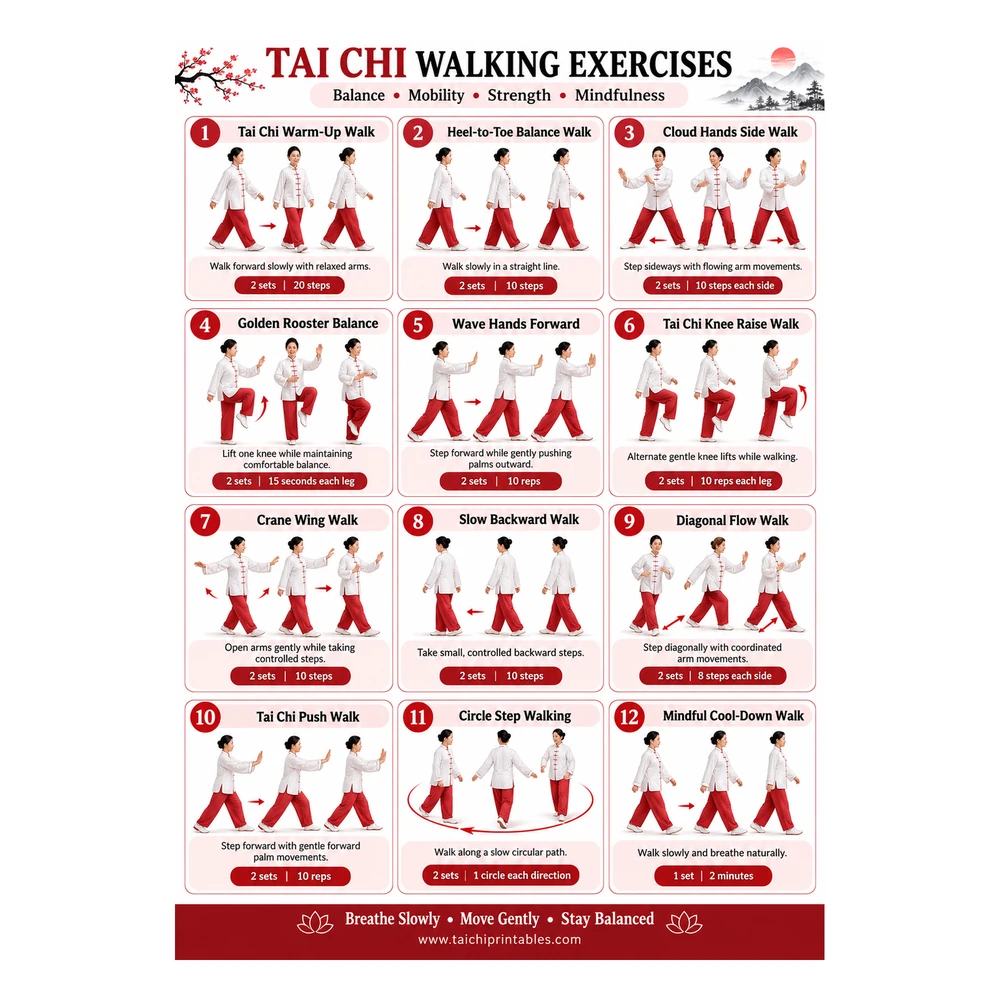

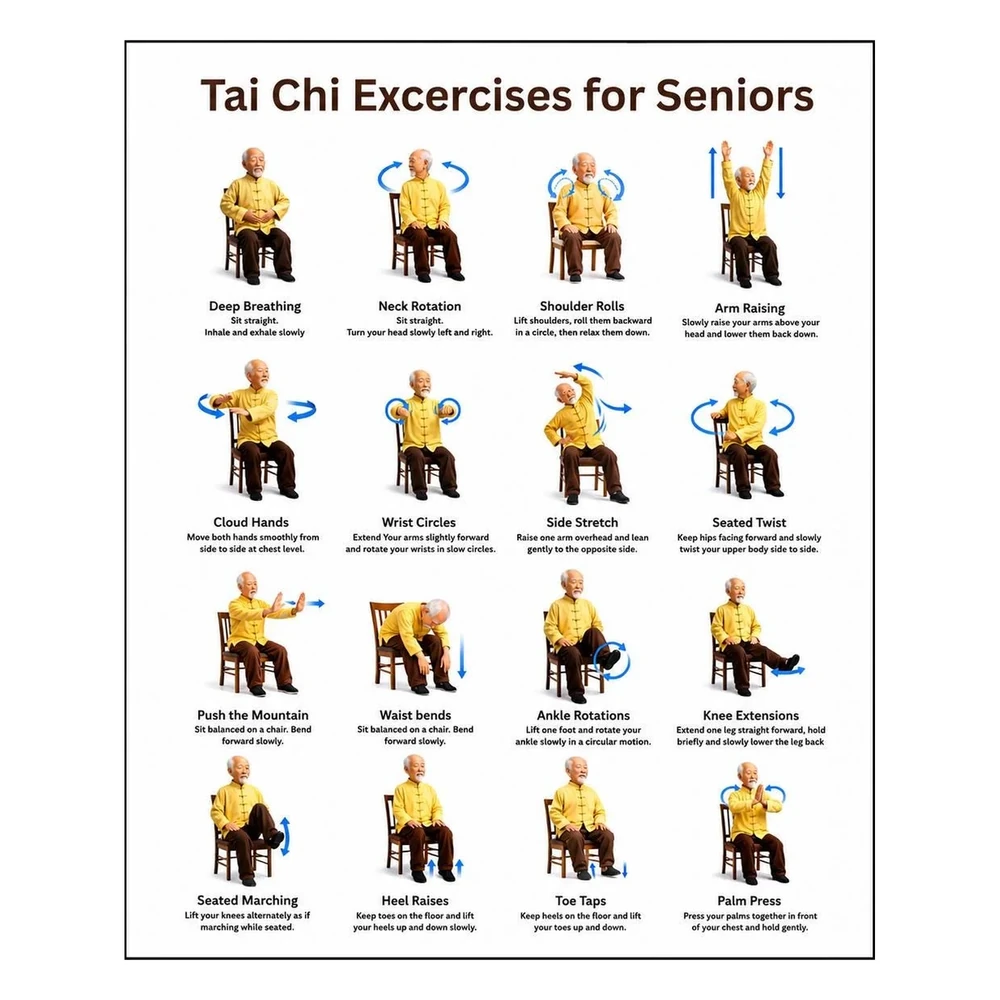
There is a small moment, familiar to many people, that happens just before exercise: you stand up, ready to begin, and your body feels like it belongs to someone who has been sitting still for hours — because it has. Shoulders stiff, neck tight, knees reluctant. Jumping straight into your routine from that state is rarely comfortable, and it is exactly what a warm-up is for.
A tai chi warm-up is not a separate workout. It is a gentle bridge between sitting still and moving properly: a few unhurried minutes that wake up your breathing, loosen the main joints in turn, and let your balance settle before the first real movement. This article explains why it matters and walks through a simple structure you can use before any gentle session.
Why Warming Up Matters More as We Get Older
Younger bodies forgive a cold start. Older bodies tend to send an invoice. Joints that have been still — overnight, or through a long afternoon in a chair — are commonly at their stiffest, and muscles take a little longer to respond. A short warm-up addresses this in practical ways: gentle movement gets the joints moving through their comfortable range, your breathing deepens, your circulation picks up gradually rather than suddenly, and your sense of balance has a chance to switch on before you ask anything of it.
There is also a mental side. The warm-up is where you find out what kind of day your body is having. A shoulder that feels tighter than usual, a knee that wants smaller movements — the warm-up tells you early, while everything is still gentle, so you can adjust the session that follows instead of discovering it halfway through.
The Shape of a Simple Tai Chi Warm-Up
The routine below is general guidance, in plain terms — the same kind of preparation used before our chair tai chi sessions and standing routines alike. Work from the top of the body down, keep everything slow, and stay well within what feels comfortable. The whole sequence takes roughly five to ten minutes, and it can be done standing with a chair nearby, or partly seated if you prefer.
1. Settle and Breathe
Begin by simply standing (or sitting) still. Let your feet settle flat, your shoulders drop, and your arms hang loosely. Take several slow breaths, letting each out-breath be a little longer than the one before. This is not wasted time: it steadies your balance, slows a busy mind, and marks the clear start of your practice. Many people find their posture quietly improves during these breaths without any effort at all.
2. Neck and Shoulders
Turn your head slowly to one side, then the other, keeping the movement small and easy — never force your neck, and never roll it in full circles. Then lift both shoulders gently towards your ears and let them drop, a few times, before rolling them slowly forwards and backwards. The neck and shoulders carry tension for most of us, and releasing it early makes every arm movement that follows feel smoother.
3. Arms and Wrists
Let your arms swing very gently, or raise and lower them slowly as if moving through water. Make a few slow circles with your wrists, and open and close your hands a few times. Tai chi asks a lot of relaxed arms and soft hands, and this short step prepares both. Keep your shoulders down throughout — if they creep up towards your ears, pause, drop them, and continue.
4. Waist Turns
With your feet planted and knees soft, turn your upper body slowly from side to side, letting your arms swing loosely with the turn, like a slow, relaxed version of looking over each shoulder in turn. Keep the turn comfortable and your hips facing mostly forwards. This loosens the waist and spine gently and is one of the classic ways tai chi practice begins to feel flowing rather than stiff.
5. Legs and Ankles
Shift your weight slowly from one foot to the other, a few times, feeling the whole sole of each foot. Then, holding your chair for support, make a few gentle circles with one ankle, then the other. If you like, add a few small, slow knee bends — more of a softening than a squat. This step wakes up the joints that will carry you through the standing movements, and gives your balance a final rehearsal.
6. First Slow Steps
Finish the warm-up by walking slowly in place, or taking a few unhurried steps across your space, tai chi style: heel down first, weight rolling gently forwards, knees soft. After half a minute of this, you are ready to begin your routine — our Tai Chi for Seniors exercises are a typical example of what might follow.
How to Know You Are Warm Enough
You are not aiming to sweat or tire yourself. A good tai chi warm-up leaves you feeling looser than when you started, breathing a little more deeply, with your joints moving more easily and your balance feeling awake. If you still feel very stiff, simply repeat the gentlest parts — there is no rule against warming up for longer. On some days, particularly cold mornings, the warm-up may honestly be most of what you do, and that is a perfectly respectable session.
Common Warm-Up Mistakes
- Rushing. A fast warm-up misses the point. Every movement should be slower than feels necessary.
- Stretching hard. Warm-up movements are gentle mobilising, not deep stretches. Never force a joint to its limit, especially first thing.
- Holding your breath. If you notice you are bracing and holding your breath, the movement is too big or too fast. Shrink it and breathe out.
- Skipping it on good days. Feeling fine is not a reason to skip; the warm-up is also your daily check-in with your body.
Safety Notes
Keep a sturdy chair within reach throughout, and hold it during the ankle and stepping work. Wear flat, non-slip shoes and clear the floor around you. Stop if you feel dizzy, and sit down rather than pushing through. Keep every movement inside a comfortable range — mild looseness is the goal, pain is a stop signal. If you have a health condition, joint problems or a history of falls, check with your doctor before starting a new exercise routine. This article is general educational information, not medical advice.
Frequently Asked Questions
How long should a tai chi warm-up take?
About five to ten minutes suits most people. It should feel unhurried but not endless: long enough for your breathing to deepen and your main joints to loosen, short enough that you still have energy and enthusiasm for the session itself.
Can I do the warm-up seated?
Yes. The breathing, neck and shoulder work, arm and wrist movements and waist turns can all be done sitting in a sturdy chair. Only the weight shifts, ankle work and slow steps need standing, and those can be done holding the chair, or left out on days when sitting suits you better.
Do I need to warm up before chair tai chi?
It is still worthwhile. Seated practice uses your shoulders, arms, waist and breathing just as standing practice does, and a few gentle minutes of preparation makes the session feel smoother. The standing steps at the end can simply be replaced with gentle seated weight shifts.
What if I feel dizzy during the warm-up?
Stop, hold your support, and sit down until the feeling passes completely. Do not continue the session that day. If dizziness happens repeatedly, mention it to your doctor before practising again.
Is the warm-up a workout in itself?
It is very light, but it is real movement, and on days when energy is low or stiffness is high, a warm-up done slowly and completely is a legitimate gentle session. Many long-term practitioners say the habit of never skipping it is what kept them practising for years.
The Bottom Line
A tai chi warm-up is five to ten quiet minutes: settle and breathe, loosen the neck, shoulders, arms and waist, wake up the legs and ankles, and take your first slow steps. It asks almost nothing of you, and it gives back a session that feels smoother, safer and more enjoyable from the very first movement. Make it a fixed part of your routine, and your body will start to expect it — in the best possible way.