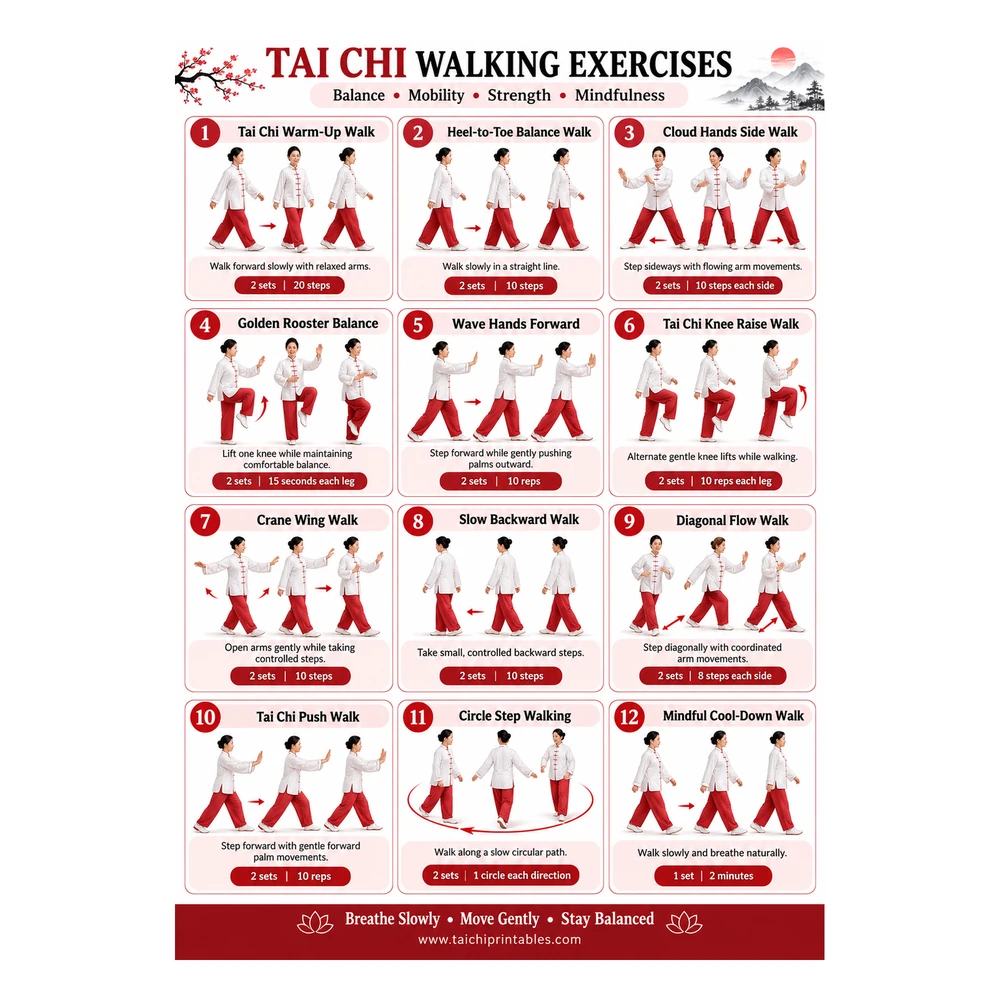

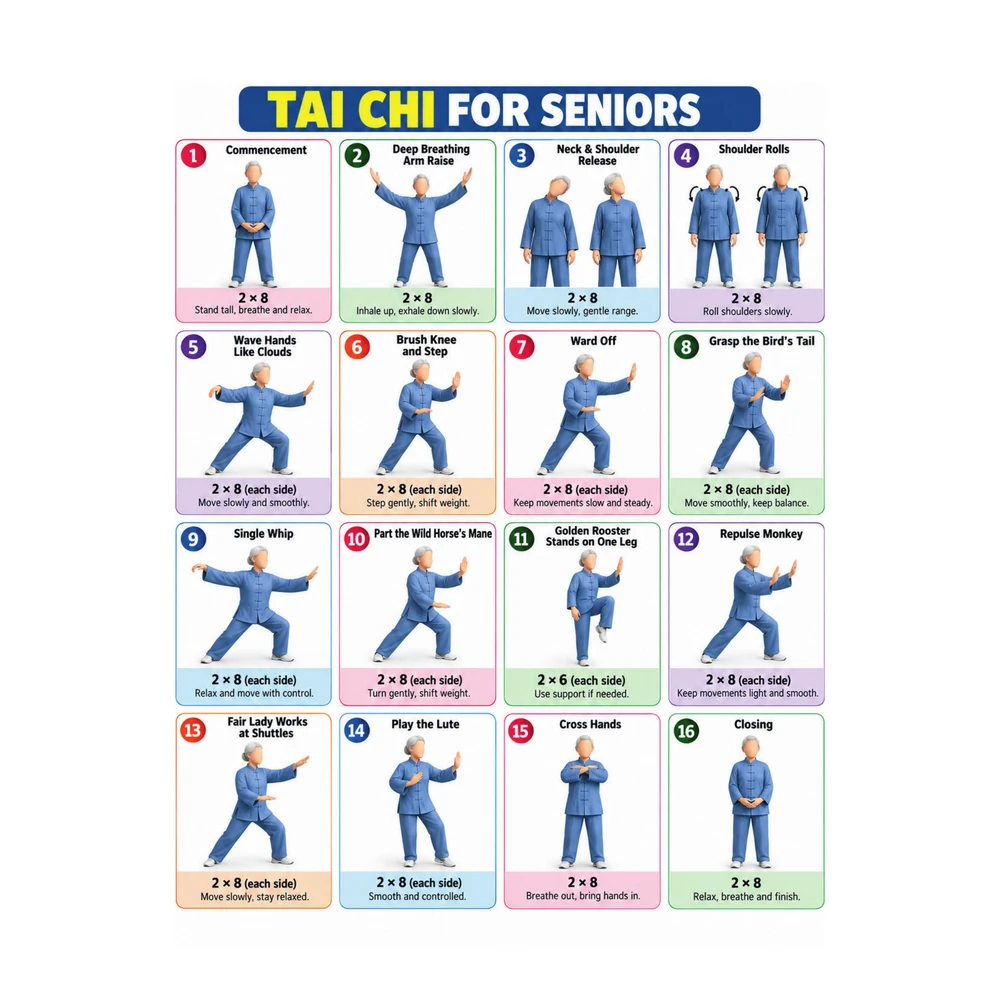
If you live with stiff, aching joints, you have probably wondered whether a gentle exercise like tai chi might be something you could manage — and whether it would actually be sensible for you. Those are reasonable questions, and this article answers them honestly, including the limits of what tai chi can do.
One thing needs to be said right at the start, because it matters more than anything else in this article: if you have arthritis, talk to your doctor before starting tai chi or any new exercise. Your doctor knows your joints, your medication and your overall health, and their guidance comes before anything written here. Tai chi is not a treatment for arthritis, and nothing in this article should be read as medical advice.
What the Word “Arthritis” Means
“Arthritis” is a general word, not a single condition. It is used for a range of conditions that involve pain, stiffness, swelling or reduced movement in the joints. The most common form in older adults involves wear-related changes in the joint, but there are also inflammatory forms, in which the body’s immune system is involved, and several other types besides. The joints most often affected are the knees, hips, hands, feet and spine, though almost any joint can be involved.
Because the word covers so many different situations, no single piece of exercise advice fits everyone who has arthritis. A knee that is mildly stiff on cold mornings and a joint affected by an inflammatory condition are very different starting points. That is another reason the conversation with your doctor matters: it turns general information into advice that fits you.
Why People With Stiff Joints Look for Gentle Movement
It is a frustrating pattern: joints that hurt or feel stiff make you move less, and moving less tends to make the stiffness feel worse, while the muscles that support the joints gradually do less work. Many people with arthritis therefore go looking for a form of movement that is slow, low-impact and adjustable — something they can do on an ordinary day, at home, without jarring or straining their joints.
Tai chi often comes up in that search because of how it is practised: slowly, standing (or seated, in chair-based versions), with no impact, no floor work, and movements that can be made smaller or skipped altogether. It is understandable that this appeals. But appealing is not the same as proven, and the honest position is this: gentle movement is a normal part of how many people manage daily life with stiff joints, while claims about what any exercise does to arthritis itself belong to medicine, not to an exercise chart.
What Gentle Tai Chi Practice Involves
A gentle tai chi session for a beginner usually looks like this:
- Standing slowly through a sequence of flowing movements, or practising seated in a sturdy chair.
- Shifting weight gradually from one foot to the other, turning the waist gently, raising and lowering the arms.
- Moving only within a comfortable range — tai chi postures can be performed in a small, modest version that asks very little of any single joint.
- Short sessions, often ten to twenty minutes, with rest taken whenever it is needed.
Our Tai Chi for Seniors exercises show the standard standing routine, and our guide to tai chi for flexibility shows how the movements are performed as gentle stretches with short holds. Both are written for general readers; neither is designed for, or adapted to, any medical condition.
What Tai Chi Cannot Do
This section is deliberately plain, because honesty here protects you:
- Tai chi does not cure arthritis. There is no exercise that does.
- Tai chi is not a treatment for arthritis, and it is not a substitute for the medical care, medication or physiotherapy your doctor may recommend.
- We make no claim that tai chi reduces joint pain or inflammation. If you come across strong promises of that kind anywhere, treat them with caution.
- Tai chi cannot tell you what is wrong with a joint. New, worsening or unexplained joint pain needs a medical assessment, not an exercise routine.
What tai chi honestly is, is a gentle way of moving: a form of exercise that some people with stiff joints find manageable and enjoyable as part of an active daily life, alongside — never instead of — their medical care.
Practical Points If Your Doctor Agrees You May Try
If you and your doctor decide gentle tai chi is reasonable for you, a cautious approach makes sense:
- Start smaller than you think you need to. Use the modest version of every movement, keep sessions short, and build up only if your joints feel no worse afterwards.
- Respect flare-ups. Arthritis often has better and worse periods. On a bad day, rest, or do only the gentlest seated movements — or skip practice entirely. Never push through a flare-up to keep a routine going.
- Use support. Practise beside a sturdy chair or counter, and hold on whenever you feel unsteady.
- Watch your hands and wrists. If your hands are affected, keep the arm movements loose and relaxed, and skip any posture that asks you to bear weight through your hands.
- Notice the response. Mild tiredness after gentle exercise is ordinary. Joint pain that is sharper, new, or still worse a day or two later is a signal to stop and raise it with your doctor.
Safety First
To repeat the most important point in this article: talk to your doctor before starting tai chi if you have arthritis, and check in again if your symptoms change, if you have a significant flare-up, or if you are considering increasing how much you do. Stop practising and seek medical advice if you experience severe pain, a hot or swollen joint, sudden loss of movement, dizziness, or chest pain.
Practise on a clear, flat surface in flat, supportive shoes. Keep a chair within reach. Stop any movement that hurts — in tai chi, easing off is always the correct response, never a failure. This article is general educational information only; it is not medical advice and does not replace the judgement of your own healthcare professionals.
Frequently Asked Questions
Can tai chi cure my arthritis?
No. Tai chi does not cure arthritis, and no exercise does. It is a gentle form of movement that some people include in an active routine alongside their medical care. Anyone who promises a cure is not being honest with you.
Should I exercise during a flare-up?
As a general rule, rest is the sensible response to a flare-up: reduce what you do, or stop altogether until things settle, and follow your doctor’s advice. Gentle movement on better days and rest on bad days is a far wiser pattern than pushing through.
Is seated tai chi an option if standing is difficult?
Yes, chair-based tai chi performs the arm, breathing and gentle trunk movements while you sit, which many people find more manageable. Standing practice is not compulsory, and seated practice is a complete option in its own right, not a lesser one.
How will I know if tai chi is not right for me?
Warning signs include joint pain that increases and stays increased, swelling, or new symptoms after practice. If any of those happen, stop and discuss it with your doctor before continuing. Your doctor may suggest a different form of activity, or a physiotherapist’s guidance instead.
Does tai chi replace my arthritis medication or physiotherapy?
No, absolutely not. Never change, reduce or stop prescribed medication or treatment because you have started an exercise routine. Tai chi, if your doctor agrees to it, sits alongside your care — it does not replace any part of it.
The Bottom Line
Tai chi is a slow, gentle, adaptable form of exercise, and it is natural that people living with stiff, sore joints are curious about it. The honest answer is balanced: it cannot cure or treat arthritis, it makes no promise about pain or inflammation, and it is never a substitute for medical care. What it can be — with your doctor’s agreement, practised cautiously and within comfortable limits — is a pleasant way to keep moving as part of daily life. Start with that conversation with your doctor, and let everything else follow from it.