
A stiff upper back can make everyday movements feel less comfortable. You might notice tightness around your shoulder blades after sitting for a long time, looking down at your phone or spending hours working at a desk. Sometimes, the shoulders simply feel tense after a busy day.
Gentle stretching can give you an opportunity to move your upper back and shoulders through comfortable ranges. You do not need special equipment or a complicated routine. A sturdy chair, a little space and a few minutes are enough to get started.
This guide explains how to stretch upper back muscles with six gentle movements suitable for beginners and older adults. Each stretch includes clear instructions, along with safety advice to help you practise carefully.
Why Does Your Upper Back Feel Stiff?
The upper back includes the area between your neck and the lower part of your rib cage. It contains muscles that help support your posture and coordinate movements of your shoulders and arms.
Stiffness around this area can have several everyday causes.
Sitting for long periods
When you sit for extended periods, you may stay in much the same position without noticing. Your shoulders might gradually move forwards, and your upper back may become rounded.
A desk, dining table or comfortable chair can all encourage this posture if you remain in one position for too long.
Looking down at phones and screens
Many people spend time looking down at a phone, tablet or laptop. This often means the head moves forwards and the shoulders round.
Repeating this position throughout the day can leave the neck and upper back feeling tense or tired.
Everyday habits and activities
Household tasks, reading, driving and carrying shopping can all involve repeated upper-body positions.
You might also raise your shoulders without realising it when concentrating or feeling under pressure.
Limited movement throughout the day
If your shoulders and upper back do not move through many different positions, you may notice that certain movements feel less comfortable.
Taking occasional movement breaks and practising gentle stretches can help you explore a wider range of comfortable movement.
Safety Rules Before You Start
Before learning how to stretch upper back muscles, take a moment to prepare. Stretching should feel controlled and comfortable. You should never force your body into a position.
Keep these guidelines in mind:
- Choose a clear space where you can move without bumping into furniture.
- Use a sturdy chair that does not slide or roll.
- Move slowly and avoid sudden twisting or pulling.
- Keep your shoulders relaxed rather than lifting them towards your ears.
- Breathe normally throughout each stretch.
- Move only as far as feels comfortable.
- Avoid bouncing or forcing a deeper stretch.
- Stop if you experience sharp pain.
If you have an ongoing neck, shoulder or back problem, speak with a doctor or physiotherapist before trying a new stretching routine.
Six Gentle Upper Back Stretches
These six stretches are designed to be simple and easy to follow. You can practise them in order or choose a few that feel comfortable for you.
Start with a small range of movement. There is no need to reach a particular position or copy someone else’s flexibility.
1. Seated Shoulder Blade Squeeze
Purpose: Gently bring the shoulder blades towards each other while keeping the shoulders relaxed.
- Sit towards the front of a sturdy chair with both feet resting flat on the floor.
- Keep your back comfortably upright and let your arms rest beside your body.
- Relax your shoulders and look straight ahead.
- Slowly draw your shoulder blades towards each other, as though you are gently bringing them closer together.
- Keep your shoulders down rather than shrugging them towards your ears.
- Hold the position for about three to five seconds while breathing normally.
- Slowly release the squeeze and let your shoulders return to their natural position.
- Rest briefly before repeating.
- Repeat five to eight times, or fewer if you prefer. Keep the movement gentle rather than squeezing as hard as possible.
2. Chest Opener Using the Back of a Chair
Purpose: Gently open the front of the shoulders and chest while allowing the upper back to settle into a comfortable position.
- Stand behind a sturdy chair with your feet about hip-width apart.
- Place both hands on the back of the chair, keeping your grip comfortable.
- Step backwards a small distance while keeping your hands in place.
- Gently move your hips backwards and allow your chest to lower slightly.
- Keep your arms comfortable and avoid locking your elbows.
- Let your head remain in line with your upper body rather than dropping it sharply.
- Hold the position for about 10 to 15 seconds while breathing naturally.
- Slowly bring your body upright and step closer to the chair.
- Repeat once or twice if comfortable. Do not push your chest down or pull hard on the chair.
3. Seated Upper Back Rounding Stretch (Hands on Knees)
Purpose: Gently round the upper back and move the shoulder blades apart.
- Sit on a sturdy chair with both feet flat on the floor.
- Place your hands on top of your knees.
- Sit comfortably upright and look ahead.
- Slowly move your shoulders forwards and allow your upper back to round gently.
- Let your shoulder blades move slightly apart as your hands rest on your knees.
- Keep your lower body steady and avoid forcing your head down.
- Hold the rounded position for about five seconds while breathing normally.
- Slowly return to your upright sitting position and relax your shoulders.
- Repeat four to six times. Keep the movement focused on the upper back rather than bending your entire body forwards.
4. Gentle Neck-to-Shoulder Tilt
Purpose: Introduce a small, comfortable movement between the neck and shoulder area.
- Sit upright on a sturdy chair with both feet resting on the floor.
- Let your arms relax beside your body.
- Look straight ahead and keep your shoulders level.
- Slowly tilt your right ear a small distance towards your right shoulder.
- Keep your right shoulder relaxed and avoid raising it towards your ear.
- Stop as soon as you feel a gentle stretch along the side of your neck.
- Hold briefly, for around five seconds, without pulling on your head.
- Slowly return your head to the centre.
- Repeat the same small movement towards your left shoulder.
- Try two or three repetitions on each side. Keep the movement very gentle. Do not use your hand to pull your head down, and avoid turning or twisting your neck during the tilt.
5. Standing Wall Stretch
Purpose: Practise a comfortable shoulder and upper-body stretch using a wall for support.
- Stand facing a wall at a comfortable arm’s distance.
- Place both palms against the wall at about chest height.
- Keep your feet about hip-width apart and your knees slightly relaxed.
- Slowly walk your hands a little higher on the wall, only as far as feels comfortable.
- Allow your chest to move gently towards the wall while keeping your hips in a comfortable position.
- Keep your head in line with your upper body and avoid arching your lower back.
- Hold the position for about 10 seconds while breathing normally.
- Slowly walk your hands back down the wall.
- Return to a relaxed standing position.
- Repeat once or twice. Keep your hands at a comfortable height. If raising your arms causes discomfort, use a lower position or leave this stretch out.
6. Cross-Body Shoulder Stretch
Purpose: Gently stretch the back of one shoulder at a time.
- Sit or stand comfortably with your back upright.
- Relax both shoulders and let your arms rest by your sides.
- Slowly bring your right arm across the front of your chest.
- Keep the arm at a comfortable height, with your elbow slightly bent if needed.
- Place your left hand on your right upper arm, just above the elbow.
- Gently guide your right arm a little closer towards your chest.
- Keep your right shoulder relaxed and avoid twisting your upper body.
- Hold the position for about 10 to 15 seconds while breathing normally.
- Slowly release your arm and return it to your side.
- Repeat the movement with your left arm, using your right hand to guide it gently across your chest.
- Try one or two repetitions on each side. The stretch should feel mild. Do not pull hard or force your arm across your body.
How Often Should You Stretch Your Upper Back?
You do not need a long stretching session to begin. A few gentle movements performed regularly may be easier to maintain than an occasional lengthy routine.
The right frequency depends on your comfort, mobility and daily activity.
Start with a short routine
If you are new to stretching, begin with two or three of the movements in this guide. Spend a few minutes practising them slowly.
You can add the remaining stretches as you become more familiar with the positions.
Take movement breaks during the day
If you spend a lot of time sitting, try to change position occasionally. Stand up when appropriate, move your shoulders gently or take a short walk around your room.
These breaks can help you avoid remaining in one position for too long.
Choose a routine that fits your day
You might prefer stretching in the morning, after a period of sitting or during a quiet part of the evening.
There is no need to follow a strict schedule. Choose a time when you can move without rushing.
Pay attention to your comfort
Some days your movements may feel easier than others. Keep your range of motion comfortable and reduce the number of repetitions when needed.
If a particular stretch repeatedly causes discomfort, leave it out and ask a healthcare professional for advice.
Safety: When to Stop Stretching
These upper back stretches are intended as general movement exercises. They are not a treatment for back, neck or shoulder conditions, and they should not replace medical advice or prescribed care.
Pay attention to how your body responds during and after each movement.
Stop immediately if you experience:
- Sharp pain.
- Shooting or radiating pain.
- Numbness or tingling.
- Weakness in your arms or hands.
- Dizziness or unusual discomfort.
If you experience sharp, shooting or radiating pain, numbness or weakness, do not continue the routine. See a doctor or physiotherapist for ongoing problems.
It is also sensible to seek professional advice before starting if you have a recent injury, an ongoing shoulder or neck problem, or difficulty moving your arms comfortably.
Remember that a stretch does not need to feel intense to be useful as a gentle movement practice. Small, controlled movements are a sensible place to start.
Other Gentle Movement Guides
Upper back movement is only one part of everyday mobility. You may also find it useful to explore other areas of your body.
If you spend time sitting or notice tightness around your lower back, read our guide to best stretches for lower back.
For practical advice on sitting and standing more comfortably, see how to improve posture.
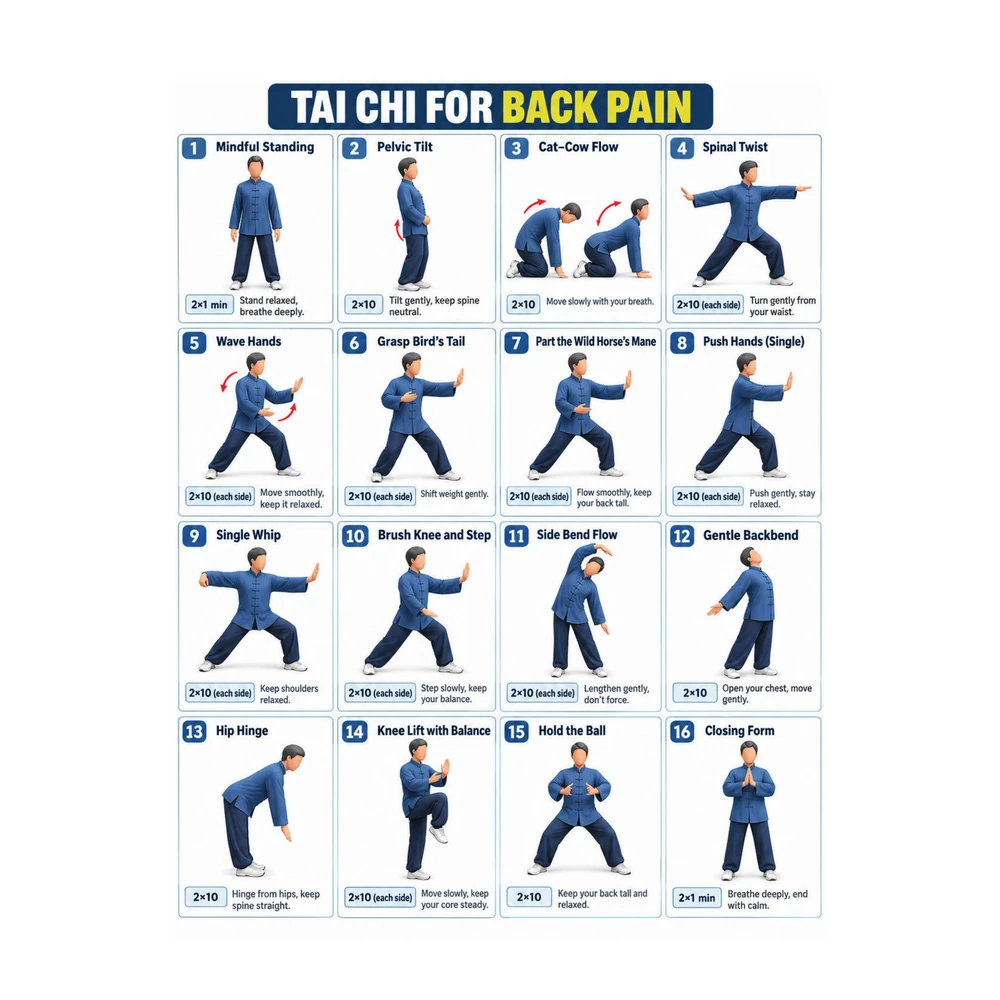
You can also explore our Tai Chi for back pain page for information about gentle Tai Chi movements.
Frequently Asked Questions
How do I stretch my upper back at home?
You can stretch your upper back using simple movements such as seated shoulder blade squeezes, gentle upper back rounding and supported wall stretches. Use a sturdy chair or wall when needed, and keep every movement within a comfortable range.
Why does my upper back feel tight after sitting?
Sitting for long periods can encourage you to remain in one position, sometimes with rounded shoulders or your head leaning forwards. Repeated positions and limited movement throughout the day may contribute to a feeling of stiffness.
How long should I hold an upper back stretch?
For the gentle stretches in this guide, a hold of around five to 15 seconds is a reasonable starting point, depending on the movement. Never force a position or hold a stretch if it causes pain.
Can older adults do upper back stretches while sitting?
Yes. Several gentle upper back movements can be practised while seated, including shoulder blade squeezes and upper back rounding. Use a sturdy chair, keep both feet supported and move slowly.
Should upper back stretches hurt?
No. You may notice a mild stretching sensation, but sharp pain is not expected. Stop if you experience sharp, shooting or radiating pain, numbness or weakness, and seek advice from a doctor or physiotherapist for ongoing problems.
Conclusion
Learning how to stretch upper back muscles does not require complicated movements or special equipment. A few gentle exercises can help you explore comfortable movement around your shoulders, neck and upper back.
Start with the seated stretches if standing is difficult, and use a sturdy chair or wall for support when needed. Move slowly, breathe normally and avoid forcing any position.
Most importantly, pay attention to your comfort. A simple routine that fits naturally into your day is a sensible way to make gentle movement part of your everyday habits.