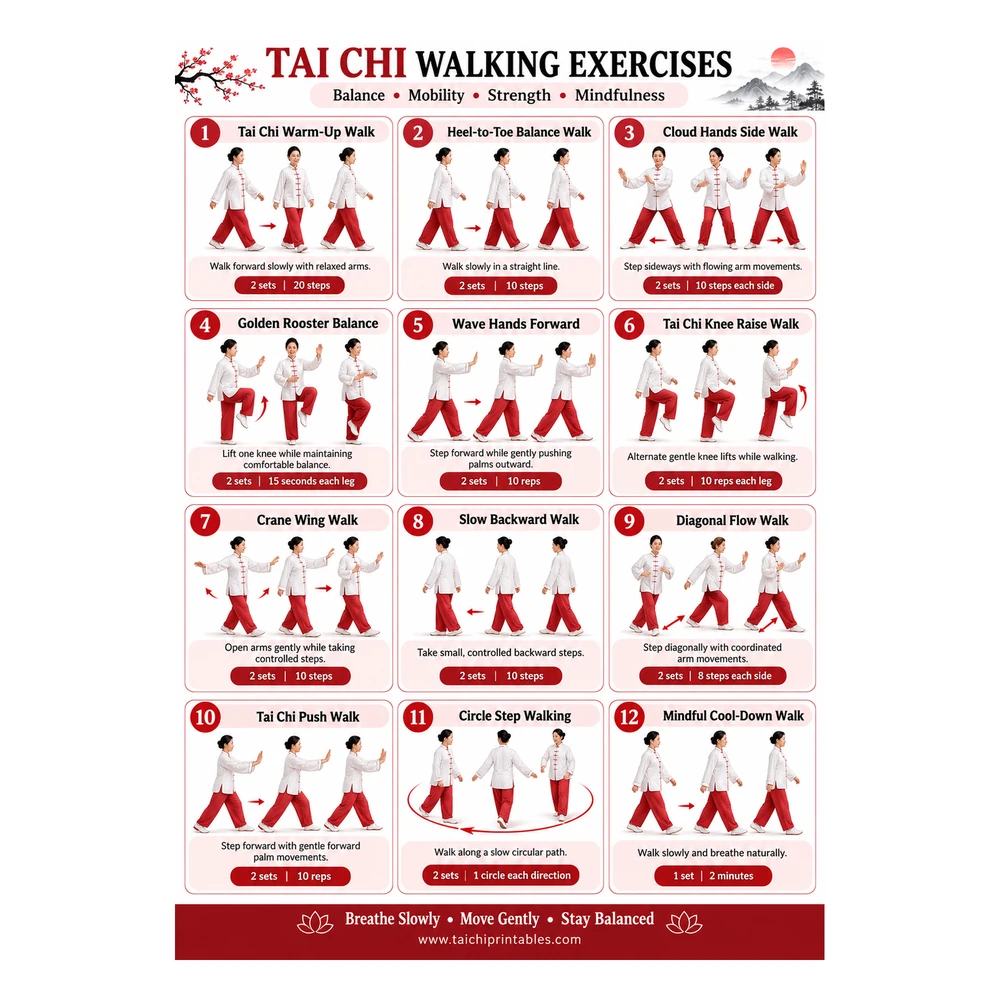

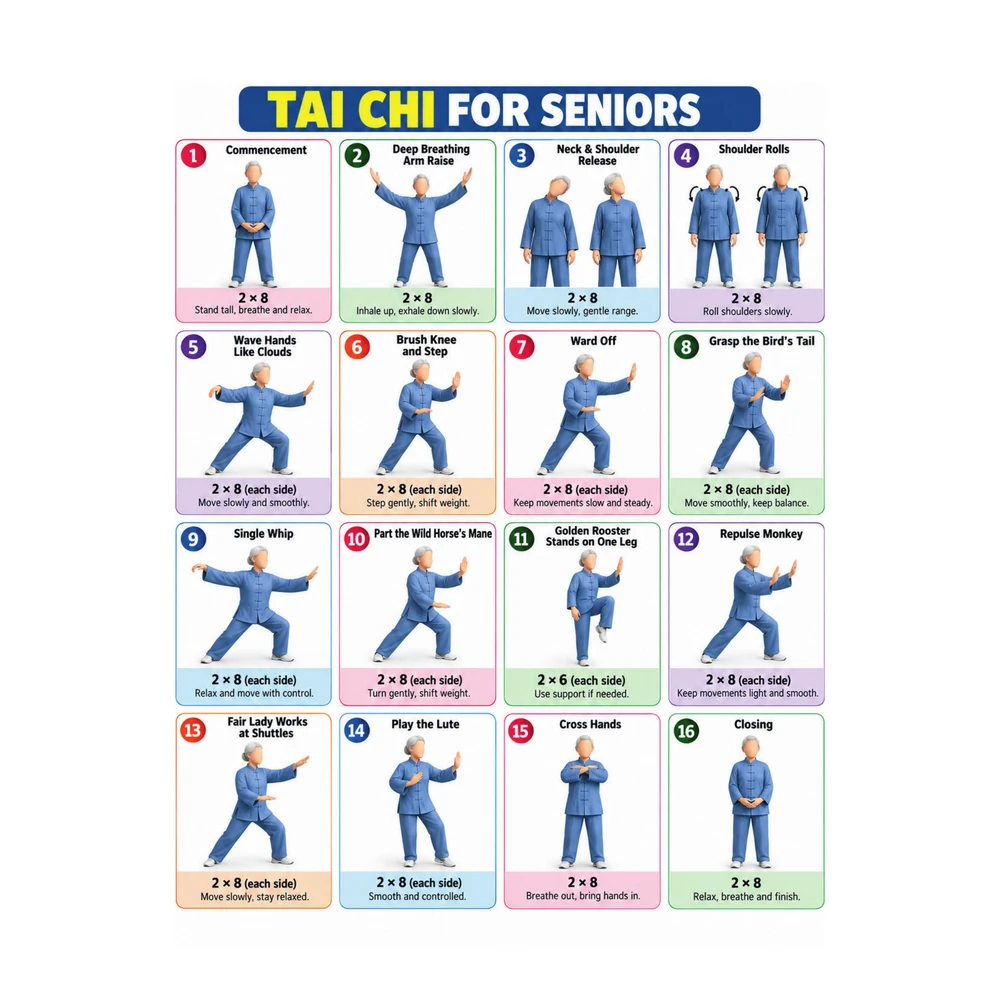
Tai chi is unusually well suited to home practice. It needs no special room, no equipment beyond a sturdy chair, and no partner or class timetable. A clear patch of floor, ten quiet minutes and a willingness to move slowly are enough to begin — and, honestly, enough to keep going for years.
This guide covers the practical side of doing tai chi at home: choosing your space, what to wear, how a session is structured, the different ways to learn at home, and how to build a regular habit. If you are brand new to the practice itself, our guide to tai chi for beginners at home is the best place to start; this article is about setting up home practice well.
Choose your space
You need roughly two paces of clear floor in each direction — enough to step forward, back and sideways and to turn around comfortably. A living room with the coffee table pushed aside, a spare bedroom or a hallway all work well. What matters is that the floor is level and uncluttered: move bags, shoes and loose rugs out of the way before you start, and keep pets in another room if they like to weave between your feet.
Place a sturdy chair at the edge of your space, within easy reach. It is there for balance support during standing movements, and for sitting down quickly if you feel tired or dizzy. Good light helps, and if you practise near a window, so much the better — but any quiet corner will do. If you have a garden or patio with a level, even surface, practising outdoors on a calm day is a pleasure many home practitioners enjoy; just apply the same rules about clear space, firm footing and support within reach.
What to wear and have nearby
Wear loose, comfortable clothes you can raise your arms and take a step in — ordinary daytime clothes are fine. On your feet, choose flat shoes with grip, or firm slippers with non-slip soles; avoid practising in socks on hard or polished floors. Keep a glass of water nearby, and if you use a printed chart or a written routine, have it somewhere you can see it without bending or twisting awkwardly — propped on the chair or on a shelf at eye level works well.
How a home session is structured
A tai chi session at home follows the same shape as a class, in three parts.
Settle. Begin by standing quietly for a minute, breathing naturally and letting your shoulders drop. This short pause marks the start of practice and lets your balance settle before you move.
Movements. Work through your chosen movements slowly, one at a time, repeating each a few times before moving on. Beginners often practise just a handful of movements per session; there is no requirement to complete a long sequence.
Close. Finish the way you began: standing quietly, breathing, letting everything settle. A complete beginner session — settle, a few movements, close — takes about ten minutes. As you learn more movements, sessions naturally grow to fifteen or twenty minutes. Let them grow; do not force them.
Learning at home: guides, charts and video
There are three common ways to learn tai chi at home, and many people combine them. Written guides explain each movement in steps you can re-read at your own pace, which suits careful learners. A one-page printed chart puts a whole routine in front of you at a glance — illustrations, order and repetitions — so you can follow a session without pausing to scroll or rewind; charts are also easy to keep where you practise. Video shows the flow and timing of movements, which written steps cannot fully convey, though it can be awkward to watch a screen while you are moving.
Whichever you choose, learn one small piece at a time. Practise the same few movements for a week before adding more, and expect the arms to feel awkward for the first few sessions — everyone’s do. Our guide to the best exercises for seniors at home can help you decide which style of routine suits your goals; this article is about tai chi practice itself.
Safety at home
Home practice is gentle, but it deserves the same care as any exercise. Practise beside your chair and hold it whenever you feel unsteady. Keep movements within a comfortable range — mild effort is right, pain is a stop signal — and sit down at once if you feel dizzy. Clear the floor before every session, not just the first; yesterday’s tidy space has a way of collecting clutter.
If you have a health condition, joint problems or a history of falls, check with your doctor before starting, and follow any personal restrictions you have been given over anything written here. This article is general educational information, not medical advice.
Building a regular habit
The routines that work at home are the ones that fit ordinary life. Practise at the same time of day if you can — many people choose the morning, when the house is quiet — and keep sessions short enough that doing one never feels like a big decision. Two or three sessions a week is a solid start; some people prefer a few minutes daily.
On days when a full session feels like too much, do the shortest version: stand quietly, practise one favourite movement, close. Keeping the appointment with yourself, even briefly, is what turns practice into a habit. If you would like a complete routine to work through, our Tai Chi for Seniors exercises article teaches a full gentle set of movements step by step.
Frequently Asked Questions
How much space do I need for tai chi at home?
About two paces of clear floor in each direction is enough for beginner practice — room to step forward, back and sideways and to turn around. Most people use a living room with furniture pushed aside, a spare room or a hallway, with a sturdy chair at the edge for support.
Can I learn tai chi at home without a teacher?
Yes. The beginner movements are simple and are designed to be learned from written steps, charts or video, with a chair nearby for support. Learn a few movements at a time and keep everything slow. A class can be enjoyable later, for company and correction, but it is not required in order to start.
What time of day is best for home practice?
Whichever time you will actually keep. Many people prefer the morning, when the house is quiet and the day has not yet filled up, but an afternoon or early evening session works just as well. Consistency matters far more than the hour.
Do I need a mat or any special equipment?
No. Tai chi at home needs a clear patch of floor, a sturdy chair for support, flat shoes with grip and comfortable clothes. There is no mat work and nothing to buy in order to begin; a printed chart is a convenience, not a requirement.
How do I know if I am doing the movements correctly?
As a beginner, use three checks: are you moving slowly, are you comfortable, and is support within reach? If so, you are practising safely and usefully. Precision improves gradually as movements become familiar. If a movement ever causes pain, stop — comfort is a better guide than copying a picture exactly.
Your front room is enough
Home is not a second-best place to practise tai chi; for many people it is the best place, because practice that fits into ordinary life is practice that continues. Clear a small space, put a chair at its edge, and give yourself ten quiet minutes. Settle, move slowly, close. Repeat a few times a week, and your front room becomes the place where the habit lives.