
Search for gentle exercise and the two names turn up side by side, sometimes used as if they were the same thing. They are not — but the confusion is understandable: the two practices are close relatives. Both are slow, gentle movement practices from China, done standing with calm breathing. The real difference is how a session is put together — and that decides which one will feel easier to start with. This page sets them side by side and walks through that choice.
Tai chi, in plain language
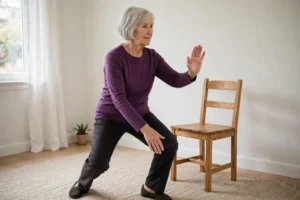
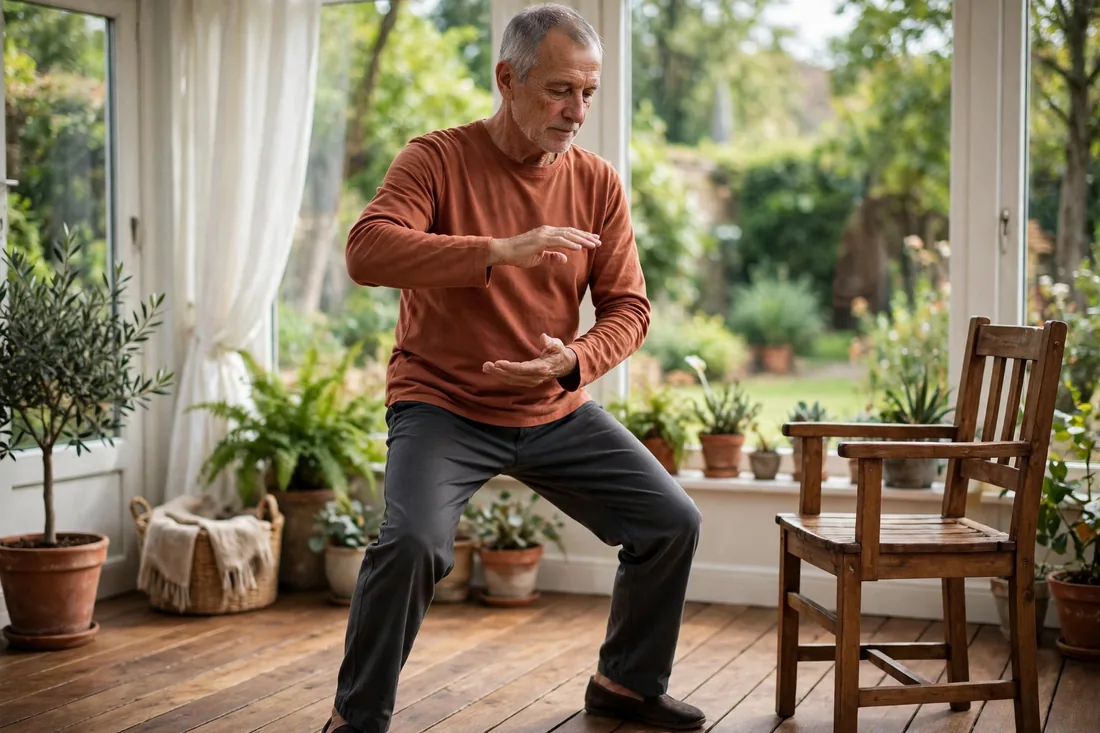
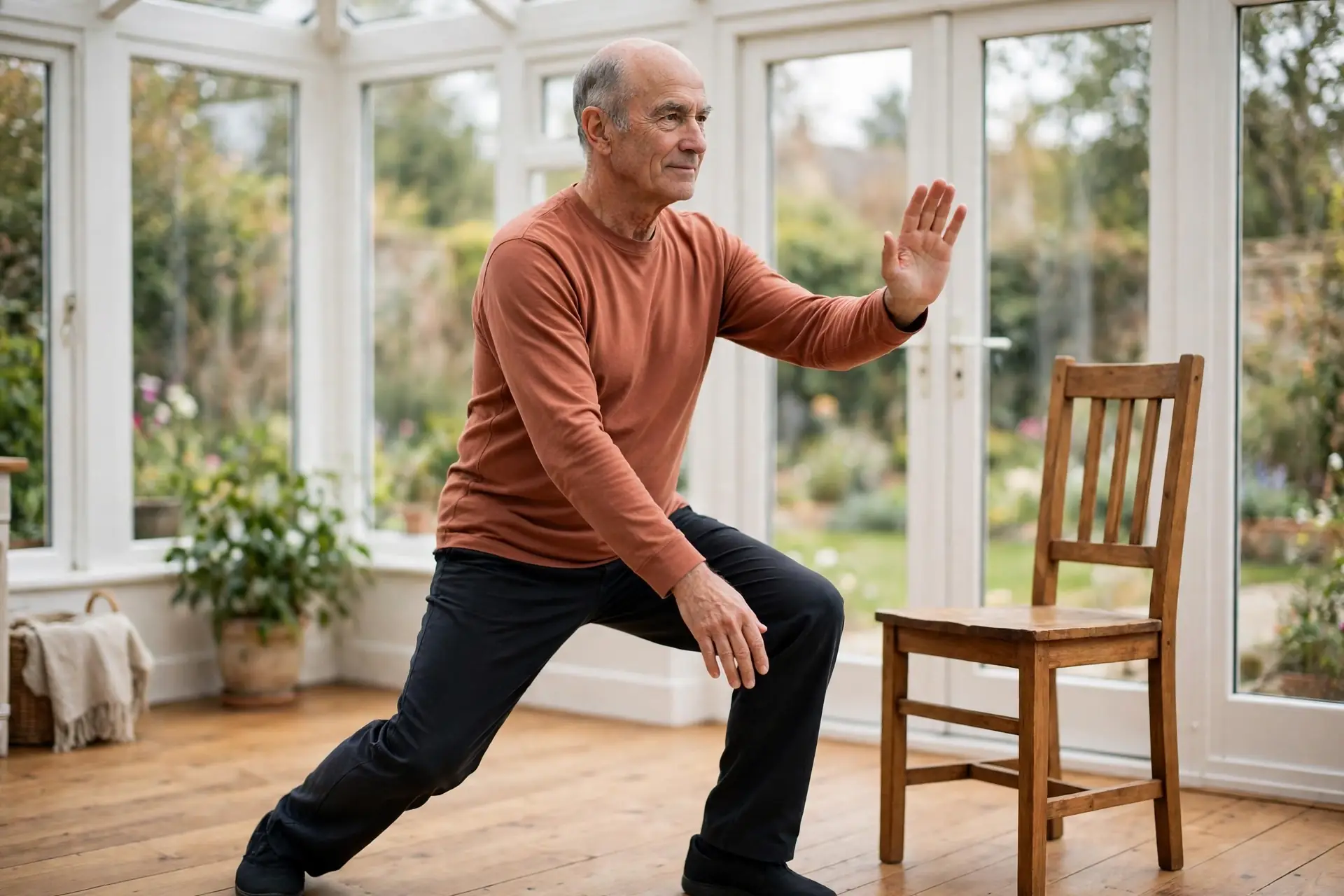
Tai chi is a sequence practice. You learn a series of named movements — with names like Cloud Hands and Brush Knee and Push — and perform them one after another without stopping. A linked sequence like this is sometimes called a form. Your weight shifts gradually from one foot to the other, your steps travel and turn, and your breathing stays calm and natural throughout.
Tai chi began in China as a martial art. The US National Center for Complementary and Integrative Health (NCCIH) describes it as “a series of slow gentle movements and physical postures, a meditative state of mind, and controlled breathing”, and notes it has become more focused on health promotion and rehabilitation over the years. In our shop, the Tai Chi for Beginners Workbook teaches gentle beginner adaptations of eight classic movements, joined into a first routine of about 10 minutes over a 2-week starter plan.
Qigong, in plain language
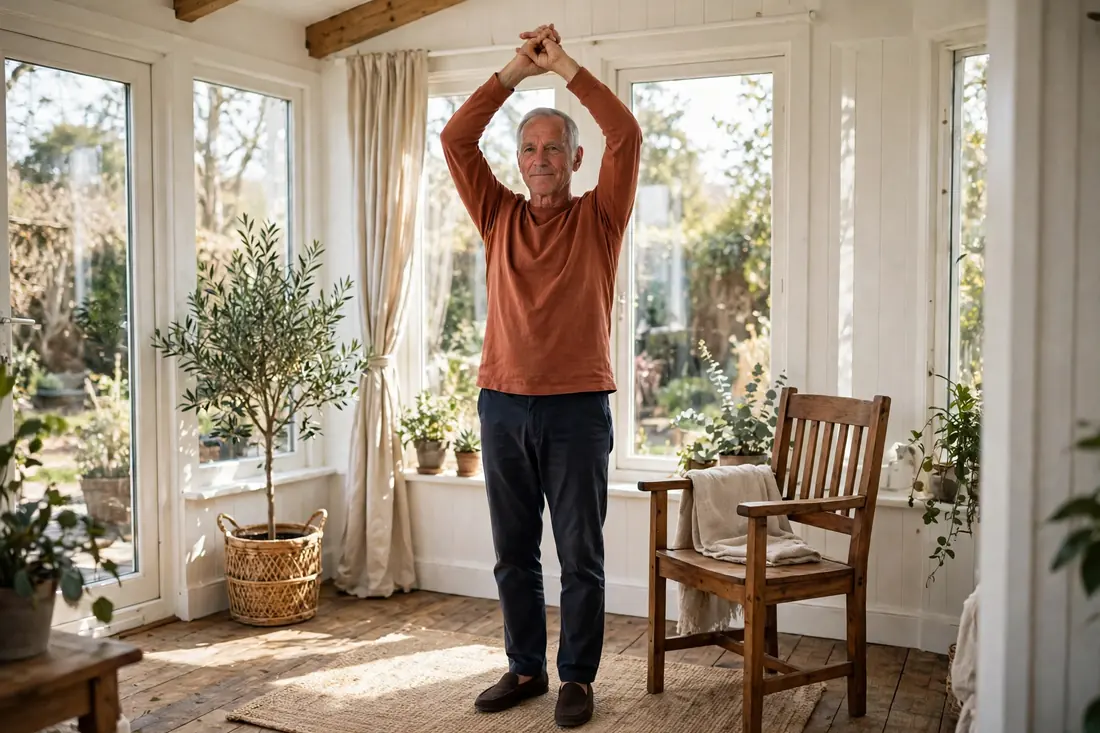
Qigong (pronounced “chee-gong”) works the other way round. Instead of a flowing sequence, a qigong set is made of separate, simple pieces. You do one piece — raising both hands overhead, say — repeat it a few times in place, and only then move on to the next. Breathing is taught as a skill in its own right: in slowly through the nose, out through the mouth or nose, matched loosely to the movement — in as you open or lift, out as you close or lower.
NCCIH records that qigong was developed in China thousands of years ago as part of traditional Chinese medicine, and that in most forms the movements are “gentle and smooth, aimed for relaxation”. One of the best-known qigong sets is the Eight Brocades (Ba Duan Jin): eight short pieces worked through in order, taking about 10 to 12 minutes in total. Our Qigong for Beginners guide teaches that set piece by piece, in large print.
Why the two get mixed up
The family connection is genuine. NCCIH points out that when tai chi is performed for health, it is considered a form of qigong, and lists the Eight Brocades among the hundreds of forms of qigong exercises developed in China. Teachers, classes and shops — including this one — usually treat the two as separate practices anyway, because the experience of doing them is different: one flows in a sequence you gradually memorise, the other repeats one simple piece at a time. Neither view is wrong; they answer different questions. For choosing what to practise in your living room, the practical difference below is the one that matters.
Side by side
| Tai chi | Qigong | |
|---|---|---|
| Origins, in brief | Began in China as a martial art; today practised mainly for health and gentle exercise. | Developed in China thousands of years ago as part of traditional Chinese medicine. |
| Movement style | Continuous and flowing: movements link together, weight shifts from foot to foot, and the practice travels and turns. | Mostly in place: each piece is a simple movement repeated a few times, then finished before the next begins. |
| Structure | Sequences (forms): a set order of different movements performed as one unbroken flow. | Sets of separate pieces: the Eight Brocades is eight pieces, each repeated, worked through in order. |
| Breathing | Calm, natural breathing is one of the foundations; you never force or hold it, and it settles into the pace of the sequence. | Breathing is taught step by step on its own basics page, matched loosely to each movement — in as you lift or open, out as you lower or close. |
| A beginner session | You learn one movement at a time, then join them; the workbook’s plan adds two every couple of days, and the full routine takes about 10 minutes. | You learn one piece at a time and can use it straight away; the full set takes about 10 to 12 minutes, with nothing to memorise beyond the order of the pieces. |
| Seated options in this shop | Four of the workbook’s eight movements have a seated option; a fully seated chair tai chi guide is also available. | Three of the eight pieces have a seated option; a fully seated qigong breathing chart is also available. |
Which should you start with?
There is no correct order. This is a question of taste and practicality — not of which practice is “better” or more suitable for a medical condition. Four common starting points:
If you want the simplest possible first session, start with qigong. A single piece is one movement, repeated. You can learn Two Hands Hold Up the Heavens in minutes and have done real practice the same day. The Eight Brocades asks you to remember only the order of eight pieces — kept on one page of the guide, in front of you.
If the idea of a flowing form is what attracts you, start with tai chi. The pleasure of tai chi is the unbroken flow: one movement melting into the next. It asks more patience at the start: the movements only become a routine once you can link them, and the workbook allows two weeks for that.
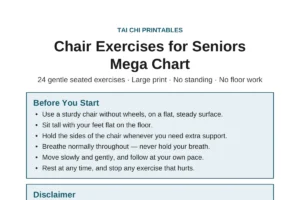
If breathing is the part you care about most, qigong gives it more attention. The qigong guide teaches breathing on a dedicated basics page before the first piece, and for breathing practice on its own, entirely seated, the Qigong Breathing Chart sets out five seated exercises as a daily routine of about 5 minutes.
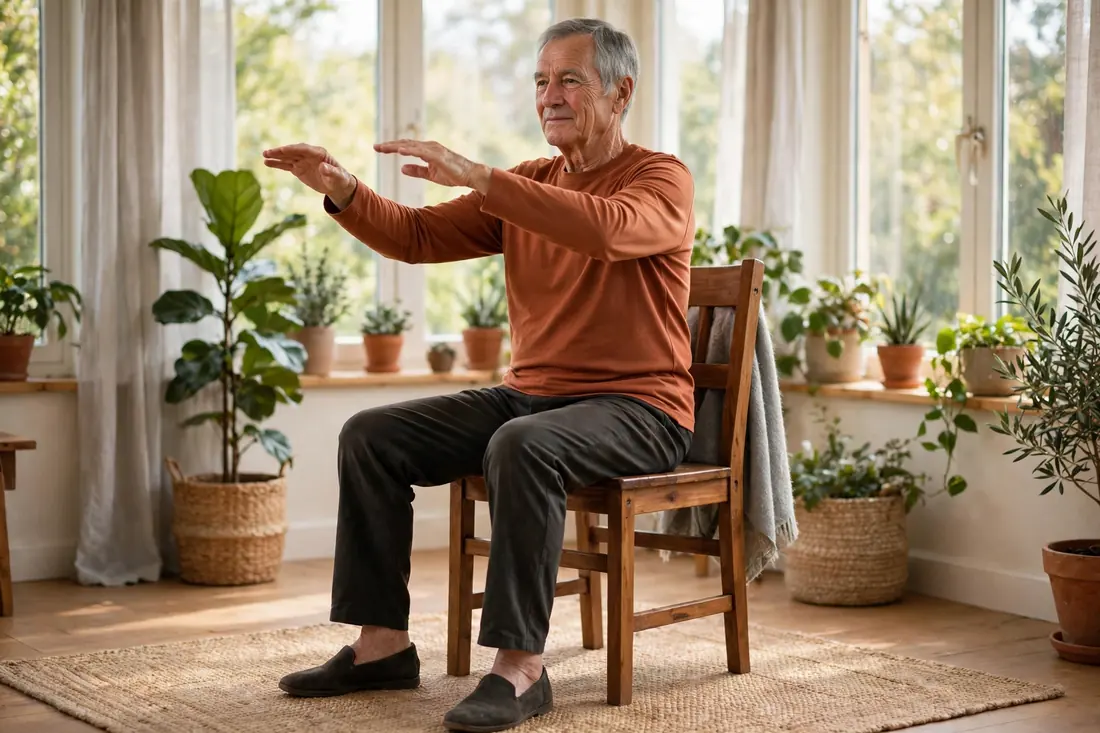
If you need to stay seated, be aware that both main guides are standing practices, done beside a sturdy chair you hold whenever you need support. Each includes seated options for some movements — four of eight in the tai chi workbook, three of eight in the qigong set. For a practice seated from start to finish, the fully seated paths here are chair tai chi and the breathing chart
above.
Your first step, whichever you choose
If qigong sounds like your starting point, the Qigong for Beginners — Eight Brocades guide (7 pages, US Letter and A4) teaches the full set one piece at a time, breathing basics first. If tai chi appeals, the Tai Chi for Beginners Workbook (9 pages, US Letter and A4) covers the four foundations, the eight movements and the starter plan. Both are printable PDFs priced at $0 in our shop at the time of writing — no class, uniform or equipment needed.
Safety first: the points both guides share
The two guides’ safety guidance is nearly identical:
- Practise on a clear, flat floor with nothing to trip over, and keep a sturdy chair beside you, within reach. Hold it whenever you need support.
- Wear flat, non-slip shoes, move slowly, and take small steps.
- Breathe naturally throughout — never force your breath or hold it.
- Never force a stretch, and keep every bend shallow.
- Stop at once and sit down if you feel dizzy, breathless or in pain.
- If you feel unsteady, have someone nearby while you practise.
- Check with your doctor before starting, especially if you have a health condition or a history of falls.
Frequently asked questions
Is tai chi a type of qigong?
By one widely used classification, yes. NCCIH says that when tai chi is performed for health, it is considered a form of qigong — one of hundreds of forms developed in China. In everyday teaching, though, the two are usually taught as distinct practices, because a tai chi session (a linked, flowing sequence) is organised very differently from a qigong session (separate pieces, each repeated). This shop follows the everyday approach and keeps them as separate guides.
Which is easier to learn, qigong or tai chi?
For most complete beginners, qigong has the gentler learning curve: each piece is a single movement repeated in place, so there is little to remember before you can practise. Tai chi asks you to link movements into an order, which takes longer — the workbook spreads it across two weeks. “Easier” here is about memory and structure, not effort: both are practised slowly and gently.
What does “qi” mean? Is qigong about energy?
“Qi” is traditionally translated as energy or breath, and NCCIH describes qigong as developed to optimise energy within the body, mind and spirit — the traditional idea behind the practice, given here as background, not as a medical claim. You do not need to take any position on it to practise. The guides in this shop teach the physical movements, posture and breathing in plain language, and make no claims about energy, meridians or organs.
Do I have to stand for either practice?
In the two main guides, yes — both are practised standing on a clear floor, with a sturdy chair beside you to hold whenever you need it. Some movements have seated options (four of the eight tai chi movements; three of the eight qigong pieces). If standing is not suitable for you, look at the fully seated options instead — the chair tai chi guide or the Qigong Breathing Chart — and check with your doctor before starting any new routine.
Can I practise both?
Yes — nothing about either practice rules out the other, and they share the same safety basics. Pick one first, give it the two weeks both guides suggest, and add the other later if curious; rest days are part of both approaches.
A final word
Qigong repeats; tai chi flows. That single sentence is most of the difference. If you want to be moving within five minutes of opening a guide, begin with the Eight Brocades. If you want a sequence that gradually becomes one continuous, flowing routine, begin with the tai chi workbook. Either way you will be practising slowly, breathing calmly, and standing beside a chair you can hold — which is how both guides intend a beginner to practise.
This article and the guides it describes are general educational information, not medical advice. Stop if you feel pain, dizziness or breathlessness, sit down and rest, and check with your doctor before starting a new exercise routine, especially if you have a health condition or a history of falls.