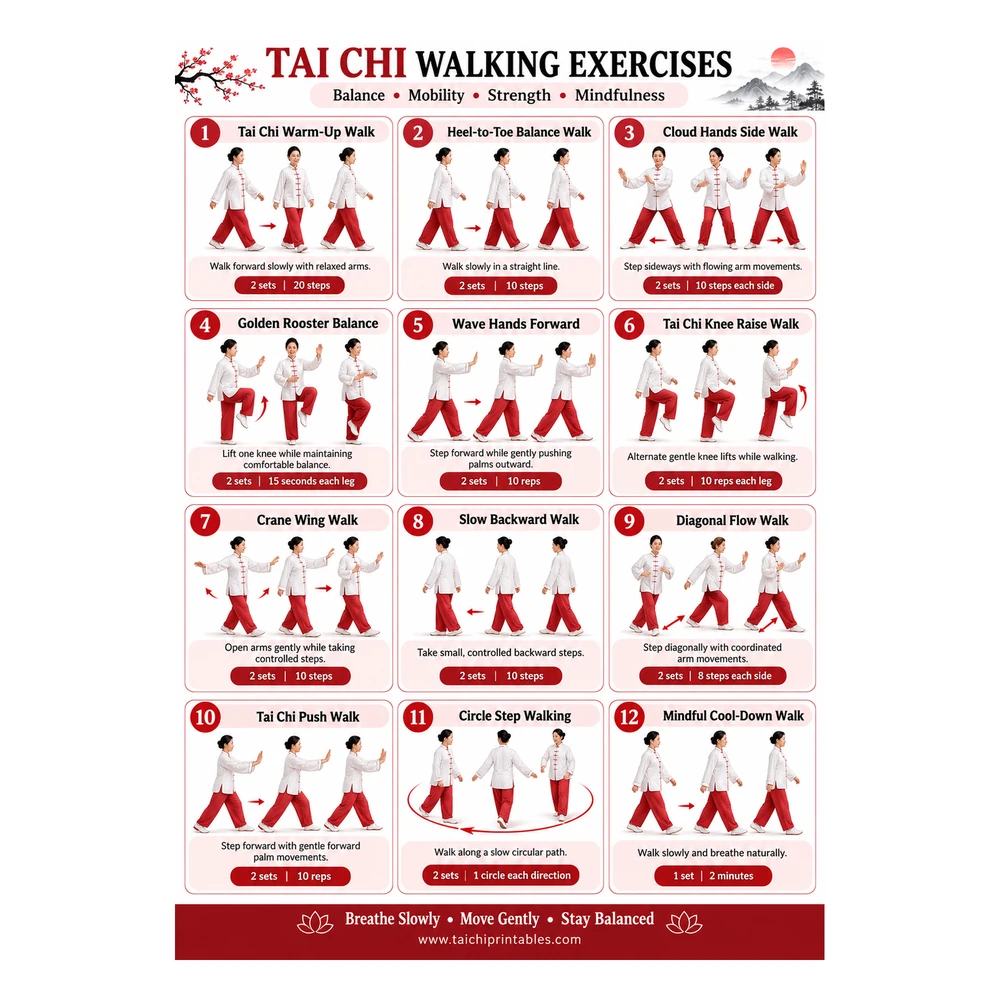

When people picture tai chi — a group in a park moving slowly together, arms floating, nobody hurrying — the style they are usually picturing is Yang tai chi. It is the most widely practised of the traditional tai chi family styles, and it is the one most beginners meet first, whether or not they ever learn its name. This guide explains what the Yang style is, where it came from, what makes it look and feel the way it does, and what a beginner can borrow from its approach — even if you never study a traditional form.
The family styles of tai chi
Tai chi is not one single routine. Over generations it developed into several family styles, each associated with the family that shaped and taught it. The Chen style is generally regarded as the oldest of the surviving styles, and the others — Yang, Wu, Wu (Hao) and Sun among them — grew out of it as different teachers adapted the practice to their own students and settings.
All of the styles share the same foundations: slow, continuous movement, an upright and relaxed posture, weight shifting gently from leg to leg, and breathing that stays calm underneath everything. Where they differ is in flavour — the size of the movements, the height of the stances, the pace, and how much visible variety there is between one movement and the next. The Yang style sits at the gentle, even end of that family.
Where the Yang style came from
The Yang style was developed by the Yang family, who learned from the older Chen tradition and then reshaped what they had learned for a wider public. As the practice spread during the nineteenth and twentieth centuries — taught in towns and cities to students who were not martial artists by trade — the Yang version of it was gradually softened and smoothed. Movements that in the Chen style could be low, sudden or demanding became, in Yang hands, higher, steadier and more uniform.
That softening is a large part of why Yang tai chi travelled so far. A practice that almost anyone could begin, at almost any age, in ordinary clothes, in a park or a hall, was a practice that could be taught to whole communities. When tai chi later spread around the world as a gentle health practice, it was very often the Yang style — or routines built in its spirit — that people were learning.
What Yang style looks and feels like
Yang tai chi is known for its evenness. The pace stays much the same from the first movement to the last: no sudden bursts, no drops into low stances, no sharp changes of speed. The posture is upright and open, the steps are unhurried, and the arms move in broad, rounded patterns, as if the whole body were tracing large slow circles in the air.
Individual movements have evocative names — parting the wild horse’s mane, waving hands like clouds, grasping the bird’s tail — and in a Yang sequence they are linked so smoothly that it can be hard to see where one ends and the next begins. Practitioners aim for a quality sometimes described as moving like a river: continuous, unforced, and the same depth all the way through.
For the person doing it, the feeling is meditative without being still. Your attention rides on the movement itself — the slow transfer of weight, the turn of the waist, the path of the hands — and because the pace never spikes, breathing settles into the rhythm naturally. Sessions are typically practised standing, in loose clothing, with no equipment at all.
Why beginners often meet this style first
Because Yang tai chi became the public face of the practice, it is the style behind most introductory classes, community sessions and beginner routines, even when nobody mentions its name. Its characteristics are beginner-friendly almost by accident: the stances are comfortable rather than deep, the tempo forgiving, the movements large and clear enough to follow from the back of a group.
There is also a practical reason. A style designed to be taught to everybody had to be learnable by everybody, so Yang sequences tend to introduce their movements gradually and repeat them often. A new student is rarely asked to do anything sudden, low or complicated in the first weeks. You begin by walking slowly and waving your arms in large soft patterns, and the subtlety arrives later, at its own pace.
If you are curious about how a gentle, beginner-level routine is put together, our beginner’s guide to starting tai chi at home begins with just four simple movements and builds from there.
What a beginner can borrow from the Yang approach
You do not need to enrol in a traditional form to learn from the Yang style. Its habits are useful in any gentle practice:
- Keep the pace even. If one movement is hurried and the next is slow, smooth out the difference. Evenness is the Yang signature.
- Stay upright and open. Tall posture, chest open, shoulders down — never crouched or strained.
- Move in curves. Let the arms travel in rounded paths rather than straight lines and sharp angles.
- Let the waist lead. Turns begin from the middle of the body, and the arms follow.
- Never force the depth. Yang practice keeps stances at a comfortable height. Comfort is not cheating; it is the method.
Borrow those five habits and even a short, simple routine will begin to feel like tai chi rather than ordinary arm-waving — which is, in the end, what the style has been teaching the world for generations.
A note about the routine on this site
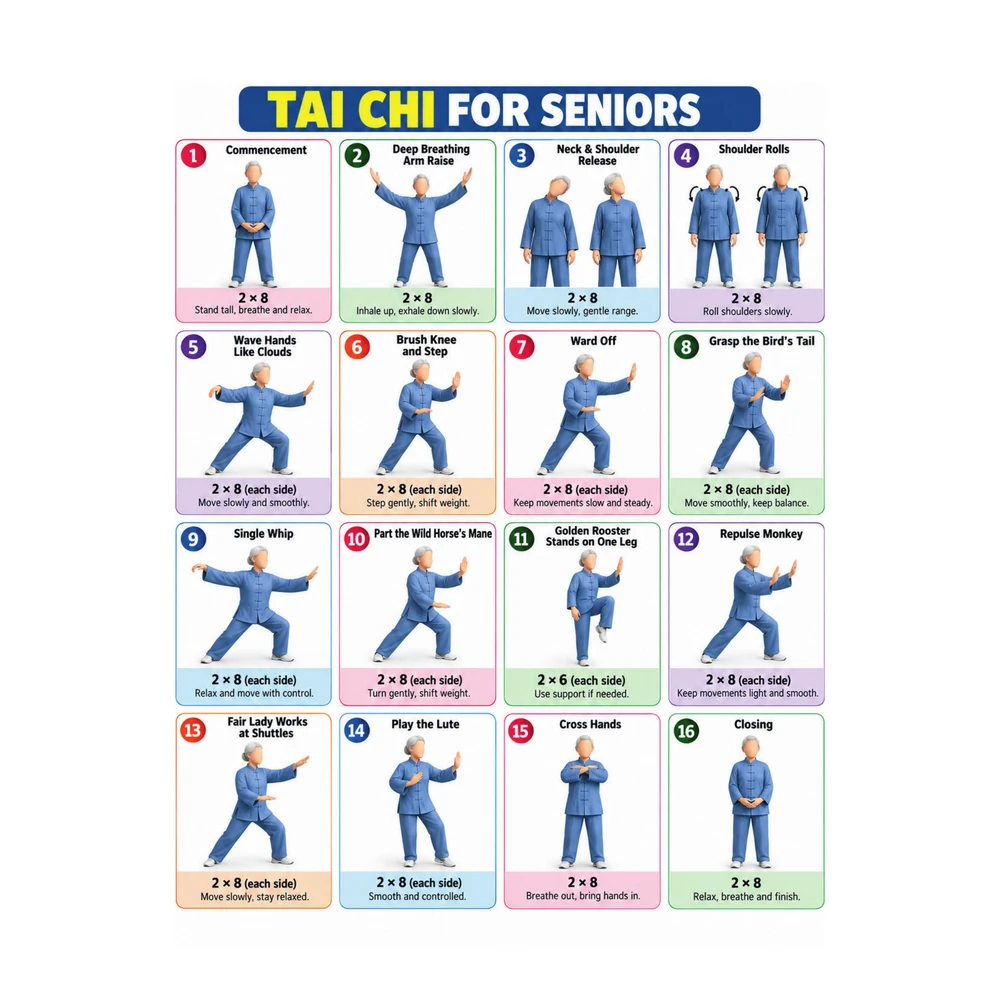
It is worth being straightforward: the routine on this site is a gentle modern set of movements, not a traditional Yang form. It was put together for older beginners practising at home — sixteen standing movements with clear steps and repetitions, presented on a printable chart. It borrows the Yang style’s spirit of slowness, evenness and upright ease, but it does not claim to teach the classical Yang sequence, and learning that sequence properly is a job for a qualified teacher over many months.
You can see the full set in our Tai Chi for Seniors routine, where every movement is taught step by step. Think of it as a doorway: a calm, manageable way to begin moving in the tai chi manner, from which a traditional class — Yang style or otherwise — is a natural next step if your interest grows.
Frequently Asked Questions
Is Yang tai chi the best style for beginners?
It is the style beginners most often encounter, and its even pace and comfortable stances make it a welcoming introduction. “Best” depends on the person, though — any traditional style taught well, at a gentle level, can suit a beginner. What matters more than the style is the teacher, the pace of the class and whether the movements feel comfortable for your body.
How is Yang style different from Chen style?
Chen is the older style and keeps more contrast: movements can be lower, slower-then-sudden, and more visibly martial. Yang grew out of Chen but smoothed those contrasts away, settling into an even, flowing pace with upright stances. Watching the two side by side, Yang looks calmer and more uniform; Chen looks more varied and athletic.
Do I need to learn a full traditional form?
No. A traditional long form is a serious and rewarding study, but it is not required to enjoy tai chi’s gentle movement. Many people practise short routines or simple movement sets for years and are perfectly content. Start where you are, with something manageable, and let your appetite decide what comes next.
How long does it take to learn Yang tai chi?
The honest answer is that it is learned gradually. The basic way of moving — slow, even, upright, relaxed — can be felt in your very first session. A full traditional sequence takes much longer to memorise and refine, and practitioners speak of it as a practice that keeps deepening rather than one that gets finished. For home beginners, that is good news: the benefits of the approach begin with the first slow movement, not the last.
Can older adults practise Yang style safely?
Its characteristics suit older adults well: no floor work, comfortable stances, an even pace and nothing sudden. As with any exercise, practise beside support if your balance is uncertain, keep movements within a comfortable range, and stop if you feel dizzy or in pain. If you have a health condition, check with your doctor before starting.
In short
Yang tai chi is the style that carried a once-specialist practice out into the world’s parks: slow, even, upright and open, developed from the older Chen style and softened for everybody. You may never study its traditional form, and that is fine. Borrow its habits — an even pace, curved movements, a tall relaxed posture, and no forcing — and whatever gentle routine you follow will carry its spirit.
Safety note: Practise beside a sturdy chair if you feel unsteady, keep every movement comfortable, and rest whenever you like. This article is general educational information, not medical advice; check with your doctor before starting a new exercise practice if you have any health concerns.