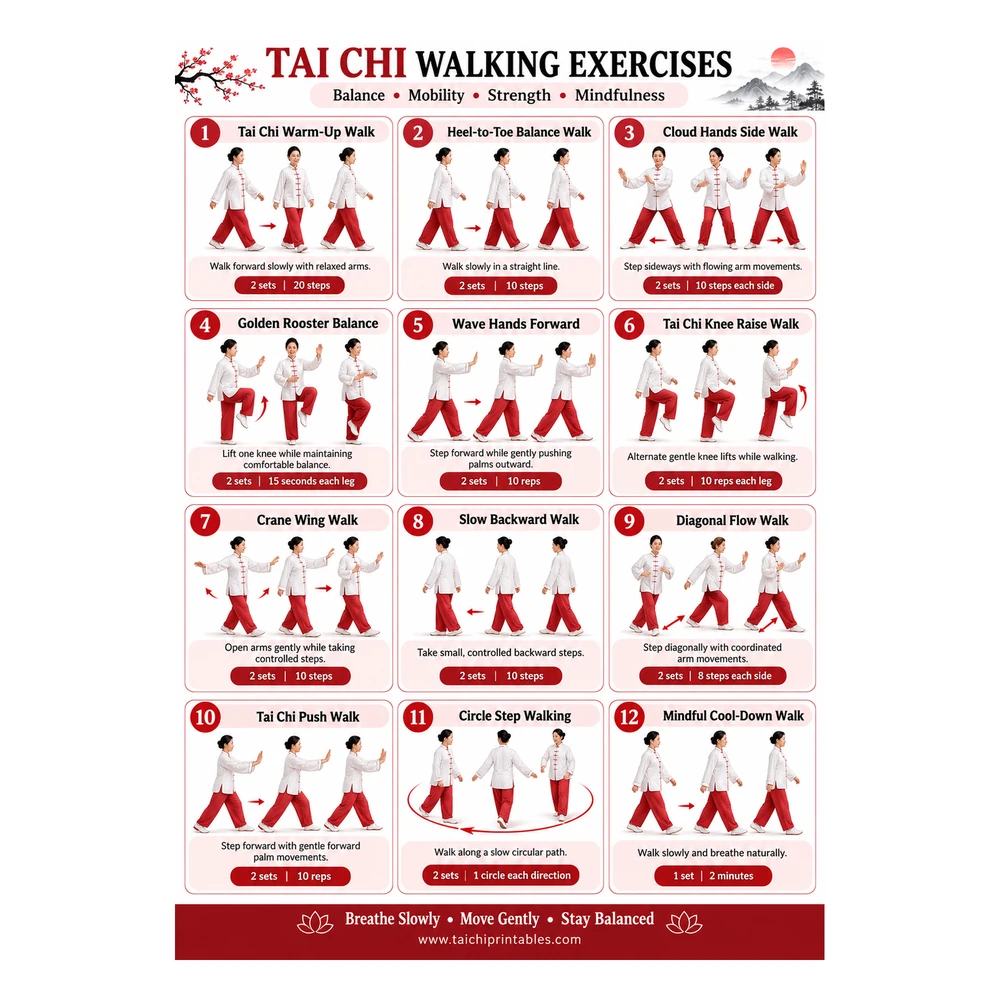

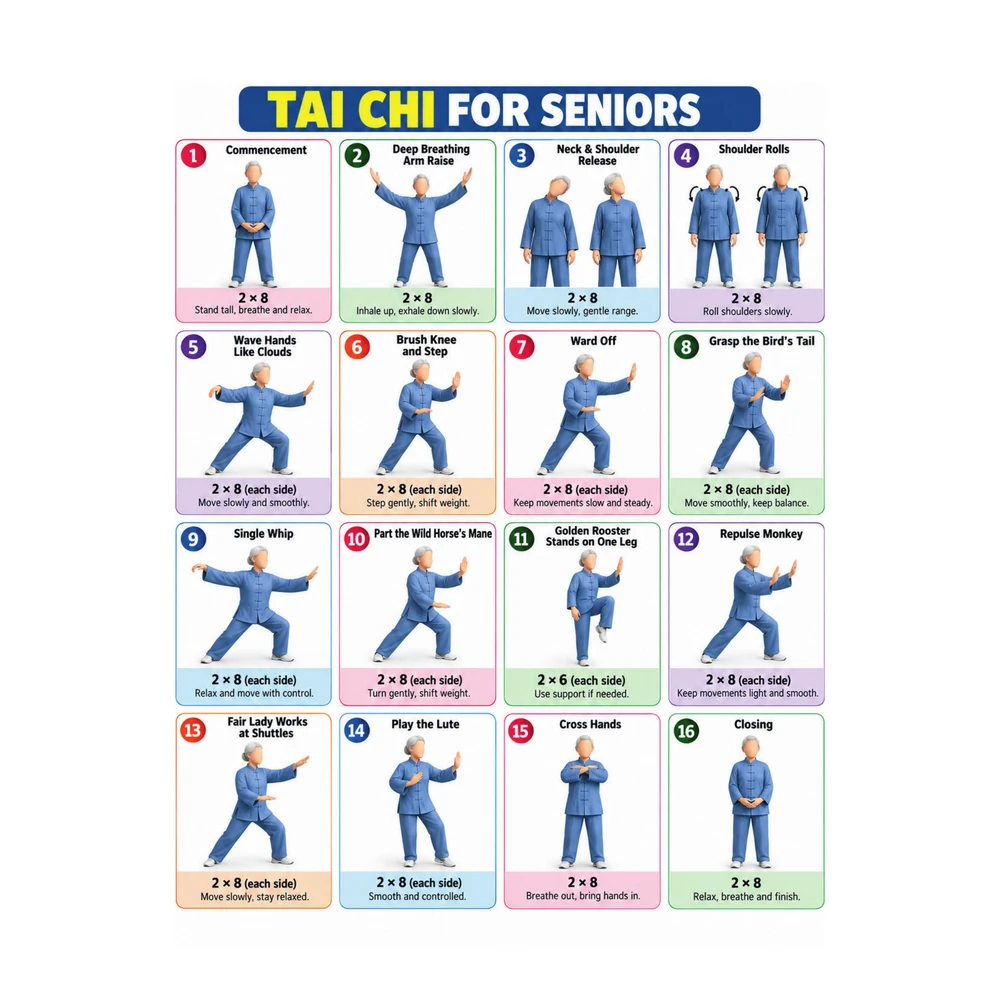
Some tai chi movements have plain, practical names. Others sound like poetry. Wave Hands Like Clouds is firmly in the second group, and it is one of the best-known movements in tai chi. If you have ever seen a class moving slowly from side to side, hands drifting as though through mist, you have probably seen it without knowing its name.
This article explains what the name means, describes the movement in general terms as it is practised in tai chi, and shows how a beginner can try a gentle version safely at home. It is an educational introduction to a classic movement, written for curious beginners.
What the name means
Tai chi movement names often describe a picture rather than a body position, and this one is a good example. As you shift your weight slowly from one side to the other, your hands turn and drift sideways in soft, continuous arcs — rising, turning and settling like clouds moving across the sky. Nothing hurries. Nothing stops and starts. The hands simply keep drifting, the way clouds do.
Teachers often use the image to help students relax. If you imagine your hands moving through soft cloud rather than through empty air, the wrists soften, the fingers relax, and the whole movement becomes smoother. The picture is not decoration; it is a practical teaching tool.
The movement in general terms
Wave Hands Like Clouds is usually practised standing, moving gently from side to side. In broad terms, the weight shifts onto one leg while both hands drift across the body in the same direction, palms turning as they travel. Then the weight shifts back the other way, and the hands drift back with it, turning again. One hand tends to travel higher, around chest or face height, while the other stays lower, around waist height, and they exchange roles as the direction changes.
The feet may stay in one place while the body turns and shifts, or small sideways steps may be added, depending on the style and the teacher. The head and gaze usually follow the upper hand softly. Everything is slow, even and continuous — there are no pauses, jerks or sudden changes of direction. Different tai chi styles perform the movement slightly differently, so treat this as a general description rather than a fixed set of instructions.
In many classes and forms, the movement is repeated several times in a row, drifting slowly in one direction and then back again, which gives it a meditative quality: there is nothing to count and nothing to finish, just the steady rhythm of weight moving from side to side. It is also often used as a linking movement between other postures, which is one reason it appears in so many different routines. For a beginner, that repetition is good news — the movement gives you time to settle into it.
How to try a gentle version
If you would like to feel what the movement is like, try this simplified version beside a sturdy chair or countertop, where you can hold on to your support whenever you need it. Comfort matters more than correctness at this stage.
- Stand with your feet a little wider than hip-width apart, knees soft, with your support close by.
- Let your weight settle onto your right leg. At the same time, let both hands drift slowly to the right, one around chest height and one lower, palms turning gently as they move.
- When your weight has fully shifted, pause for a breath.
- Now shift your weight slowly onto your left leg, and let your hands drift back to the left, turning as they travel.
- Continue shifting from side to side a few times, moving as slowly as you comfortably can.
Keep the movement small. A gentle sway with drifting hands gives you the flavour of the movement without demanding balance or flexibility you may not have yet. If you are working through a full gentle routine at home, our Tai Chi for Seniors exercises article is a helpful piece of related reading, with a complete set of movements taught step by step.
What to pay attention to
The weight shift leads. The hands follow the body rather than travelling on their own. If your arms are moving but your weight is staying in the middle, slow down and let the shift happen first.
The hands turn, not flap. The palms rotate gradually as the hands cross the body, like slow clouds rolling over. Keep the wrists soft and the fingers relaxed.
The head stays level. Avoid bobbing or leaning. Your body turns and shifts from the waist and legs while your head floats at a steady height.
Everything stays even. The charm of this movement is its steadiness. If one direction feels rushed or jerky, that is a sign to slow the whole thing down.
Common beginner mistakes
Moving only the arms. Without the weight shift, the movement becomes arm-waving. The slow transfer of weight from leg to leg is the heart of it.
Going too wide. Large steps and big arm sweeps make the movement harder to control. Small and slow is better, especially at first.
Stiff wrists and fingers. Tension in the hands is very common. Shake your hands out gently between attempts and let them feel heavy and soft.
Holding your breath. Breathe naturally throughout. If you notice your breath stopping, pause and restart more slowly.
Safety notes
Practise beside a sturdy chair, countertop or wall so that support is always within reach, and hold on whenever you feel unsteady. Wear flat, firm shoes and clear the floor around you. Keep every movement inside a comfortable range, and stop if you feel dizzy or in pain. If you have a balance problem, a joint condition or any other health concern, check with your doctor before trying new movements. This article is general educational information, not medical advice.
Frequently Asked Questions
Is Wave Hands Like Clouds a beginner movement?
It appears in many tai chi forms and is often one of the movements beginners meet early, usually in a simplified version. The basic side-to-side version described here is a reasonable place to start, as long as you keep it small, slow and supported.
Why is it called Wave Hands Like Clouds?
The name describes the picture the movement makes: the hands drift and turn continuously from side to side, like clouds crossing the sky. Tai chi names often work this way, giving you an image to copy rather than a list of positions to hold.
Do I need to step sideways while doing it?
Not necessarily. Some versions travel sideways with small steps; others shift the weight from leg to leg in one place. The in-place version is simpler and is a sensible choice for practising at home, where space and balance support matter.
How fast should the movement be?
Slowly and evenly. There should be no sense of hurry and no pause where the movement stops dead. If you are unsure whether you are going slowly enough, slow down a little more — most beginners move faster than they think.
Can I practise it sitting down?
The classic movement is a standing one, because the weight shift between the legs is central to it. Gentle seated arm movements exist in chair-based exercise, but they are different movements. If standing is difficult for you, ask your doctor or a qualified teacher what would suit you.
A movement worth meeting slowly
Wave Hands Like Clouds has survived in tai chi for a long time because it captures what the practice is about: weight shifting calmly from side to side, hands soft and continuous, breath unhurried. You do not need to perform it perfectly to enjoy trying it. A few slow, supported shifts beside a chair will tell you more about the movement than any description can — and that quiet, drifting feeling is exactly what the name promises.