
People often arrive at tai chi and yoga by the same road. They want something gentle. They want to move more, feel steadier, and finish a session calmer than they started — without being shouted at, bounced around, or folded into shapes meant for somebody half their age. Both practices can offer that, which is why the two are so often mentioned in the same breath. But they are not the same thing, and the differences matter when you are choosing where to begin.
This page compares the two fairly: where each one comes from, how a session actually feels, how the movements differ, what you need, and who tends to choose which. There is no loser here. Yoga is a rich and rewarding practice that suits millions of people. The aim is simply to help you see which of the two fits your body, your home and your temperament.
Two different roots
Yoga developed in India over a very long history and brings together physical postures, breathing practices and meditation. In the classes most people meet today, the emphasis is on the postures: positions you move into, hold for a while, and then leave, often linked together into flowing sequences.
Tai chi developed in China, originally as a martial art, and over time its slow, health-focused side became the form most people practise today. Where yoga holds positions, tai chi keeps moving: a tai chi session is one continuous, unhurried sequence of standing movements, with the weight shifting gently from leg to leg and the arms tracing slow patterns in the air.
Both traditions take breathing and calm attention seriously, and both are usually practised slowly and without competition. The family resemblance is real — but spend ten minutes in each and you will feel the difference at once.
How a session feels
A typical yoga class moves between the floor and standing. You might begin lying down, rise through kneeling and standing postures, balance for a while, and finish lying down again in stillness. There is variety, and for many people that variety is the pleasure of it. There is also a fair amount of getting up and down, which is worth thinking about honestly if your knees, hips or wrists complain, or if getting off the floor has become a project in itself.
A typical tai chi session is simpler in shape. You stand — or sit, in a chair-based routine — and you move slowly from beginning to end. There is no floor work at all. Nothing is held at full stretch, nothing is rushed, and the effort is deliberately mild. People often describe it as feeling like moving through water: steady, smooth and quietly absorbing.
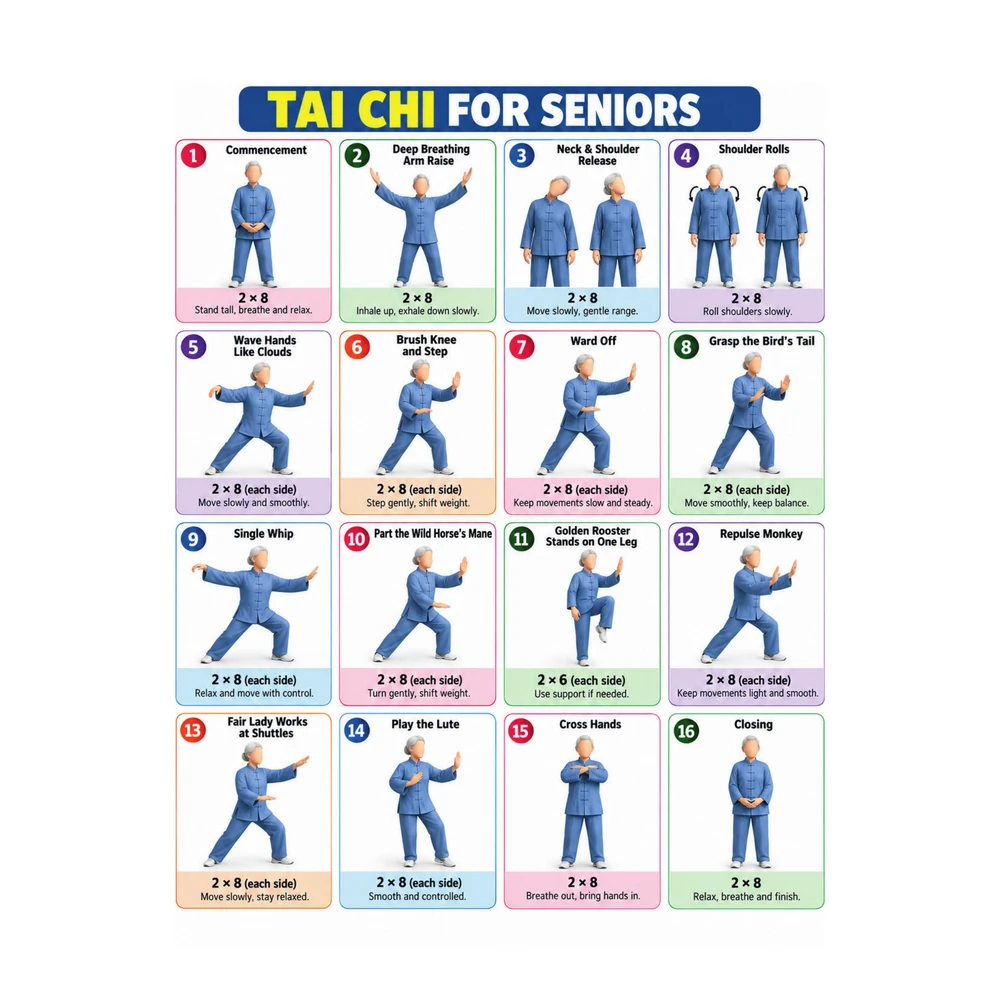
Our Tai Chi for Seniors routine shows the shape of a standing session: sixteen gentle movements, each taught step by step, all done on your feet with a chair nearby for support.
Movement style: held poses and flowing sequences
The clearest difference is what your body does moment to moment. Yoga asks you to arrange yourself into a posture and stay there, breathing, while the muscles work and the stretch deepens. Strength and flexibility are built partly through that holding.
Tai chi rarely holds still. One movement melts into the next, so your joints are taken gently through their range again and again rather than parked at the end of it. The stretches are mild — you pass through comfortable positions rather than settling into your deepest one — which is why many older beginners find tai chi easier on stiff joints. The trade-off is that tai chi asks more of your attention and coordination as the sequence unfolds, though at beginner level the sequences are short and repetitive by design.
On the floor, or on your feet?
For many readers this is the deciding question. A good deal of popular yoga happens on the floor: lying, sitting, kneeling, and positions that load the wrists and knees. Plenty of older people manage all of that happily, and chair yoga exists for those who prefer to sit. But if floor work is simply not for you — if getting down is fine but getting back up is an expedition — tai chi removes the problem entirely. Every movement in a standard tai chi routine is done standing, and the whole practice can also be done seated in a chair, as our chair tai chi articles describe.
Balance is approached differently too. Yoga often includes standing balance poses held on one leg. Tai chi practises balance in motion: slow weight shifts and small steps, usually with support within reach, so steadiness is rehearsed at the pace daily life actually happens.
Equipment and space
Yoga usually calls for a mat, and many people add blocks, straps or cushions as they go. None of it is expensive, but it is stuff to store, unroll and put away. Tai chi needs no equipment at all: a patch of floor, flat comfortable shoes or firm slippers, and loose clothes you can step and turn in. A sturdy chair nearby is a sensible companion for beginners, and that is the full list.
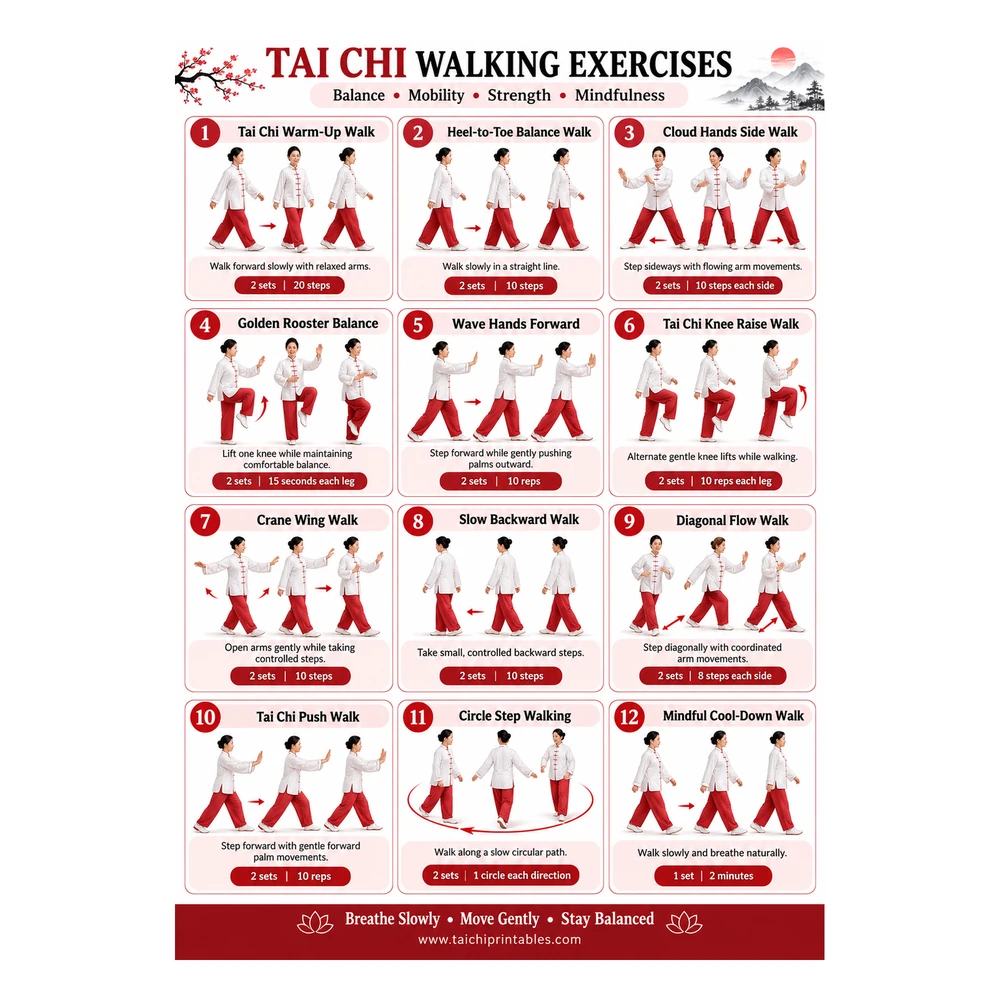
Both practices fit in a living room, and both can be followed from printed guidance if you prefer paper to a screen — tai chi routines in particular reduce neatly to a single illustrated page.
Who tends to choose which?
People who enjoy variety, deeper stretching, and the quiet of held postures often settle happily into yoga, especially if they are comfortable on the floor. People who prefer to stay on their feet, move continuously, and keep stretches gentle often find tai chi the easier fit. Tai chi also tends to suit those returning to movement after a long gap, because the starting level is so low: your first session can be ten slow minutes beside a chair, and that genuinely counts.
Age alone decides nothing — there are ninety-year-old yoga practitioners and thirty-year-old tai chi beginners. What matters is the honest match between the practice and your body as it is now. If you are torn between gentle practices generally, our comparison of qigong vs tai chi covers another close cousin that confuses many beginners.
Can you do both?
Of course. The two are not rivals, and plenty of people practise yoga on some days and tai chi on others, enjoying the held stretches of one and the flowing movement of the other. If you are starting from very little movement, though, it is usually kinder to begin with one, let it become a habit, and add the second later if you still want to. Two new routines at once is how good intentions quietly evaporate.
Frequently Asked Questions
Which is easier for a complete beginner, tai chi or yoga?
Both have beginner-friendly forms. Tai chi is often the gentler first step for older beginners because everything is done standing or seated, movements are not held at a deep stretch, and there is no floor work. A gentle or chair-based yoga class can be just as approachable. The honest answer depends on your joints, your balance and whether you are comfortable getting down to the floor and up again.
Which is better for balance?
They train balance differently. Yoga holds standing balances in stillness; tai chi practises balance while moving slowly — shifting weight, stepping and turning with support nearby. Many people find the tai chi approach closer to the balance they need in daily life, but either practice, done regularly and safely, gives your steadiness regular rehearsal.
Do I need to be flexible to start either one?
No. Flexibility is something these practices maintain gently over time, not an entry requirement. In tai chi especially, movements are kept small and comfortable at first. If a position or movement does not feel right, you make it smaller — that is built into the practice, not a compromise.
Is tai chi or yoga better for sore knees?
Neither should ever be pushed through pain. Tai chi avoids floor work and kneeling altogether and keeps the knees softly bent rather than loaded deeply, which many people with grumbling knees find manageable. Some yoga postures involve kneeling or deep knee bends, though a good teacher can adapt them. If you have a knee condition, check with your doctor about what suits you before starting either.
How often should I practise?
Short and regular beats long and occasional for both. Two or three gentle sessions a week is a sensible start, and ten to twenty minutes is a perfectly respectable session while you build the habit.
The short answer
Yoga holds; tai chi flows. Yoga often takes you to the floor; tai chi keeps you on your feet or in a chair. Yoga usually wants a mat; tai chi wants nothing but a little space. Both are calm, breath-led and kind when taught gently. If staying upright, moving continuously and keeping stretches mild sounds like your kind of exercise, tai chi is likely your starting point — and nothing stops you enjoying yoga later as well.
Safety note: Whichever practice you choose, start gently, keep support nearby for standing work, and stop if you feel dizzy or in pain. If you have a health condition or joint problems, check with your doctor before beginning. This article is general educational information, not medical advice.