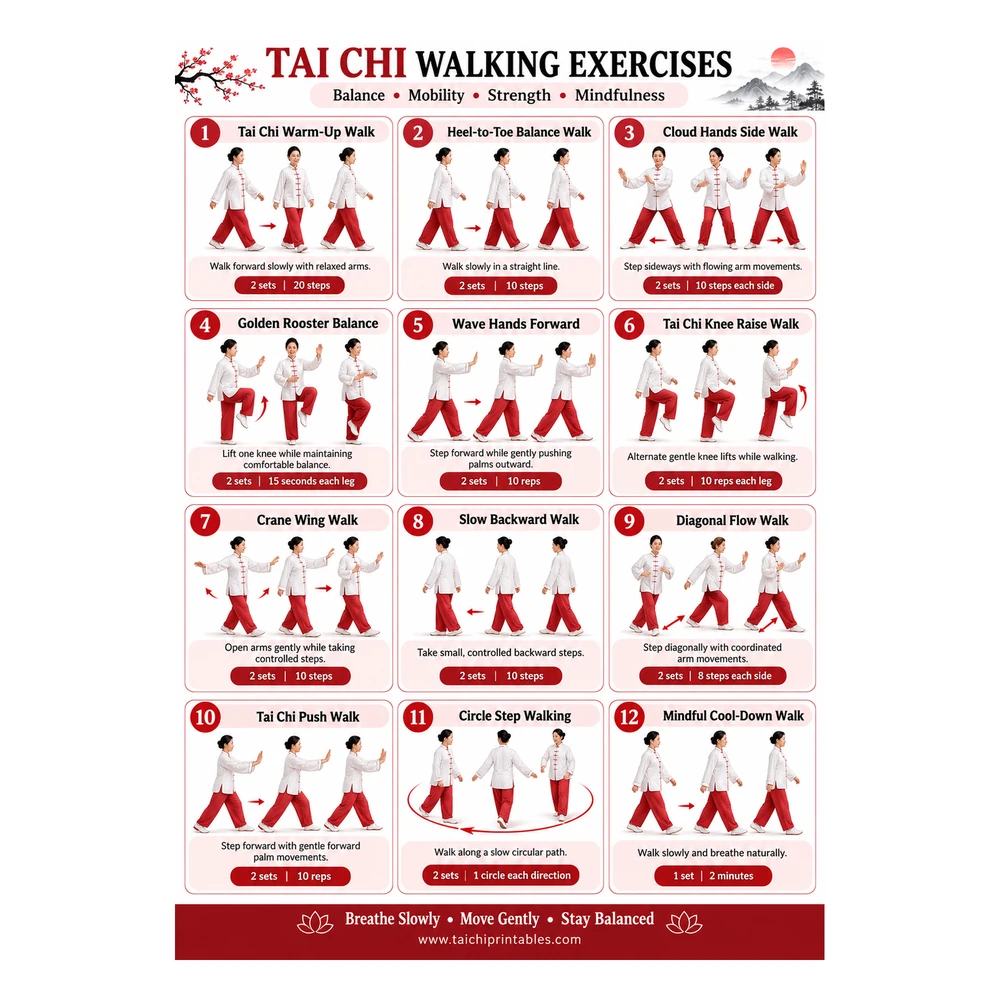

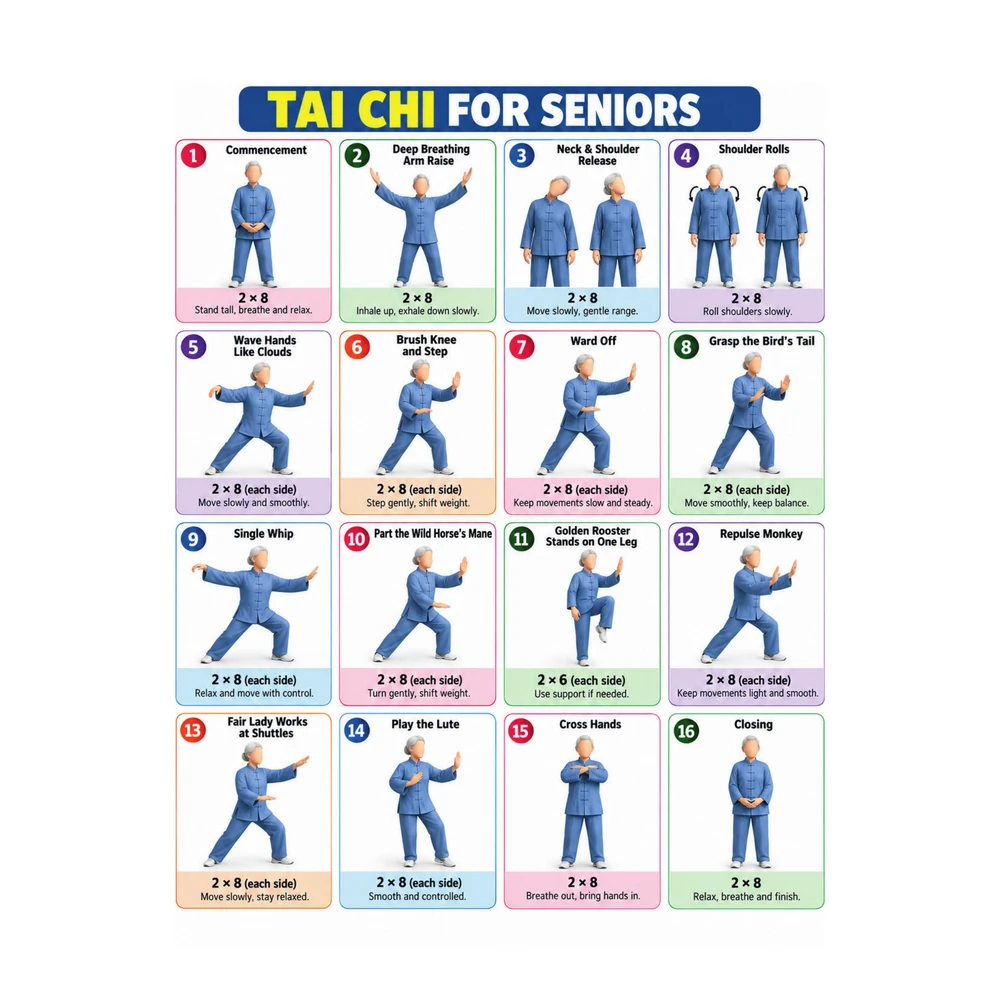
If you are over 60 and curious about tai chi, you are in very good company. A great many people take up this gentle practice in their sixties, seventies and beyond, often having never done anything like it before. You do not need to be fit, flexible or experienced. You need a little floor space, a sturdy chair nearby, and a willingness to move slowly.
This guide is written specifically for beginners over 60: what the first weeks usually feel like, how to pace yourself, the health check worth doing before you start, and how to choose a first routine. For step-by-step beginner guidance in general, see our main guide to tai chi for beginners at home — this article focuses on the questions that matter most when you are starting later in life.
Starting after 60 is completely normal
Tai chi has a long tradition of being practised by older adults, and modern classes and home routines are full of people who began after retirement. There are practical reasons it suits this stage of life: the movements are slow and low-impact, there is no floor work to get up and down from, nothing is timed or competitive, and every movement can be made smaller or done with support.
Starting later also has an advantage younger beginners often lack: patience. Tai chi rewards a calm, unhurried approach, and most over-60 beginners take to that naturally. You are not behind. In this practice, slow is not a compromise — it is the method.
What the first weeks usually feel like
Expect the first few sessions to feel unfamiliar rather than difficult. The movements themselves are gentle, but coordinating arms, legs and breathing at the same time takes a little getting used to, and almost everyone feels slightly awkward at first. That feeling fades quickly, usually within a few sessions.
Many beginners notice small things first: that standing quietly for a minute feels steadier than it did, that the movements practised last time come back more easily, that they look forward to the quiet ten minutes. Progress in tai chi tends to be gradual and personal rather than dramatic, and that is entirely normal. Judge your practice by whether you are keeping it up and enjoying it, not by how quickly you learn new movements.
Pace, support and balance
The single most useful habit for an older beginner is to practise beside support. Keep a sturdy chair, a countertop or a wall within reach for any standing movement, and hold on whenever you feel unsteady — for whole movements, if you like. Using support is not a lesser version of the exercise; it is how the practice is designed to be learned safely.
Keep movements small and slow, wear flat shoes with grip rather than socks on smooth floors, and clear the area around you before you begin. Short sessions are fine: ten minutes of gentle practice, done regularly, is a respectable routine at any age. Rest whenever you need to, including in the middle of a session.
A health check before you start
Before beginning any new exercise routine, it is sensible to check with your doctor, particularly if you have a heart condition, joint problems, a balance disorder, a history of falls, or recent surgery. This is not a formality. Your doctor can tell you about any movements you should avoid or adapt, which is far more useful than guessing.
If you take medication that can make you dizzy, or you sometimes feel light-headed when standing, mention that too. And if balance problems are new, worsening or unexplained, have them checked before starting — some causes need attention in their own right. Once you have the all-clear, you can begin with confidence.
Choosing your first routine
Start with a short, gentle routine rather than an ambitious one. A good first routine for an over-60 beginner has a small number of movements, clear written steps, and a chair nearby throughout. Our Tai Chi for Seniors exercises article teaches a complete gentle routine step by step, and its opening movements make a kind first week: learn a few, practise them until they feel familiar, then add more.
Seated practice is a perfectly good starting point too. If standing for ten minutes feels like too much at first, chair-based tai chi lets you learn the arm movements, breathing and rhythm while seated, and you can stand for more of the routine as you feel able. Many people mix the two, sitting for some movements and standing for others.
Building the habit
Regularity matters more than length. Two or three short sessions a week, at roughly the same time of day, will carry you further than one long session now and then. Many people attach practice to an existing habit — after breakfast, before lunch — so it becomes part of the day’s furniture rather than another decision to make.
Expect interruptions: holidays, visitors, colds, busy weeks. When they happen, simply resume with a shorter, easier session. The habit survives because returning is easy, not because you never stopped.
It can also help to keep a simple note of your sessions — a tick on a calendar is enough. Looking back over a month of ticks is quietly encouraging, and it makes the habit visible on the days when motivation dips. Some people practise with a spouse or a friend, in person or simply by comparing notes; a shared routine is often easier to keep than a private resolution.
Safety notes
Always practise beside support, stop any movement that causes pain, and sit down if you feel dizzy. Never push through discomfort to finish a routine. Keep the floor clear, wear suitable shoes, and check with your doctor before starting if you have any health condition or concern. This article is general educational information, not medical advice.
Frequently Asked Questions
Am I too old to start tai chi?
No. Tai chi is widely practised by people in their sixties, seventies and beyond, and many of them began at exactly that stage of life. The movements are slow, low-impact and adaptable, and you can practise beside a chair for support from the very first session.
Do I need to be fit or flexible before I begin?
No. You start from wherever you are. The movements can be made small, sessions can be short, and parts of a routine can be done seated. Fitness and flexibility are things people hope to maintain through practice, not entry requirements for it.
How long should my first sessions be?
Around ten minutes is plenty at first, including time standing quietly at the start and finish. Short sessions done two or three times a week will teach you more than one long session, and they are much easier to keep up.
Can I do tai chi if my balance is poor?
Many people with unsteady balance practise tai chi beside a chair or counter, holding on whenever they need to. Have new or worsening balance problems checked by your doctor first, follow any advice they give, and never practise standing movements without support in reach.
What if I can only practise sitting down?
That is fine. Chair-based tai chi lets you learn the arm movements, breathing and slow rhythm while seated, and it is a complete way to practise in its own right. If your strength and confidence grow, you can stand for parts of a routine later — but there is no obligation to.
A good age to begin
There is no deadline on starting something gentle. Begin beside a chair, keep sessions short, check with your doctor first, and give the first few weeks a fair chance before judging the practice. Most over-60 beginners find that the awkwardness passes quickly and the quiet ten minutes becomes something they protect. That is a fine outcome at any age — and a particularly good one to start now.