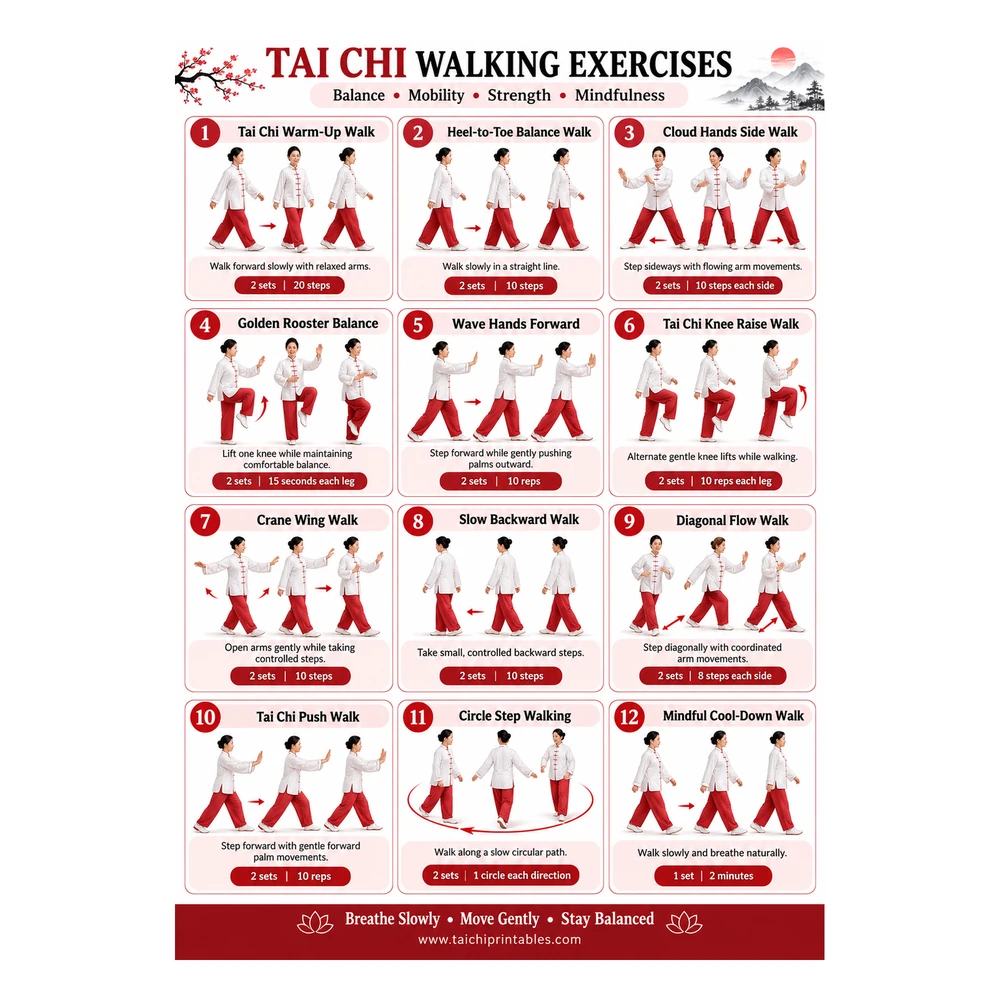

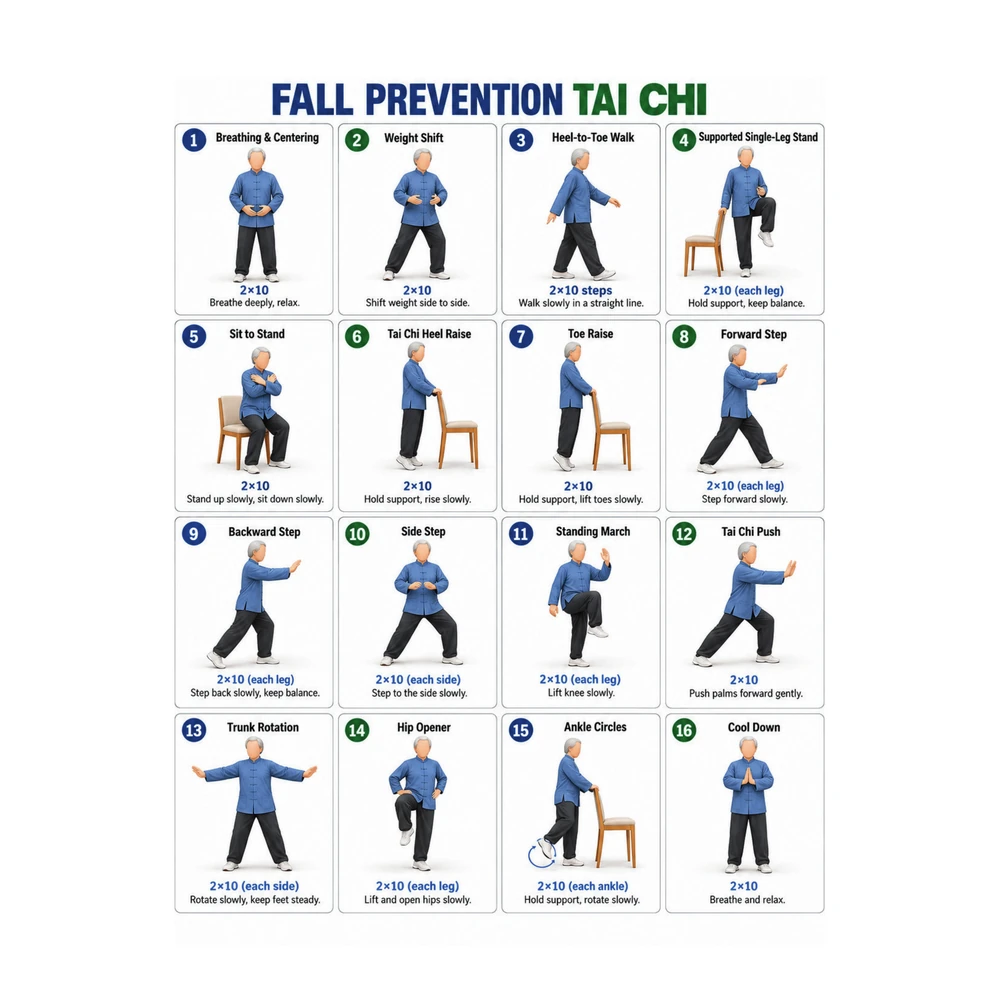
Staying steady on your feet matters more with every passing year, and fall prevention starts with something unglamorous: practising balance, a little and often, before you need it. A short daily routine fits into almost any morning, and it needs no gym, no special clothing and very little space. The 16 movements below come from Tai Chi, a slow, gentle style of exercise that suits older adults well — nothing is rushed, and every step stays under your control.
Each movement comes with plain instructions: what it’s for, how to do it, how many times to repeat it, and one tip to make it easier at the start. You’ll stand near a chair or counter throughout, so support is always in reach. Take your time, and treat this as practice, not a test.
What Are Fall Prevention Exercises?
Fall prevention exercises for seniors are simple movements that practise the skills you use daily to stay upright: shifting weight from foot to foot, standing on one leg briefly, stepping in different directions, and turning without losing balance.
In this routine, those skills are broken into small, slow Tai Chi movements. Some are done standing still, like heel raises and ankle circles. Others involve short steps forward, backward, and to the side. A few, like the Supported Single-Leg Stand, belong to the family of single leg balance exercises, where one foot briefly carries your weight while the other lifts slightly.
The point isn’t to push hard. It’s to repeat easy movements often, so they feel familiar. Short, regular sessions suit beginners better than one long session now and then.
6 Benefits of Balance Practice for Seniors
1. Steadier Steps
Repeating weight shifts and slow steps may help you practise steadier movement around the house or garden.
2. More Confidence on Your Feet
Practising standing and stepping in a controlled setting makes those movements feel more familiar in daily life.
3. Better Posture Awareness
Standing tall and noticing where your weight sits builds a habit of checking your posture.
4. Stronger-Feeling Legs and Ankles
Heel raises, toe raises, and sit-to-stand movements work the legs and ankles gently.
5. Smoother Turning and Reaching
Trunk rotations and hip openers practise the turns you use when reaching for a shelf or turning in the kitchen.
6. A Calm, Regular Routine
Slow breathing at the start and finish gives the session a clear shape, and ten minutes fits easily into a day.
Before You Start: Safety First
- Keep a stable chair, counter, or table within reach, and hold on whenever you feel unsure.
- Clear the floor around you. Move bags, cords, and loose rugs out of the way first.
- Wear supportive, flat shoes, or go barefoot on a non-slip surface. Avoid socks on smooth floors.
- Stop straight away if you feel dizzy, unsteady, or in pain. Sit down and rest.
- Check with your doctor before starting if you have a health condition, a recent injury, or any doubt about standing exercises.
- Work at your own pace. Fewer, careful repetitions beat rushing through the full set.
16 Fall Prevention Exercises for Seniors
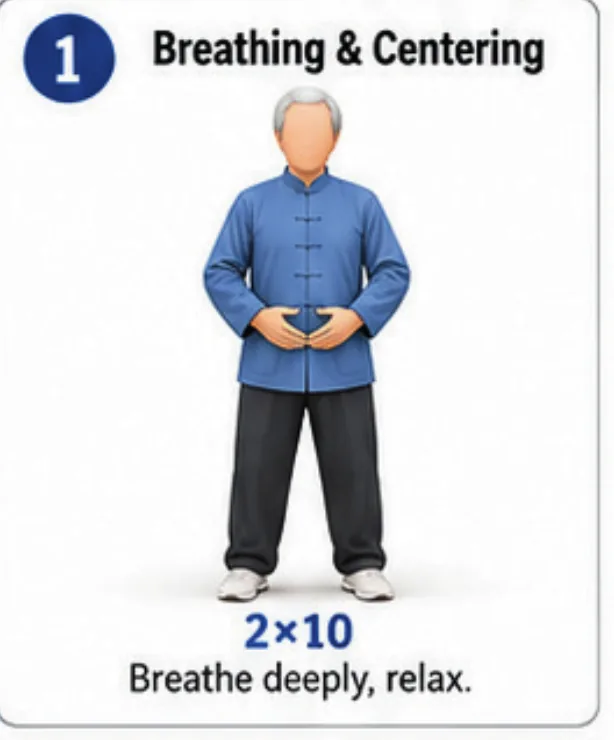
1. Breathing & Centering
Purpose: Settles your breathing and helps you stand tall before you start moving.
How to Perform:
- Stand behind a chair, hands resting lightly on its back.
- Rest your feet hip-width apart and soften your knees slightly.
- Breathe in slowly through your nose and let your shoulders drop.
- Breathe out just as slowly, eyes looking forward.
Recommended Practice: 2×10
Beginner Tip: If standing tires you, do this one seated.
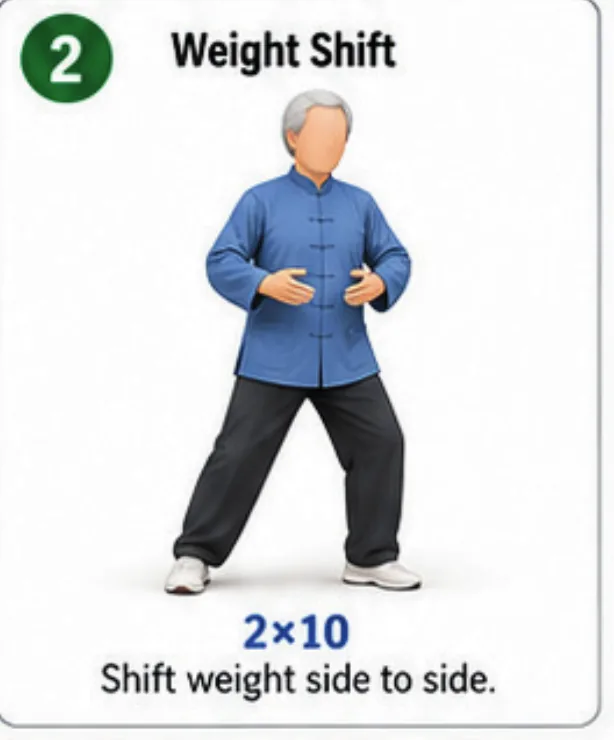
2. Weight Shift
Purpose: Practises moving your weight foot to foot, the base of every step.
How to Perform:
- Stand holding the chair, feet hip-width apart.
- Slowly shift your weight onto your right foot.
- Pause for a breath, then shift across to your left foot.
- Keep your hips level and the movement small and steady.
Recommended Practice: 2×10
Beginner Tip: Make the shift tiny at first; you don’t need to lift either foot.
3. Heel-to-Toe Walk
Purpose: Practises placing one foot in front of the other, like walking a narrow line.
How to Perform:
- Stand beside a counter or wall so support stays close.
- Step forward, heel just in front of the other foot’s toes.
- Take the next step the same way with the other foot.
- Turn carefully at the end and walk back.
Recommended Practice: 2×10 steps
Beginner Tip: Keep one hand sliding along the counter the whole way.

4. Supported Single-Leg Stand
Purpose: Practises balancing on one leg at a time while support stays right in front of you.
How to Perform:
- Stand behind the chair and hold on with both hands.
- Shift your weight onto your right foot.
- Lift your left foot just a little off the floor.
- Hold for a few breaths, set it down, then change sides.
Recommended Practice: 2×10 (each leg)
Beginner Tip: Start by lifting only your heel, keeping your toes on the floor.

5. Sit to Stand
Purpose: Practises standing up and sitting down with control, a movement you use many times daily.
How to Perform:
- Sit near the front edge of a sturdy chair, feet flat.
- Lean slightly forward from your hips.
- Push through your feet and stand up slowly.
- Pause standing tall, then sit back down slowly.
Recommended Practice: 2×10
Beginner Tip: Use the armrests for help at first; that’s fine.

6. Tai Chi Heel Raise
Purpose: Practises rising onto the balls of your feet and lowering back down with control.
How to Perform:
- Stand holding the chair, feet hip-width apart.
- Press through the balls of your feet and lift your heels.
- Rise only as high as feels comfortable and hold one breath.
- Lower your heels slowly back to the floor.
Recommended Practice: 2×10
Beginner Tip: A small lift done slowly counts just as much.

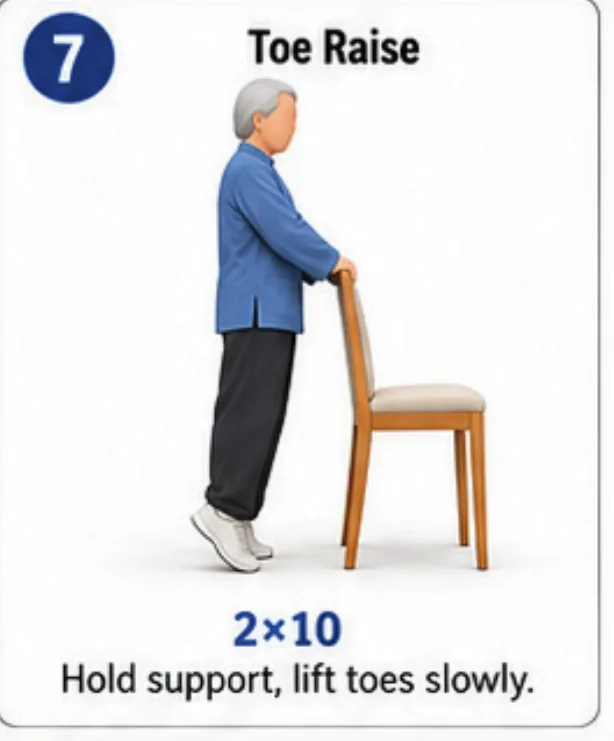
7. Toe Raise
Purpose: Practises lifting the front of your feet while your heels stay grounded.
How to Perform:
- Stand behind the chair and hold on.
- Keep your heels on the floor.
- Lift your toes and the front of each foot upward.
- Hold one breath, then lower your feet gently.
Recommended Practice: 2×10
Beginner Tip: If both feet together feels hard, lift one foot at a time.
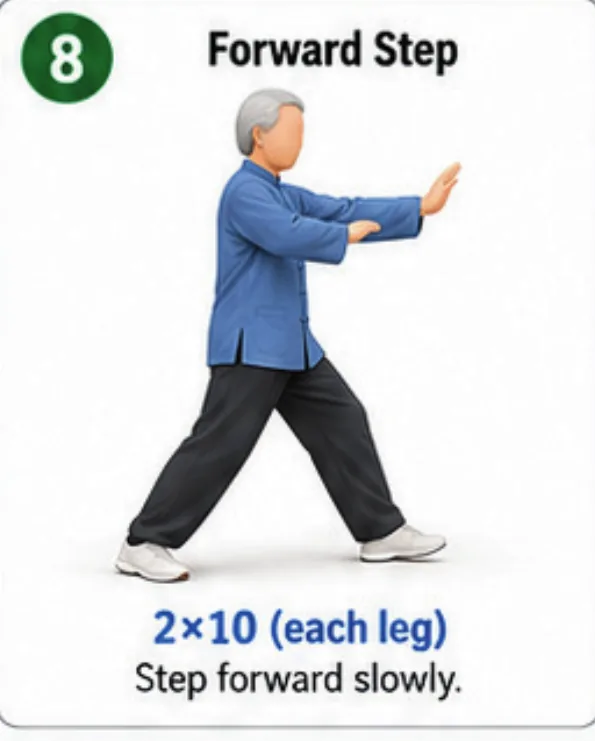
8. Forward Step
Purpose: Practises taking a controlled step forward and returning to your starting position.
How to Perform:
- Stand holding the chair or beside a counter.
- Step forward with your right foot, heel first.
- Shift a little weight onto that foot.
- Step back to the start, then repeat with the other leg.
Recommended Practice: 2×10 (each leg)
Beginner Tip: Short steps are best; length can come later, if at all.
9. Backward Step
Purpose: Practises stepping backward slowly, as you do when moving away from a sink.
How to Perform:
- Stand holding the chair with both hands.
- Step backward with your right foot, toes first.
- Place it down gently and shift a little weight onto it.
- Step back to the start, then repeat with the other leg.
Recommended Practice: 2×10 (each leg)
Beginner Tip: Keep steps small and hold your support throughout.

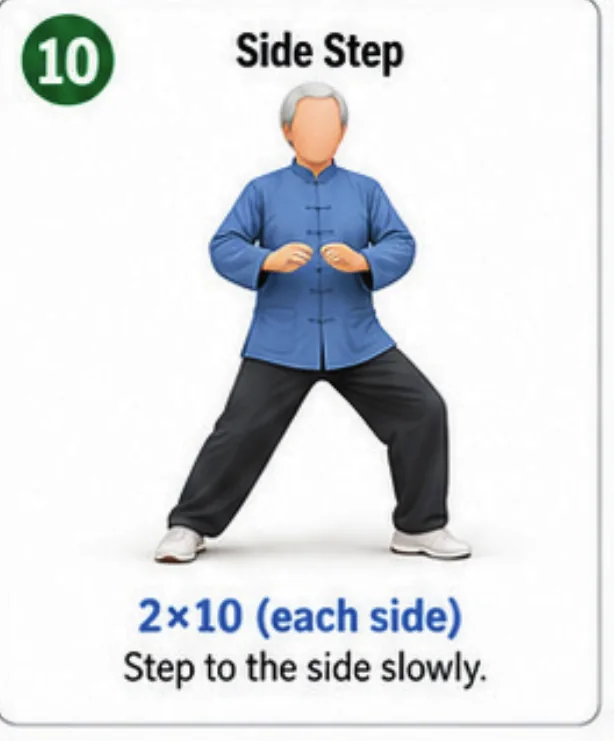
10. Side Step
Purpose: Practises stepping sideways, useful for moving along a kitchen counter.
How to Perform:
- Stand behind the chair, holding on, feet together.
- Step your right foot out to the side.
- Bring your left foot across to meet it.
- Pause, then repeat on the way back.
Recommended Practice: 2×10 (each side)
Beginner Tip: Face the chair throughout, so support stays in front of you.
11. Standing March
Purpose: Practises lifting one knee at a time, like stepping over a low threshold.
How to Perform:
- Stand behind the chair and hold on with both hands.
- Lift your right knee a few inches.
- Set the foot down gently.
- Lift your left knee the same way, and keep alternating slowly.
Recommended Practice: 2×10 (each leg)
Beginner Tip: A small knee lift is enough; control matters more than height.

12. Tai Chi Push
Purpose: Practises shifting your weight forward and back with a slow pushing arm movement.
How to Perform:
- Stand with one foot slightly ahead of the other, chair beside you.
- Rest one hand lightly on the chair.
- Shift your weight toward your front foot.
- Extend your other hand forward, as if pressing soft air, then shift back.
Recommended Practice: 2×10
Beginner Tip: Keep it slow and gentle; there’s nothing to push against but air.

13. Trunk Rotation
Purpose: Practises turning your upper body while your feet stay planted.
How to Perform:
- Stand holding the chair, or rest one hand on a counter.
- Keep your feet flat and hips facing forward.
- Turn your shoulders and head slowly to the right.
- Return to the centre, then turn left the same way.
Recommended Practice: 2×10 (each side)
Beginner Tip: Turn only as far as feels easy; never force the twist.

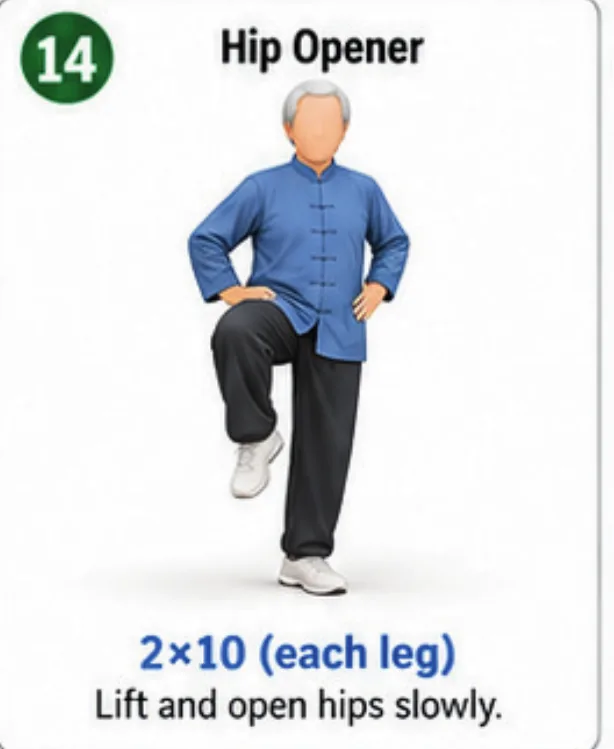
14. Hip Opener
Purpose: Practises moving one leg out to the side while the other keeps you steady.
How to Perform:
- Stand behind the chair and hold on with both hands.
- Shift your weight onto your left leg.
- Move your right leg slowly out to the side, toes forward.
- Bring it back with control, then change legs.
Recommended Practice: 2×10 (each leg)
Beginner Tip: Move the leg just a few inches out; small and steady is the goal.
15. Ankle Circles
Purpose: Keeps the ankles moving while you practise standing on one leg.
How to Perform:
- Stand behind the chair and hold on.
- Lift one foot slightly off the floor.
- Draw slow circles in the air with your toes, both directions.
- Set the foot down and repeat with the other ankle.
Recommended Practice: 2×10 (each ankle)
Beginner Tip: If lifting is too much, keep your toes down and circle the heel.

16. Cool Down
Purpose: Slows your breathing and lets your body settle after the standing work.
How to Perform:
- Stand holding the chair, feet hip-width apart.
- Breathe in slowly and let your shoulders rise a little.
- Breathe out and let them drop.
- Shift your weight gently side to side, then stand still for a few breaths.
Recommended Practice: 2×10
Beginner Tip: Sit and rest a minute afterwards before walking away.

10-Minute Sample Practice
Short on time? This session picks eight movements from above and fits into about ten minutes. Hold your support throughout, and rest when you need to.
| Exercise | Time / Reps |
|---|---|
| Breathing & Centering | 1 minute, slow breaths |
| Weight Shift | 1 minute, 2×10 |
| Supported Single-Leg Stand | 2 minutes, 2×10 each leg |
| Sit to Stand | 2 minutes, 2×10 |
| Tai Chi Heel Raise | 1 minute, 2×10 |
| Side Step | 1 minute, 2×10 each side |
| Standing March | 1 minute, 2×10 each leg |
| Cool Down | 1 minute, slow breaths |
If ten minutes feels like a lot at first, do half the table and build up over a few weeks. Showing up regularly matters most, even for a few minutes.
Get the Printable Chart
If you’d rather follow the routine from one clear page instead of scrolling, the Fall Prevention Tai Chi Exercises printable chart puts the whole sequence on one sheet: a one-page A4 printable PDF with all 16 illustrated movements, each with short instructions and its recommended reps, in the same order as this guide. Print it, keep it near your practice spot, and work at your own pace.
Frequently Asked Questions
1. How often should I practise these movements?
Start with the 10-minute version two or three times a week, then add days as it feels familiar.
2. Do I need any equipment?
None. You need a stable chair or counter, a clear patch of floor, and flat shoes or bare feet on a non-slip surface.
3. I’m a complete beginner. Where should I start?
Start with Breathing & Centering, Weight Shift, and the Supported Single-Leg Stand. Add a new movement or two each week; there’s no rush to do all 16. The best exercises for balance are rarely the hardest ones — they are the ones you repeat often enough for them to feel familiar.
4. Can I do these exercises sitting down?
Some parts adapt to sitting, like the breathing sections and ankle circles with a foot resting low. The standing movements need support nearby, so skip any that don’t suit you and ask your doctor what’s right for you.
5. What should I do if I feel dizzy during a session?
Stop, hold your support, and sit down. Rest until the feeling passes completely. If it keeps happening, talk to your doctor before practising again.
6. How is Tai Chi different from regular single leg balance exercises?
Regular balance drills often hold one position at a time. Tai Chi links slow weight shifts, steps, and turns together, so you practise balance while moving gently rather than standing still.
Final Thoughts
Balance is a skill, and skills respond to regular, gentle practice. You don’t need all 16 movements at once. Pick a few, practise near a solid chair, and let the routine grow at your own pace. If you have been looking for balance exercises for seniors that fit an ordinary morning at home, this set was put together for exactly that — a few steady minutes most days is a good place to start, and to stay.
Safety Note: This guide is about balance practice only. Practising these movements does not guarantee fall prevention, and it does not remove the risk of falling. Everyone’s body, health, and home setup are different, and what suits one person may not suit another. Always use support, work on a clear and stable surface, and consult a healthcare professional about whether these exercises are suitable for you before you begin.